
Cancun & Yucatán in 2026: Why It’s Worth the Trip
The salt hits you before you’ve even cleared customs — that warm, thick Caribbean salt that clings to your skin and tells you something exceptional is waiting outside those terminal doors. The Yucatán Peninsula delivers something almost no other single destination can: powdery Caribbean beaches, the most extensive cave-diving cenote systems on Earth, and UNESCO-listed Mayan cities — all within a two-hour drive of each other. In 2026, Cancun International Airport (CUN) will handle an estimated 30 million passengers, making it one of the busiest entry points in Latin America, with nonstop service from over 80 cities in North America and Europe. The infrastructure here is mature, English is spoken widely in tourist zones, and the Mexican peso’s favorable exchange rate against the US dollar means your travel budget stretches further than comparable Caribbean rivals like Barbados or St. Barts.
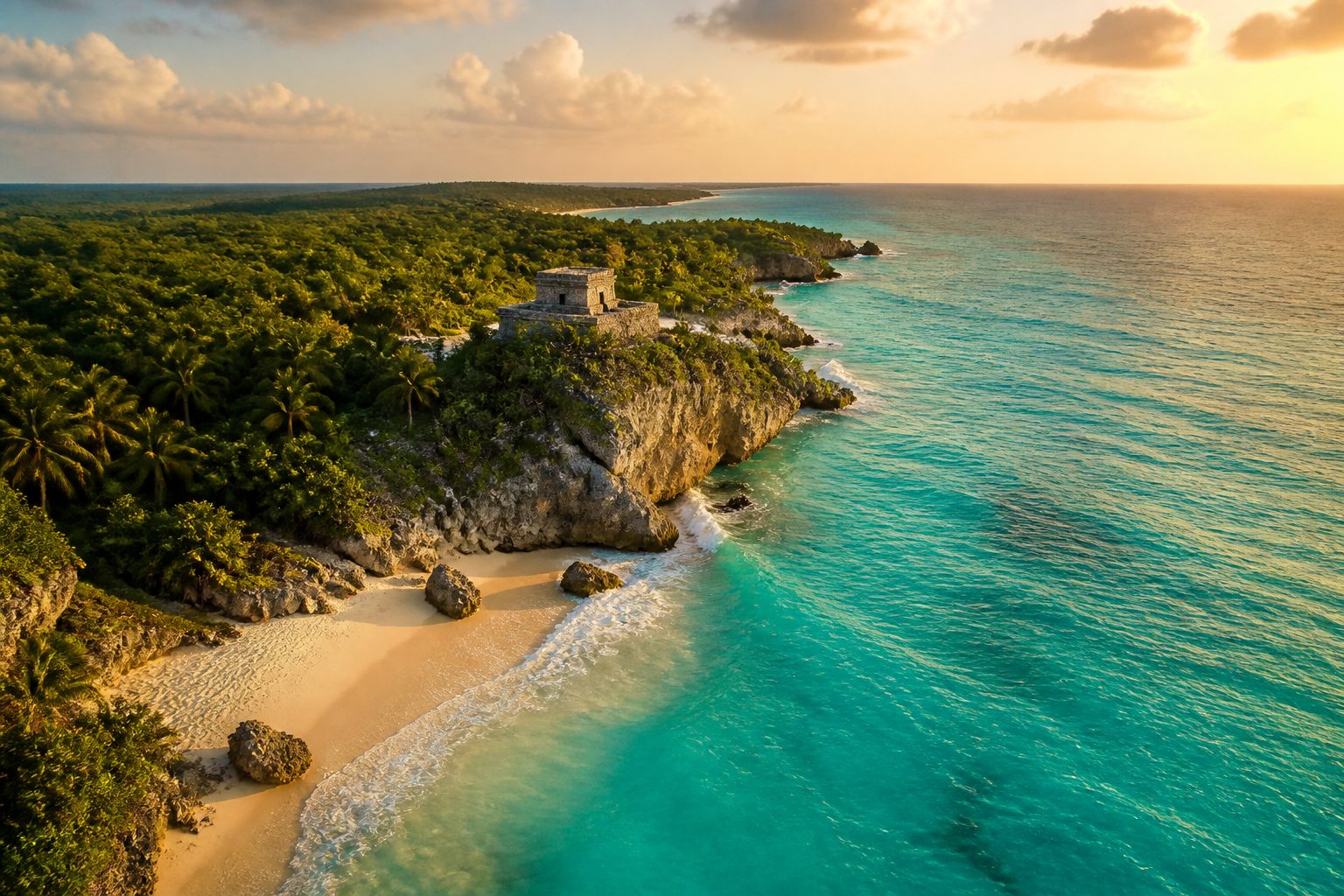
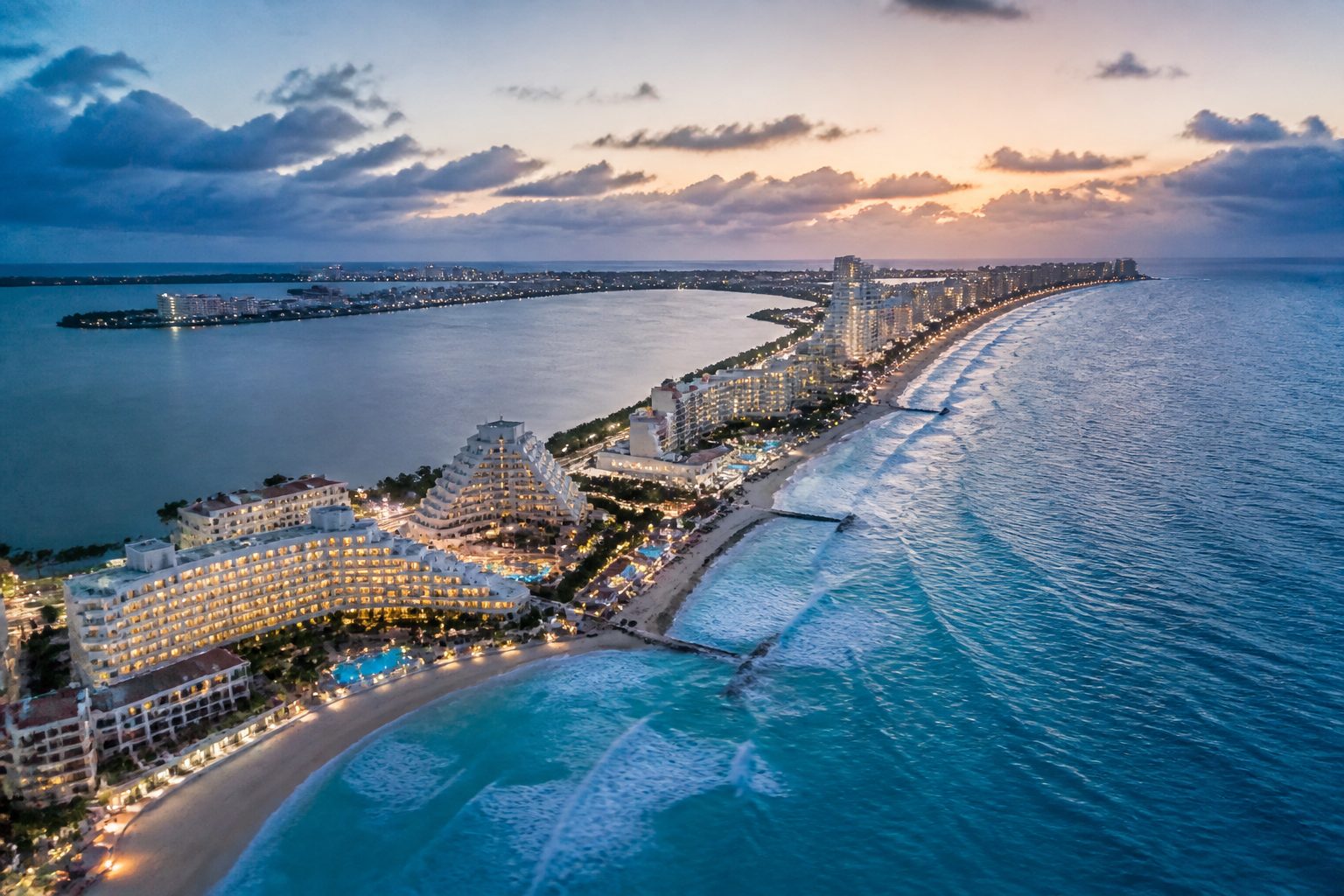
The geography rewards every style of traveler. Cancun’s Hotel Zone is a 14-mile barrier island sandwiched between the Caribbean Sea and Nichupté Lagoon — home to the glass-tower all-inclusives and the electric nightlife that built the city’s global reputation. Forty-five minutes south, Playa del Carmen’s Quinta Avenida pedestrian strip offers a European café atmosphere, boutique shopping, and the ferry dock for Cozumel. Continue another hour south and you reach Tulum, where Instagram-famous eco-lodges back onto jungle-fringed beach and the ancient Tulum Archaeological Zone commands a dramatic clifftop above the sea. The Riviera Maya — the coastal corridor connecting Cancun to Tulum — is arguably the most complete tropical vacation ecosystem in the Western Hemisphere.
Two developments in 2026 make the region even more compelling. The Tren Maya railway, linking Cancun, Playa del Carmen, Tulum, Palenque and Mérida, reached phased operational status in late 2023 and by 2026 will be running at full passenger capacity — a scenic, affordable alternative to bus or car for travelers wanting to penetrate deeper into the Yucatán interior. Meanwhile, Tulum’s new international airport (TQO), inaugurated in December 2023, now accepts direct flights from select US hubs, cutting the old two-hour transfer from Cancun entirely for south-Riviera-bound travelers.
Best Cancun & Riviera Maya Hotels for 2026
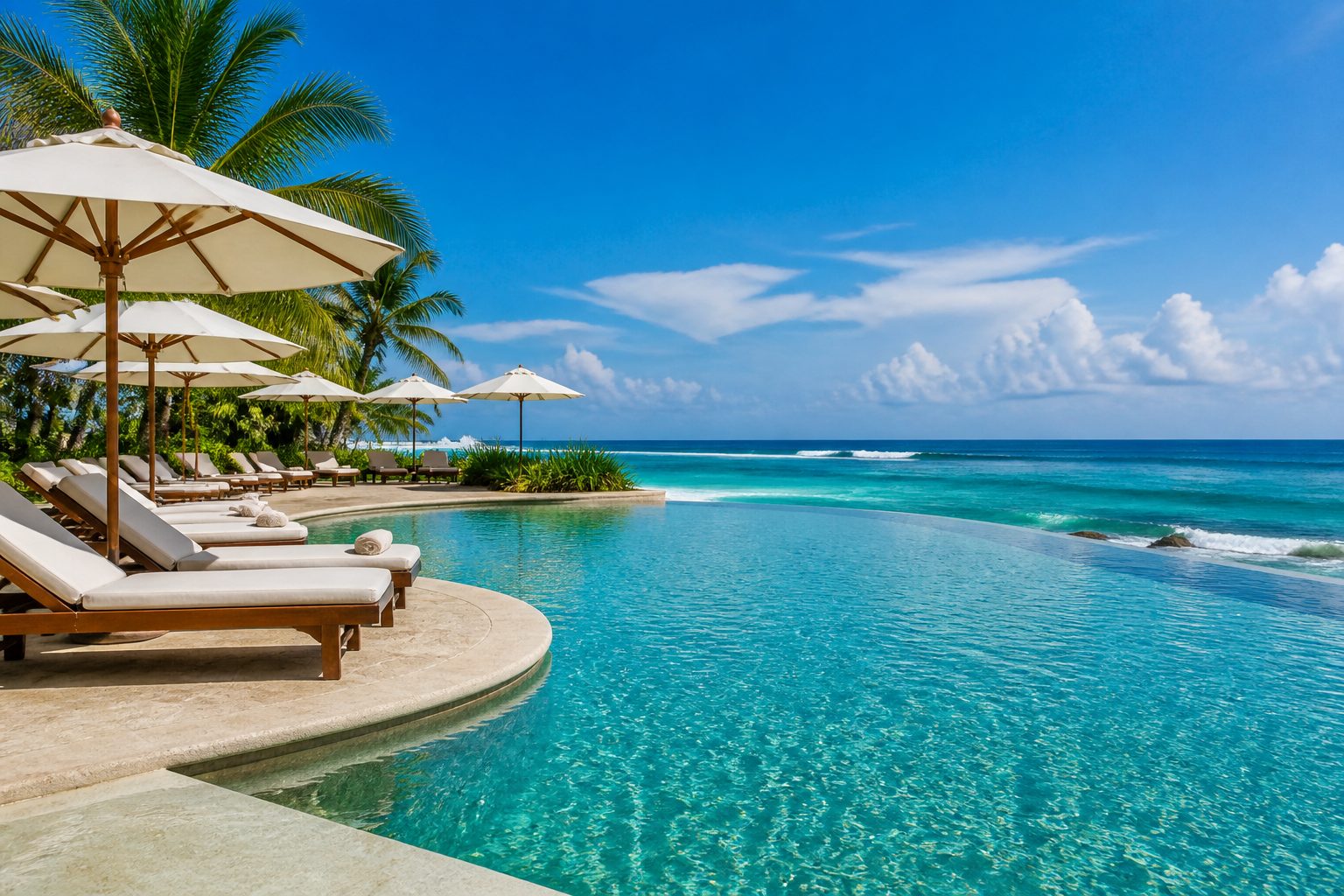
You’ll step into the Hotel Zone and understand immediately what the brochures have spent decades trying to describe — the water really is that color, that impossible electric blue that looks retouched even when you’re standing right in front of it. Cancun and the Riviera Maya together host one of the densest concentrations of internationally branded resort hotels in the world, yet the range in style and price is broader than most visitors expect. Knowing which pocket of the coast suits your travel personality will save you both money and disappointment.
In the Cancun Hotel Zone, all-inclusive mega-resorts dominate the beachfront. The Riu Palace Las Americas is a 372-room, 5-star property at Kilometer 9 of the Boulevard Kukulcan offering 24-hour all-inclusive service, seven restaurants, a swim-up bar, and direct access to one of the calmest beach stretches in the zone. For guests who want luxury without the all-inclusive crowds, the 5-star Le Blanc Spa Resort operates as an adults-only, 259-suite enclave near Kilometer 10 and consistently ranks among Condé Nast Traveler’s top Caribbean resort picks. Expect swim-out suites, a Forbes Five-Star spa, and butlered room service as standard. At the northern end of the zone near Kilometer 4, the more wallet-friendly Krystal Grand Cancun Resort offers 490 rooms with optional all-inclusive packages, placing guests steps from Playa Tortugas and its public beach atmosphere.
Along the Riviera Maya, the character shifts dramatically. The Grand Velas Riviera Maya near Playa del Carmen is a AAA Five Diamond, 539-suite resort set within 220 acres of mangrove jungle, with four distinct sections (including a swim-out suite village), eight restaurants with Michelin-pedigreed culinary concepts, and an award-winning spa. For those drawn to Tulum’s bohemian-eco aesthetic, Azulik Tulum offers 60 adults-only treehouse villas constructed entirely from sustainable local materials — no electricity, no Wi-Fi, no children under 16 — perched above the Caribbean surf. Room rates at Azulik start at approximately $600 USD per night and book out months in advance for the December through April peak season, so early reservation is essential.
Compare Cancun hotels on Booking.com to check real-time availability across all price tiers — the platform’s flexible cancellation filters are particularly useful when booking during the shoulder seasons of May and November, when prices dip by 20 to 40 percent versus peak. If you prefer rewards-based booking, you can also save 10% or more on hotels with Member Prices through Hotels.com, where the destination has hundreds of listed properties from budget to ultra-luxury.
Riviera Maya Vacation Rentals: Top Picks & Tips
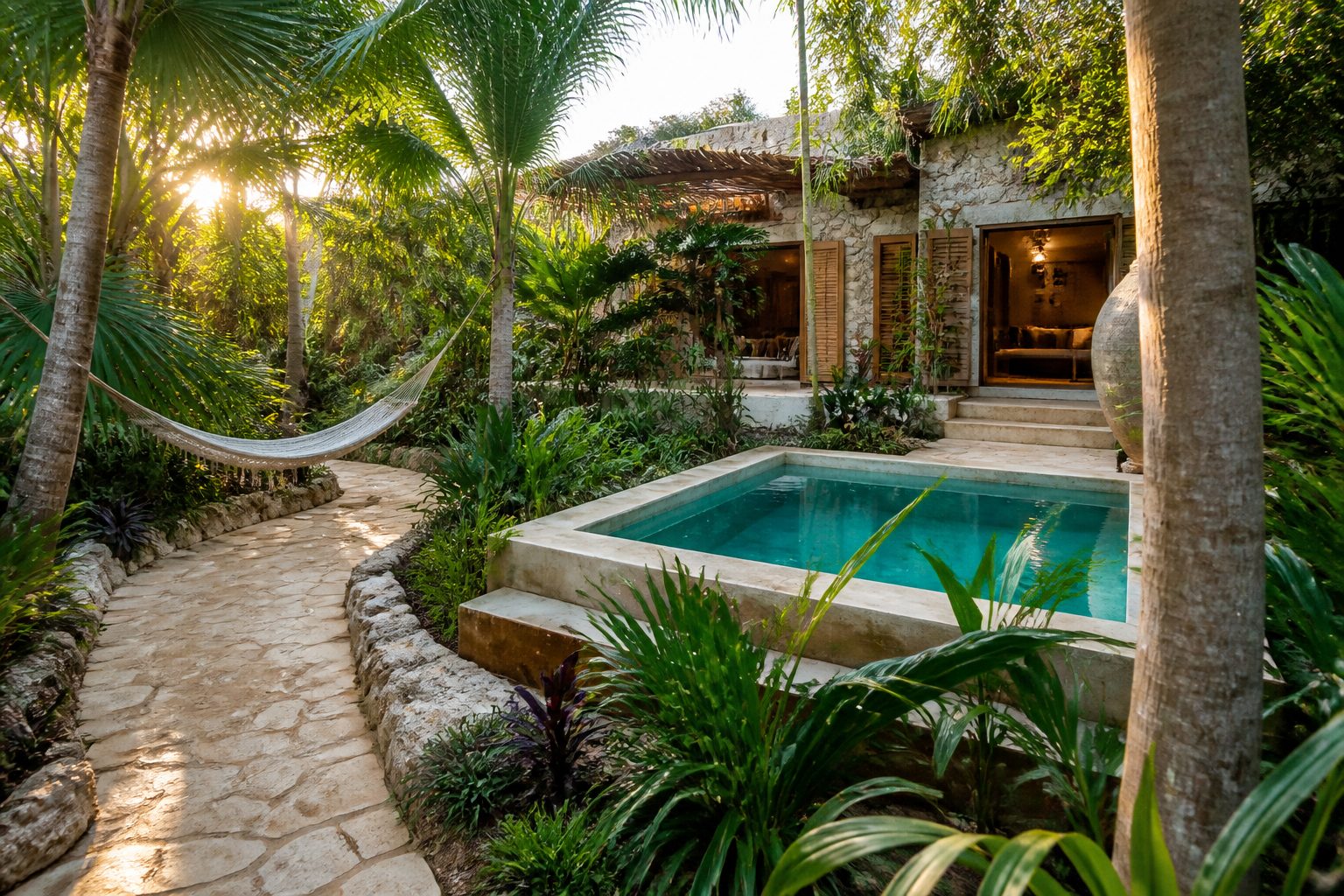
There’s a particular kind of morning that only a vacation rental delivers — padding barefoot to a private pool with coffee in hand, hearing nothing but distant surf and the jungle waking up around you, with no buffet queue and no checkout anxiety on the horizon. For families, groups, or anyone staying longer than a week, vacation rentals in the Riviera Maya routinely offer superior space, privacy, and value compared to hotel rooms — particularly once you account for the cost of eating three resort meals a day. A four-bedroom villa in Playa del Carmen’s Playacar gated community, for instance, frequently costs less per person per night than two adjacent hotel rooms at a mid-range resort, and comes with a private pool, full kitchen, and the freedom to cook fresh market seafood rather than queue at a buffet.
The Tulum corridor ranks among the most-searched vacation rental destinations in Latin America on platforms like Vrbo, driven by the surge in remote workers and digital nomads who extended stays during the post-pandemic period and never entirely left. Jungle villas with private cenote-fed plunge pools, rooftop terraces with Caribbean views, and off-grid solar-powered eco-cabins are all legitimately bookable inventory here. Tulum’s Aldea Zama neighborhood — a master-planned development roughly five minutes from the beach zone — has become particularly popular for vacation rentals because it sits equidistant between the beach clubs and the town square, making it walkable without a car.
For Isla Mujeres, the island’s small scale (it measures only five miles long and half a mile wide) makes rental homes a logical choice: a beachfront casita on the island’s calm western shore gives you a base from which you can walk or rent a golf cart to reach every restaurant, reef, and white-sand stretch within 20 minutes. Find vacation rentals in Mexico on Vrbo to browse the full inventory, from Cancun condos overlooking the lagoon to Tulum eco-villas deep in the jungle. If you prefer searching by trip type or group size, Vrbo’s dedicated vacation rental platform allows filtering by pet-friendly, pool, and beachfront criteria that hotel booking engines rarely match for specificity.
Getting Around Yucatán: Car Rentals & Transfers
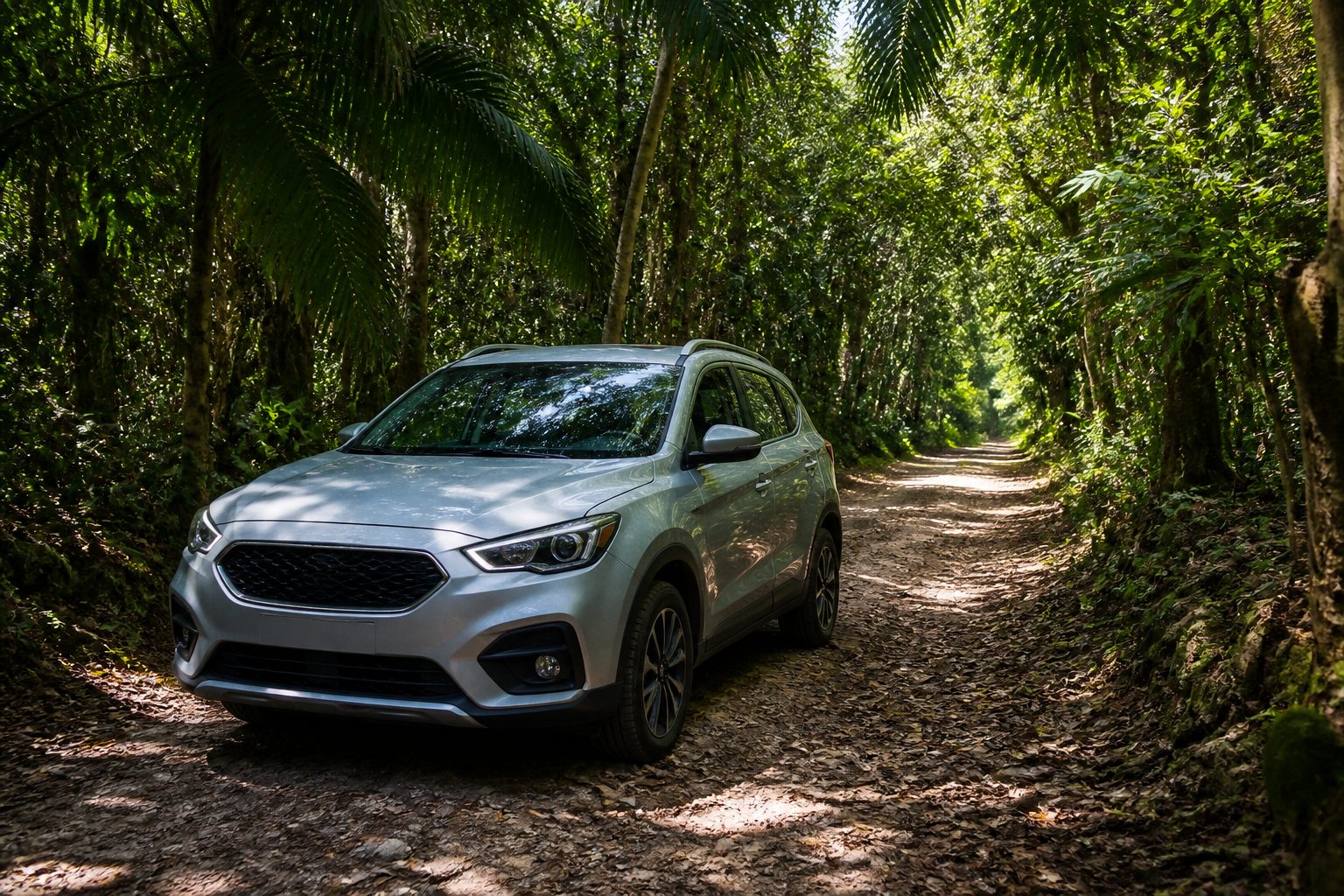
Here’s the good news: getting around the Yucatán Peninsula is easier than first-time visitors usually expect, and your choice of transport will fundamentally shape what kind of trip you have. For travelers sticking primarily to Cancun’s Hotel Zone and Playa del Carmen, ADO buses are the most cost-effective solution: the first-class ADO service runs frequent departures from the Cancun bus terminal (located at Avenida Tulum, downtown) direct to Playa del Carmen in approximately 45 minutes and onward to Tulum in a further 60 minutes, with fares typically in the 200 to 350 peso range per leg. The buses are air-conditioned, punctual, and carry reasonable luggage. For airport transfers, licensed shuttle and private transfer services operating from Cancun International Airport’s Terminal 3 and Terminal 4 arrivals halls offer fixed-price, pre-bookable rides that eliminate taxi-fare uncertainty.
Renting a car, though, is the single decision that unlocks the full Yucatán experience. Go ahead and do it. Yucatán’s road network is genuinely tourist-friendly: the 180D toll highway from Cancun to Mérida is a modern divided motorway with clear signage and service plazas, and secondary routes to cenotes and ruins are paved and manageable in a standard sedan. Unlike driving in Mexico City — where local traffic patterns, altitude, and route complexity discourage most visitors — the Peninsula’s grid of highways and the near-absence of mountain terrain make navigation straightforward. Toll costs on the Cancun–Mérida run average around 400 pesos (approximately $22 USD at current rates). Compare Cancun car rentals on EconomyBookings to find competitive daily rates from international and local agencies; booking in advance during peak season (December through April) is strongly advisable, as compact and mid-size inventory at the airport sells out quickly.
One practical note: while US dollars are accepted broadly across Cancun’s Hotel Zone and major Riviera Maya resorts, you will find noticeably better value throughout — at cenote entrance fees, roadside taco stands, local tour operators, and toll plazas — by paying in Mexican pesos. Withdraw from ATMs inside bank branches rather than standalone tourist-zone machines to avoid elevated service fees. For day trips, carry small-denomination peso bills, as many archaeological site vendors and cenote operators do not carry change for large notes.
Complete 7-Day Cancun & Yucatán Itinerary
Seven days is enough to feel the full range of what this coastline offers — to wake up in a glass-tower suite above the Caribbean, lose yourself in a jungle cenote before noon, and stand at dusk on a clifftop watching the sea turn copper below a thousand-year-old pyramid. This itinerary is built for a traveler arriving at Cancun International Airport who wants real balance — beach time and genuine cultural depth, not just one or the other. It assumes a base in either the Hotel Zone or Playa del Carmen for the first half, then shifts south to the Tulum area for the second.
Day 1 is for arrival and acclimatization. Check into your hotel or vacation rental, orient yourself to the Hotel Zone’s geography, and spend the afternoon on the beach at Playa Delfines (Kilometer 17.5 on Boulevard Kukulcan), which is the widest, most open public beach in the zone and offers the iconic turquoise-meets-white-sand photograph that defines Cancun. Have dinner at one of the rooftop ceviche bars lining the lagoon side of the boulevard.
Day 2, take the ferry from Puerto Juárez — located on the mainland just north of the Hotel Zone, approximately 25 minutes by taxi — to Isla Mujeres. The passenger ferry crossing takes roughly 25 minutes and runs at frequent intervals throughout the day. Rent a golf cart on arrival, circumnavigate the island at leisure, snorkel at the Manchones Reef (Mexico’s second-largest reef system), and lunch at one of the palapa restaurants on Playa Norte, which National Geographic has repeatedly cited as one of the finest urban beaches in the Caribbean.
Day 3, drive or bus south to Playa del Carmen and spend the morning on the beach at Mamitas Beach Club before exploring Quinta Avenida in the afternoon. If you have rented a car, make a 30-minute detour to the Aktun-Chen natural park to see your first cenote in a low-key, unhurried setting.
Days 4 and 5 are your Tulum and cenote days. Base yourself in Tulum or Aldea Zama and visit Gran Cenote — located just 4 kilometers west of Tulum town on the road toward Coba — in the early morning before tour buses arrive. The cenote’s crystal-clear freshwater, stalactite formations, and resident turtles are best experienced with fewer than 20 other swimmers present. On your second Tulum day, visit Cenote Dos Ojos, approximately 17 kilometers north of Tulum toward Playa del Carmen, a twin-chamber cave system considered among the top five cavern dive sites in the world. Non-divers can snorkel the open chambers. Finish with sunset at the Tulum Archaeological Zone on its Caribbean clifftop.
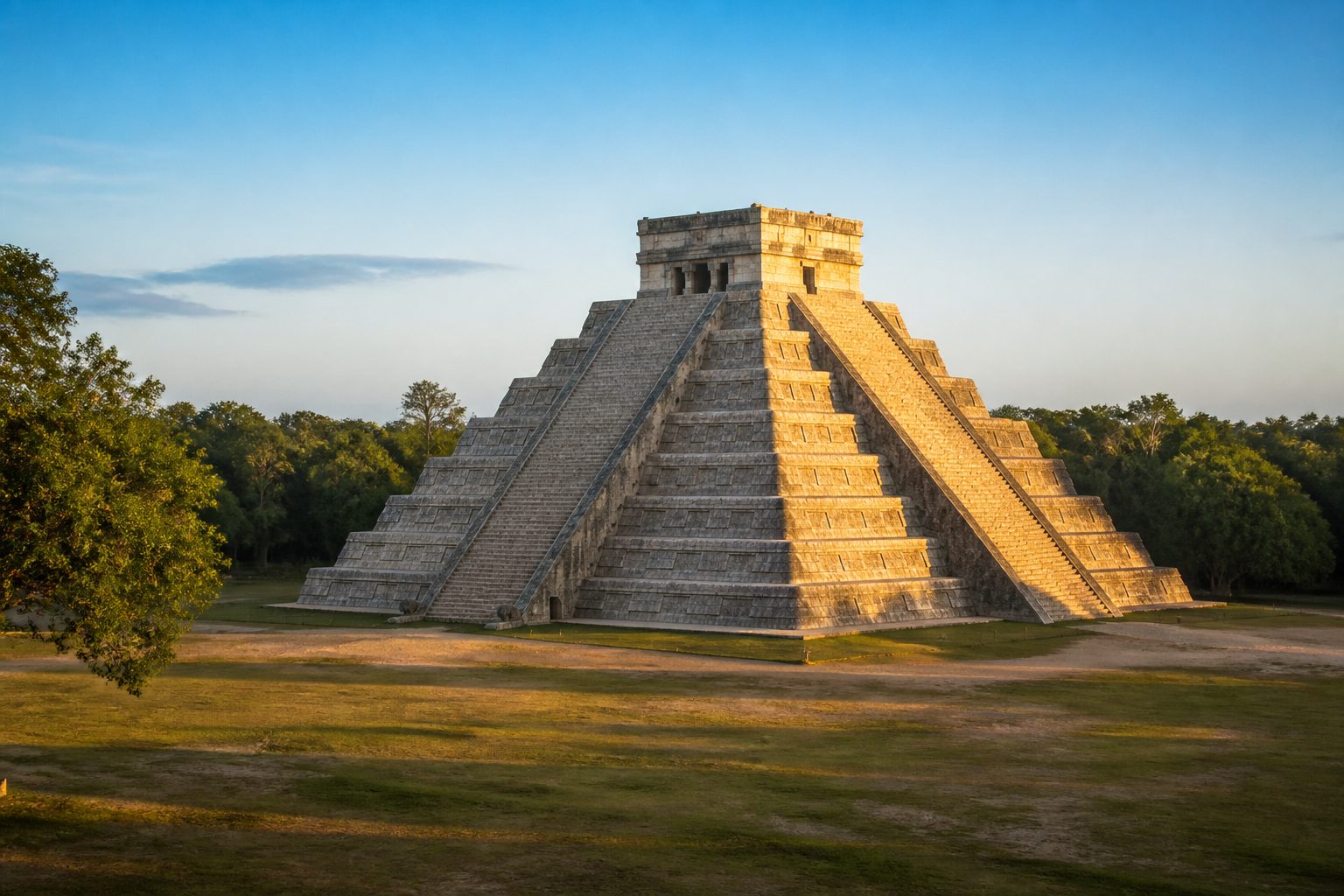
Day 6 is the Chichén Itzá day. The site is approximately a two-hour drive west of Cancun on the 180D toll highway, or reachable by ADO bus. Arrive at opening (8:00 AM) to beat both the heat and the tour groups. Chichén Itzá was named a UNESCO World Heritage Site in 1988 and one of the New Seven Wonders of the World in 2007; its 30-meter El Castillo pyramid is the most photographed Mayan structure on the planet. Allow three to four hours on site. Return via the colonial city of Valladolid for lunch — a 40-minute detour that introduces you to Yucatecan cuisine in a setting largely untouched by mass tourism.
Day 7 is for leisure and departure preparation. Sleep in. Revisit your favorite beach. Shop for Talavera ceramics or hammocks in the Mercado 28 district of Cancun downtown, and depart from Cancun International Airport feeling unhurried.
Yucatán Cenotes, Mayan Ruins & Best Day Trips

Drop below the surface of a Yucatán cenote and the world goes quiet in a way you simply won’t find anywhere else — light filters down in shafts through the limestone ceiling, freshwater turtles drift past without a second glance, and the temperature drops to something cool and startling against your skin. The Yucatán Peninsula sits atop the world’s largest known underground river system, the Sistema Sac Actun, which stretches for more than 376 kilometers of mapped passage beneath the jungle floor. The roughly 6,000 cenotes — sinkholes where the limestone ceiling has collapsed to reveal the freshwater below — that dot the peninsula are the visible access points to this system, and they represent a genuinely unmissable experience that no other destination on Earth replicates at scale.
Gran Cenote, 4 kilometers from Tulum town, is the most accessible and visually arresting introduction: an open-air chamber with a partially covered stalactite cave section, crystal-visibility water, and freshwater turtles that swim alongside snorkelers with complete indifference. Admission in 2024 was 500 pesos per person with snorkel gear rental available on site. Cenote Dos Ojos, roughly 17 kilometers north of Tulum, translates to Two Eyes — named for the two circular openings that look like pupils when viewed from above. The cavern diving here is world-class; PADI-certified divers can arrange guided cavern dives through operators in Tulum town for approximately $80 to $120 USD per person including equipment.
For Mayan ruins beyond Tulum’s clifftop site, Chichén Itzá remains the non-negotiable priority. The site receives more than two million visitors annually, which makes timing critical: a 7:00 AM departure from Cancun puts you at the gates for the 8:00 AM opening, before the tour-bus convoys from the Hotel Zone arrive around 10:00 AM. The site encompasses not only El Castillo but the Great Ball Court — the largest ancient ball court in Mesoamerica at 168 meters long — the Temple of the Warriors, and the Sacred Cenote, a natural sinkhole into which the ancient Maya made ritual offerings.
Isla Mujeres rewards even travelers with limited time. The underwater sculpture park, MUSA (Museo Subacuático de Arte), located in the waters between Cancun and Isla Mujeres, contains over 500 permanent life-size sculptures by artist Jason deCaires Taylor installed at 4 to 8 meters depth — creating an artificial reef that now draws over 750,000 visitors annually and ranks among the most-visited dive and snorkel sites in the Caribbean. Day trips to Cozumel from Playa del Carmen (ferry crossing approximately 45 minutes) access the Palancar Reef system, part of the Mesoamerican Barrier Reef, the world’s second largest coral reef structure.
Best Time to Visit Cancun: Hurricane Season & Budget Tips

The Yucatán in December feels like a different world from the Yucatán in September — trade winds versus dead heat, lively beach clubs versus near-empty stretches, and hotel rates that swing dramatically between those two poles. The region has two climatically distinct travel windows, and understanding them will protect both your experience and your travel investment. Peak season runs from December through April, when the northeast trade winds keep temperatures at a pleasant 24 to 28 degrees Celsius, rainfall is minimal, and humidity is manageable even away from the coast. This is also the period when hotel rates are highest — the week between Christmas and New Year’s and the spring break weeks of March and April represent the absolute price ceiling. Book hotels and vacation rentals for peak dates no later than October to avoid both sold-out inventory and the year’s highest rates.
Hurricane season officially runs June 1 through November 30, with the statistically highest-risk period falling between August and October. The Yucatán Peninsula has been struck by significant storms, including Hurricane Wilma in October 2005, which caused extensive damage to Cancun and remains the most intense Atlantic hurricane ever recorded at landfall. Any given year carries a relatively low probability of a direct hit to Cancun specifically, and the shoulder months of May, June, and November offer meaningfully lower hotel rates — often 30 to 50 percent below peak — with perfectly acceptable weather in most years. Travelers booking during hurricane season should always purchase comprehensive travel insurance with hurricane cancellation coverage and monitor the US National Hurricane Center’s forecasts from approximately two weeks before departure.
For budgeting, a mid-range couple spending seven days in the Riviera Maya — staying at a 4-star hotel rather than all-inclusive, eating one restaurant meal per day and cooking or snacking otherwise, renting a car for three days, and visiting two or three paid sites — should budget approximately $3,000 to $4,500 USD total including flights from the continental United States. All-inclusive packages at 4-star resorts frequently undercut this figure on a per-person basis when flight-and-hotel bundles are purchased together. The US dollar is universally accepted in the Hotel Zone and at major attractions, but as noted earlier, paying in pesos consistently yields better value — a 60 to 100 peso price differential on cenote snorkel rentals and tour operator fees is typical.
Frequently Asked Questions
Seven to ten days is the ideal range. Seven days allows you to cover Cancun’s beaches, Isla Mujeres, the cenotes near Tulum, and Chichén Itzá without feeling rushed. Ten days adds Mérida, the Uxmal ruins, and more time in Playa del Carmen.
Cancun’s Hotel Zone and the Riviera Maya tourist corridor are considered safe for international visitors and receive millions of US, Canadian, and European tourists annually. The US State Department’s travel advisory for Quintana Roo (the state containing Cancun and Tulum) as of 2024 is Exercise Normal Precautions — the same rating as many European destinations. Standard urban precautions apply: avoid displaying expensive jewelry, use licensed taxis or app-based services like Uber (available in Cancun), and stay in well-lit tourist areas after dark.
December through April is peak season: minimal rain, low humidity, and consistently warm temperatures around 27°C (80°F). November and May are excellent shoulder-season alternatives with noticeably lower hotel rates and manageable weather. August through October carries the highest hurricane risk and is generally best avoided unless your travel insurance covers cancellation.
Not necessarily for Cancun alone — the Hotel Zone has good public bus service (Route 1 runs the full length of Boulevard Kukulcan for about 12 pesos) and taxis are plentiful. However, renting a car for two to three days unlocks the cenotes, Chichén Itzá, and Coba independently and at your own pace. Yucatán’s roads are well-maintained and driving conditions are considered tourist-friendly.
Chichén Itzá is approximately 200 kilometers (124 miles) from Cancun, about a two-hour drive west on the 180D toll highway. ADO buses also run from Cancun’s main terminal to Pisté (the nearest town) with a journey time of roughly two and a half to three hours.
Gran Cenote and Cenote Dos Ojos are the two most acclaimed. Gran Cenote is 4 kilometers west of Tulum town, offers snorkeling with resident turtles, and has stalactite cave sections. Dos Ojos, 17 kilometers north of Tulum, is a world-class cavern diving site with two interconnected chambers accessible to both snorkelers and certified divers.
It depends entirely on your travel style. Cancun’s Hotel Zone suits travelers who want large all-inclusive resorts, nightlife, water parks, and easy airport access. Tulum suits those seeking boutique eco-lodges, yoga retreats, direct access to cenotes, and a quieter bohemian atmosphere. Playa del Carmen sits between both extremes and is increasingly popular as a central base.
Yes, US dollars are widely accepted throughout Cancun’s Hotel Zone, major resort areas, and tourist attractions. However, you will consistently get better value paying in Mexican pesos — vendors in tourist zones typically use an unfavorable exchange rate when accepting dollars. Withdraw pesos from bank-branch ATMs rather than standalone tourist machines to minimize fees.
Licensed shuttle services and private transfer vehicles operate from the arrivals halls at both Terminal 3 (domestic) and Terminal 4 (international) at Cancun International Airport (CUN). Pre-booked private transfers are the most straightforward option; they take approximately 20 to 30 minutes to the Hotel Zone depending on traffic. Official taxi concessions are available at the airport but are more expensive than pre-booked shuttles. Uber also operates in Cancun but cannot pick up at the airport.
The Tren Maya is a Mexican government-built passenger railway linking Cancun, Playa del Carmen, Tulum, Bacalar, Palenque, Mérida, and multiple intermediate stops. Inaugurated in phases from 2023 onward, it reached broader operational capacity by 2024 and by 2026 offers a scenic, affordable alternative to the car or bus for travelers exploring the interior Yucatán. Fares are significantly below the cost of private transfers, and the route through the jungle between Tulum and Bacalar is particularly striking.
