
Why Croatia’s Dalmatian Coast Is Best Experienced as an Island Hop
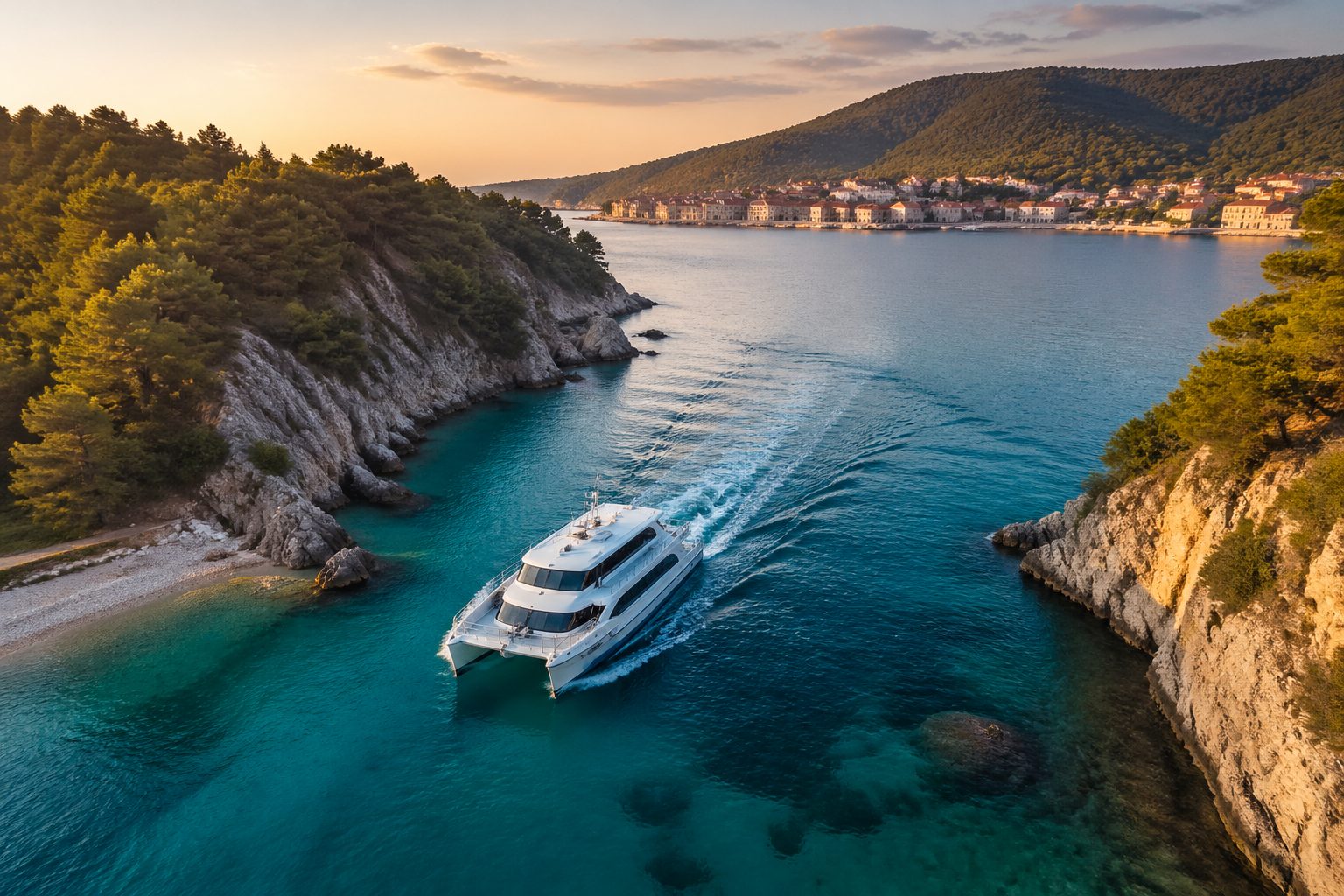
Pine resin warms in the late-afternoon sun on the path above Stari Grad, the air thick with rosemary and the dry-stone tick of cicadas. Below, the Adriatic shifts through six shades of blue you cannot quite name. A Krilo catamaran traces a white seam toward the horizon. This is the rhythm of the Dalmatian coast in summer, and it is the reason a single-base holiday in Split will leave you watching ferries depart with quiet envy.
Croatia holds 1,244 islands, islets and reefs scattered along its 1,777-kilometre coast, the most concentrated archipelago in the Mediterranean. Only fifty are inhabited, and each carries a personality the next refuses to share. Hvar is silk-shirt glamour and lavender-dusted hills. Korčula is medieval fishbone alleys and Pošip wine. Vis is shuttered military silence cracked open by a Mamma Mia 2 cameo. Mljet is salt lake within freshwater lake within a national park. Try to compress all of that into day-trips from one city and you will feel each island only as a postcard.
Multi-island travel rewires the trip. Mornings become embarkation. Afternoons belong to whichever rocky cove your ferry just unlocked. Evenings settle into a different konoba on a different stone square, the limestone bone-white as the sun drops. You learn the names of skippers, the difference between a Jadrolinija car ferry and a Krilo catamaran, the small triumph of a peka dinner ordered three hours in advance.
There is a small 2026 logistics shift worth knowing now. After the post-2024 visitor surge, Jadrolinija and Krilo have both expanded summer capacity, but peak-season catamaran reservations are now mandatory on most routes and must be booked online rather than at the harbor kiosk. Ferryhopper, Omio and the operators’ own apps all sell the same seats. Booking thirty days ahead in July and August is the difference between a confirmed crossing and a hot afternoon spent waiting for cancellations on the Riva.
The other quiet truth: the islands are not all unspoiled. Hvar Town has nightclub queues. Dubrovnik can crest twelve thousand cruise day-trippers inside walls built for fifteen hundred residents. Knowing where the crowds gather is the first step to slipping past them.
Split: The Mainland Hub & Diocletian’s Palace
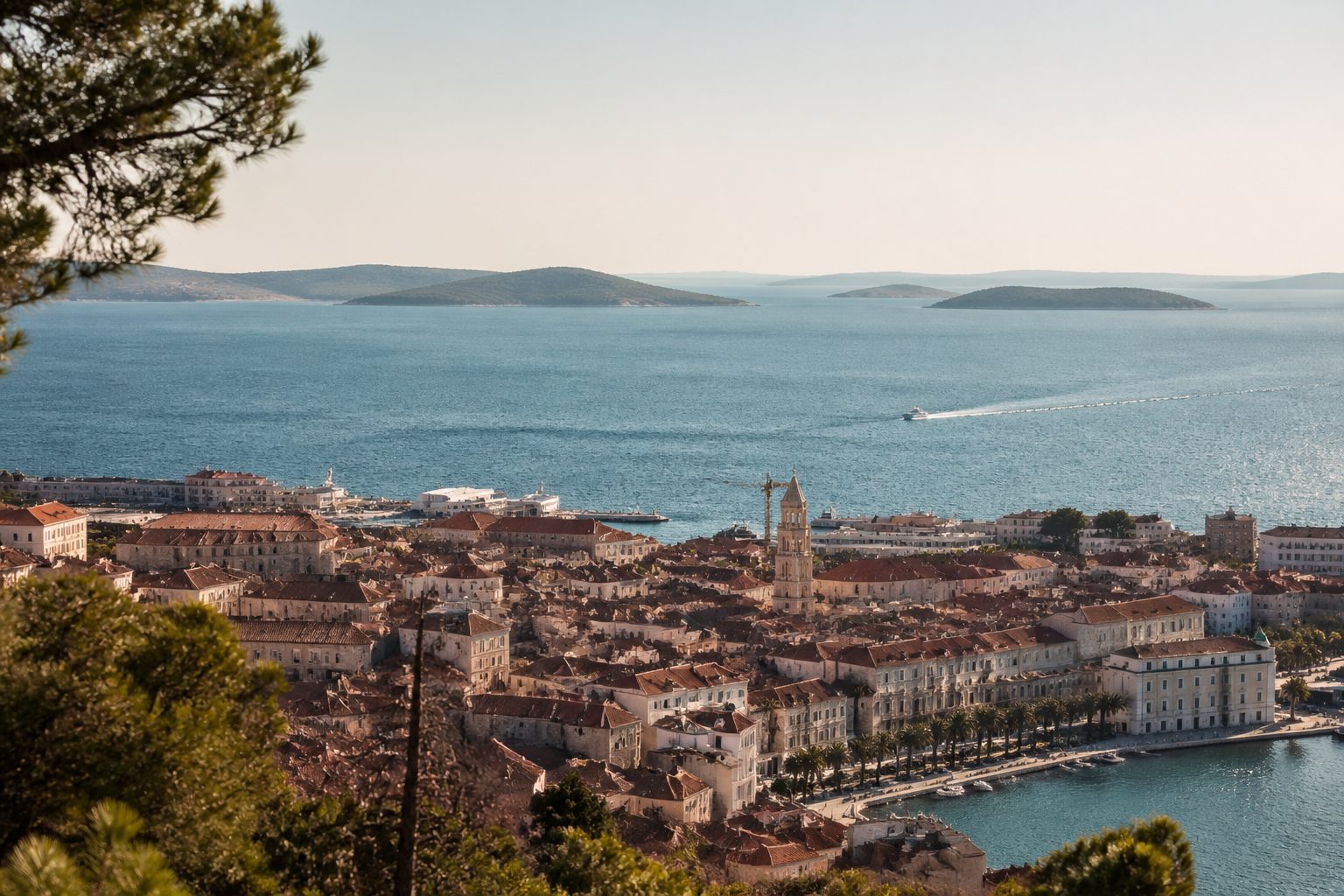
Split does not feel like a museum. It feels like a city that happens to live inside one. Three thousand people still sleep, cook and argue with their landlords inside the walls Diocletian raised in 305 CE, and the Roman emperor’s retirement fortress is the only ancient palace on earth that never stopped being used. Walk the Peristyle at midnight and a tenor will sometimes climb the cathedral steps to sing a klapa line into the marble silence. It is not a performance. It is just Tuesday.
Two or three nights here makes sense as your starting hub. Hotel Cornaro sits a thirty-second walk from the palace gate, four-star, summer rates running 250 to 380 euros depending on week. Heritage Hotel 19 wedges itself directly inside the palace stone, a boutique splurge with vaulted ceilings older than most countries. For more space and a kitchen, Vrbo apartments inside the walls run 180 to 320 euros for a two-bedroom, and waking up to morning light on Roman columns is its own kind of luxury. Booking.com inventory expands by hundreds of options once you widen the search to include Varoš, the steep stone neighborhood just west of the palace, and Bačvice, the beach district ten minutes east.
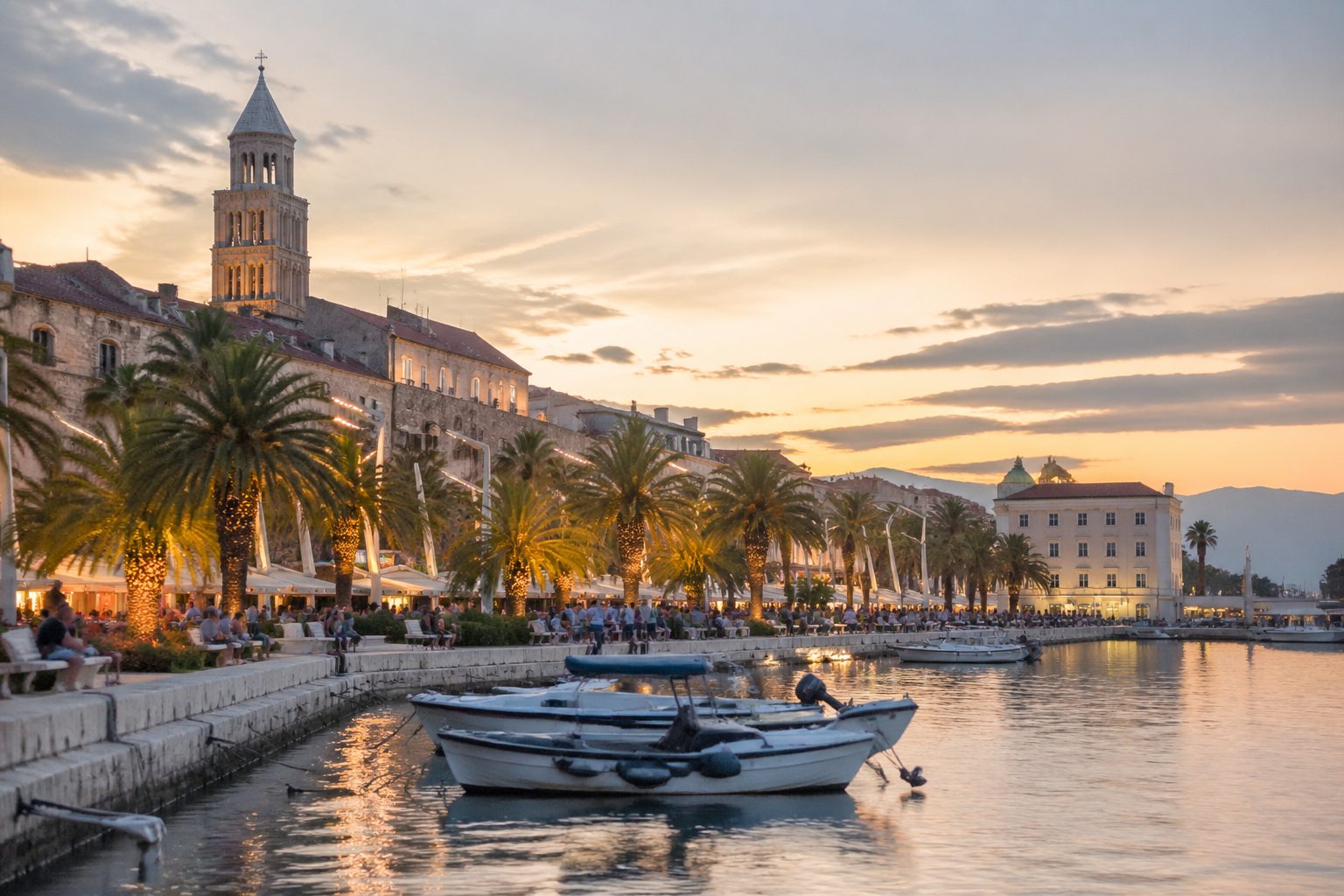
The Riva waterfront promenade is the city’s living room. Espresso in the morning, ice cream from Luka at midday, an Aperol on a wicker chair as the ferries unload at dusk. Climb Marjan, the pine-forested hill at the western edge of town, for a fifteen-minute walk to a viewpoint that scatters Brač, Šolta and Hvar across the horizon. Day-trip Klis Fortress (the Game of Thrones set for Meereen) twenty minutes inland, or the UNESCO town of Trogir thirty minutes west, where the cathedral portal carved by Master Radovan in 1240 alone justifies the drive.
Split airport (SPU) is twenty-five minutes from the center by taxi, fifteen euros by Pleso bus to the harbor. Land on a Saturday and the catamaran terminals are the only place in town busier than Pazar market. Eat lokum at Kantun Paulina, dinner at Konoba Marjan or Bokeria, and resist the temptation to order a steak at a seafood town.
The Ferry Network: Jadrolinija, Krilo & TP Line Catamarans
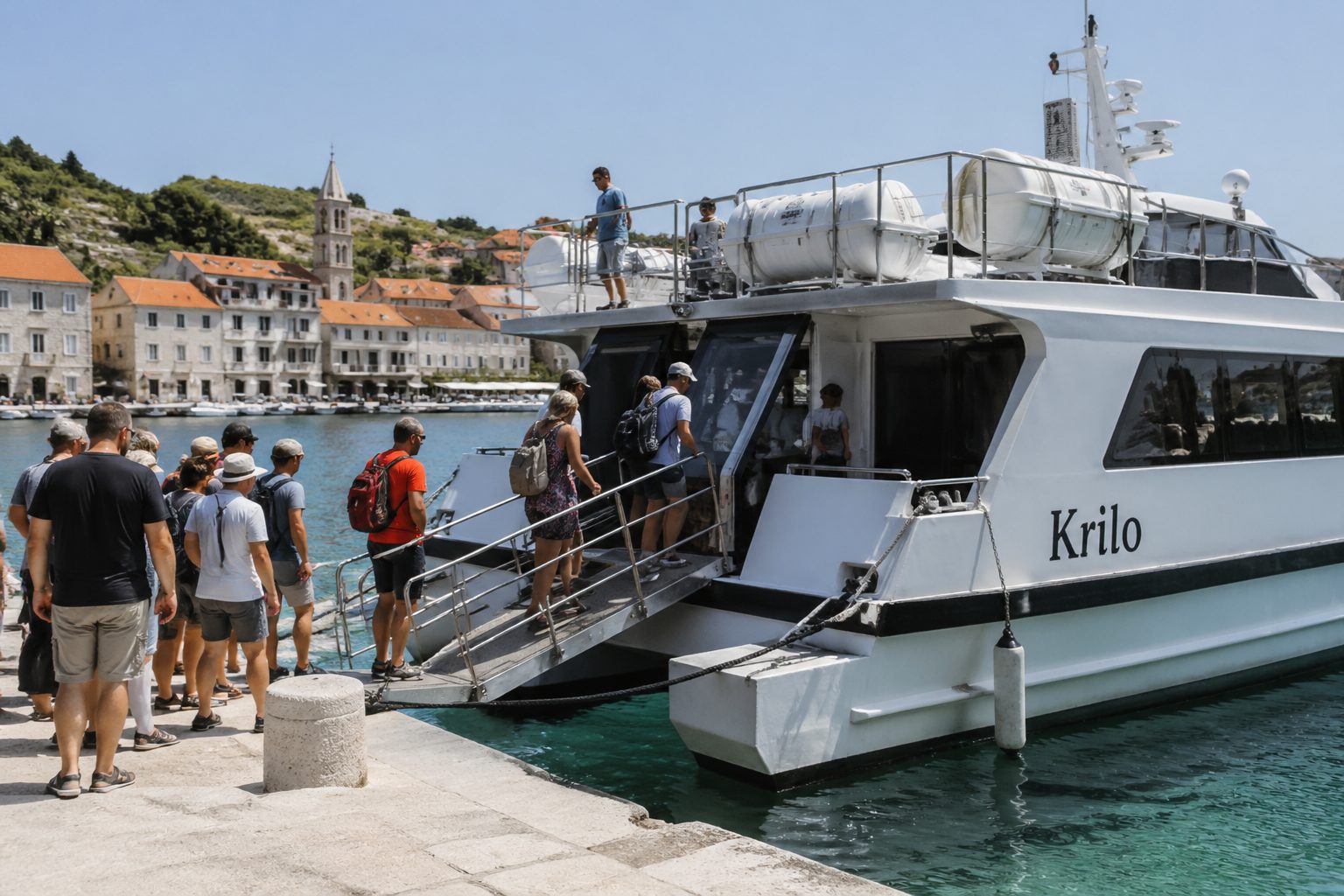
Three operators carry almost every passenger across Dalmatian water, and learning their differences saves time, money and one or two missed crossings. Jadrolinija is the state operator, the slow, dependable workhorse with the largest fleet and the only car ferries on most routes. Tickets run 4 to 12 euros for a foot passenger, 30 to 90 euros if you bring a vehicle. Boats are roomy, sundecks generous, the cafeteria sells reasonable burek. Speed is not the strength. Split to Hvar Town on a Jadrolinija car ferry takes around two hours and stops first at Stari Grad on the north side of the island, requiring a thirty-minute bus or taxi transfer to reach Hvar Town itself.
Krilo is the catamaran operator that has eaten the most market share in the last three summers. Passenger only, no vehicles, fast, and the route network has expanded to cover almost every island a tourist actually wants. Tickets sit between 12 and 30 euros depending on distance. A Krilo run from Split direct to Hvar Town takes about an hour, and the same boat continues to Korčula in another ninety minutes. The seats are airline-style, the air-conditioning aggressive, the schedule reliable.
TP Line runs a smaller catamaran fleet at similar prices, useful as a back-up when Krilo sells out and as the operator on a few niche routes. Between the three, the rule of thumb is simple. Take Krilo or TP Line catamarans for the Split, Hvar, Korčula triangle. Take Jadrolinija only when you have a vehicle to bring or when you want a slow scenic crossing in shoulder season.
Bookings open thirty to sixty days in advance depending on operator. In July and August, that is the window. Book through the operator websites (jadrolinija.hr, krilo.hr, tp-line.hr) or use an aggregator like Ferryhopper or Omio that consolidates schedules across all three with a single checkout. Omio in particular is the most useful single tool if you are also booking trains or buses from Zagreb or onward coaches to Dubrovnik through the Pelješac Bridge — one cart, one confirmation, one app. Avoid same-day harbor purchases in summer; you will lose a half-day waiting for the next departure with seats.
Hvar: Lavender, Glamour, Pakleni Islands
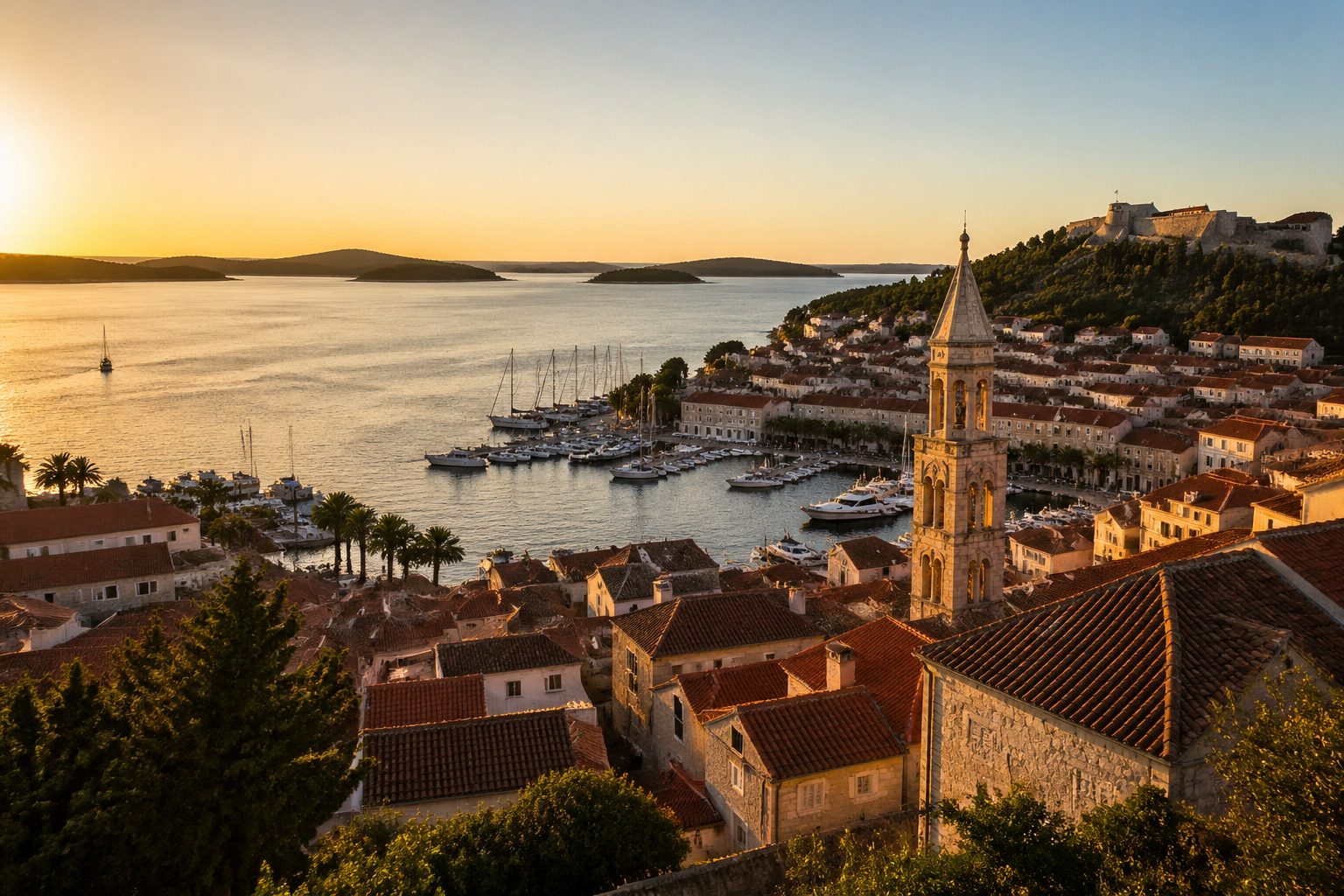
Hvar splits opinion the way it splits the day. Mornings on the island belong to lavender farmers and cyclists on the eighty-seven kilometres of marked trails that climb inland through stone-walled fields. Evenings belong to a different species entirely. Carpe Diem on the Riva opens its doors at midnight and the queue still snakes past the cathedral. Hula Hula Beach Club sells sunset cocktails at twelve euros and considers it modest pricing. Megayachts triple-park at the inner harbor in August and crew members run errands in flip-flops and gold watches.
Which Hvar you get depends on where you stay. Hvar Town is the postcard — Venetian Loggia, hilltop Spanish Fortress, the bell tower that frames every photograph — and also the busy one. Stari Grad, twenty minutes north by taxi or fifty minutes on the Hvarbus public service, is the older, quieter UNESCO-listed half of the island. Its harbor is shaped like a crooked elbow, its alleys carry the smell of fig leaves and grilled sardines, and you can still find a konoba where the owner brings out a clay jug of homemade rakija without being asked.
For harbor glamour, Adriana Hvar Spa Hotel earns its four stars: an infinity rooftop pool stares directly at Pakleni and rooms run 380 to 650 euros in peak summer. Heritage Hotel Park Hvar sits one street back, boutique, 280 to 450 euros, more breathing room for less money. Stari Grad rewards a Vrbo old-stone-house rental at 150 to 280 euros a night, with windows you can throw open to the smell of a neighbor’s basil. Booking.com lists hundreds of apartments and pensions across the island; filtering for Stari Grad, Vrboska or Jelsa rather than Hvar Town drops the average rate by a third.
The Pakleni Islands archipelago lies a fifteen-minute water-taxi off Hvar Town. Carpe Diem Beach Club on Stipanska is the famous one, but Palmižana on Sveti Klement is the prettier and quieter day-trip, with a botanical garden, two excellent seafood konobas (Toto’s and Meneghello) and pebble coves you reach by walking. Renting a small open boat for the day from Hvar harbor runs 180 to 260 euros and removes you from the cocktail-tour circuit entirely.
Korčula: The Marco Polo Island & Wine Country
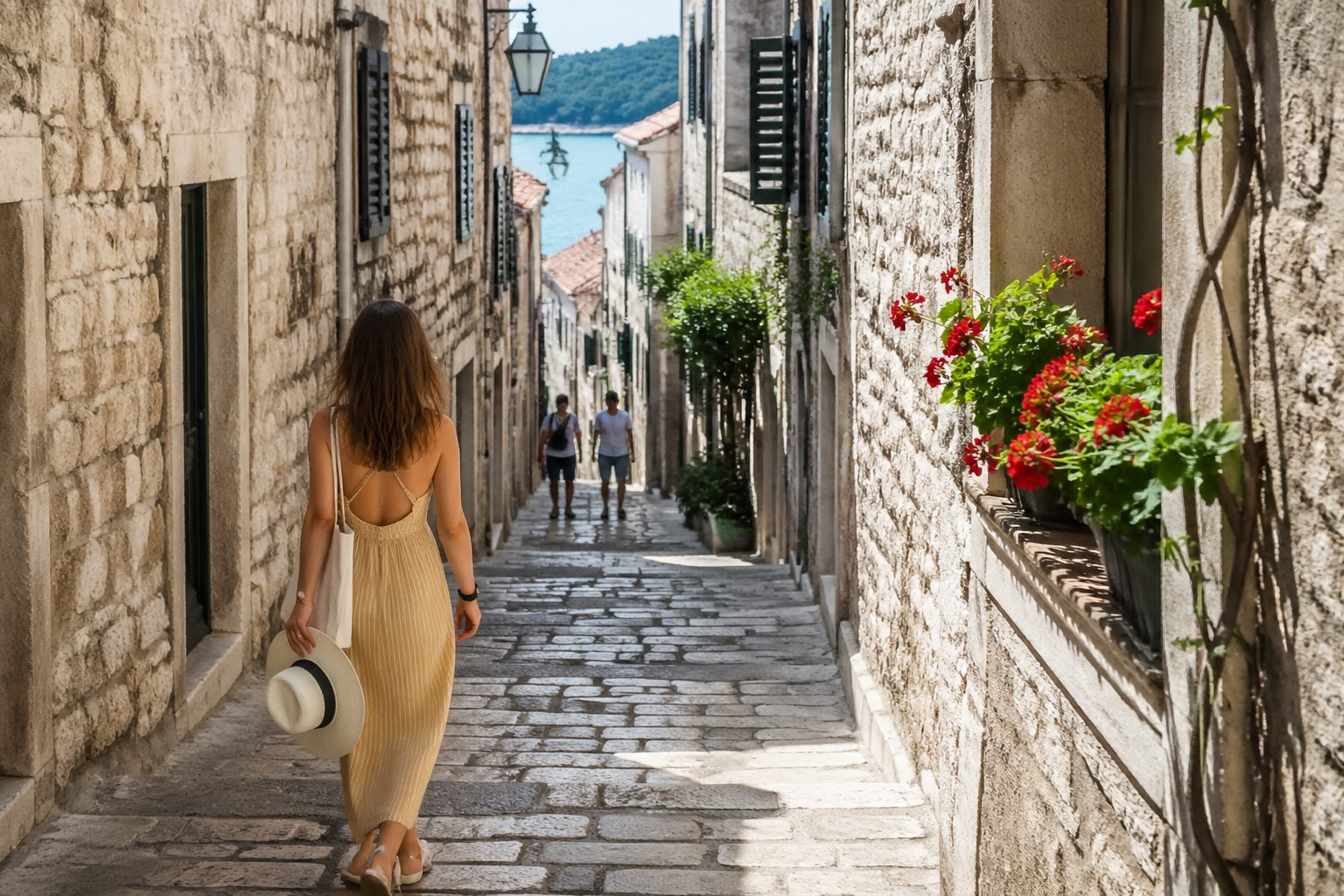
Korčula is the island most travellers skip and almost always regret skipping. The medieval old town sits on a thumb of land jutting into the channel that separates it from the Pelješac peninsula, its streets laid out in a fishbone grid in the thirteenth century to channel the maestral wind through the city and bleed the summer heat. Walk those streets at four in the afternoon and you can feel the design working — the air moves, the stone breathes, the tourists who arrived on the morning catamaran have all gone for ice cream.
The Marco Polo claim is contested by Venice and most historians, but Korčula Town owns the legend hard enough that the supposed birthplace house (1254) has been turned into a small museum on a side street near the cathedral. Skip it if you are in a hurry. Do not skip the Moreška sword dance, performed every Monday evening from July through September on a stone stage outside the city walls. Two armies of dancers in period costume fight a choreographed battle that has been performed continuously since the sixteenth century. Tickets run twelve euros and sell out by lunchtime.
The wine is the other reason to come. Korčula grows two indigenous white grapes that exist almost nowhere else: Pošip, the broad-shouldered fuller-bodied one, and Grk, lighter and saltier, grown only in the sandy soil around Lumbarda six kilometres east of the old town. Bire, Krajančić and Toreta wineries all run tastings in the Lumbarda flats, most charging twenty to thirty-five euros for a sit-down with five wines and bread, olive oil and pršut. GetYourGuide lists half-day Korčula wine tours that bundle three wineries with hotel pickup for around eighty euros.
Lumbarda is also where the best beaches sit. Vela Pržina is a soft pale-sand crescent — rare in Croatia, where pebble is the rule — and Bilin Žal is the rocky cove preferred by locals. From Korčula Town the thirty-five-minute Krilo catamaran to Mljet opens up Mljet National Park as a doable day trip, with the famous freshwater lake-within-a-lake and the small monastery island in the middle. GetYourGuide lists guided Mljet excursions from Korčula for around ninety euros per person, including park entry and the island shuttle. Stay at Lešić Dimitri Palace if the budget stretches (480 to 720 euros, five-star, in the old town); Hotel Korsal sits ten minutes east on the harbor at half that. For apartments inside the walls, search Vrbo and Booking.com under Korčula Town for stone-house rentals at 140 to 240 euros.
Vis: Croatia’s Last Authentic Island
Vis is the island the Yugoslav army kept closed to foreigners until 1989, and the mass-tourism boom only really arrived in the late 1990s. There is no airport, no helicopter pad, no Hilton, no McDonald’s. Catamaran from Split runs ninety minutes to two and a half hours depending on operator, and that single barrier of distance has done more to preserve Vis than any zoning law. Mamma Mia 2 filmed here in 2018 and the inventory ticked up modestly afterward, but a search on Booking.com or Vrbo for the first two weeks of August will still return shockingly thin results. Book six months out or move flexibly.
Two harbor towns hold most of the island. Vis Town on the north coast carries an old Venetian quarter, the long Riva curving past pastel houses, a stone-vaulted museum in the former arsenal. Komiža on the southwest is smaller, scruffier, more authentic — a working fishing village where the boats unload tuna at five in the morning and the konobas open at noon for whoever wandered down. Stay in either; do not try to commute between them in summer without a scooter or a rental car.
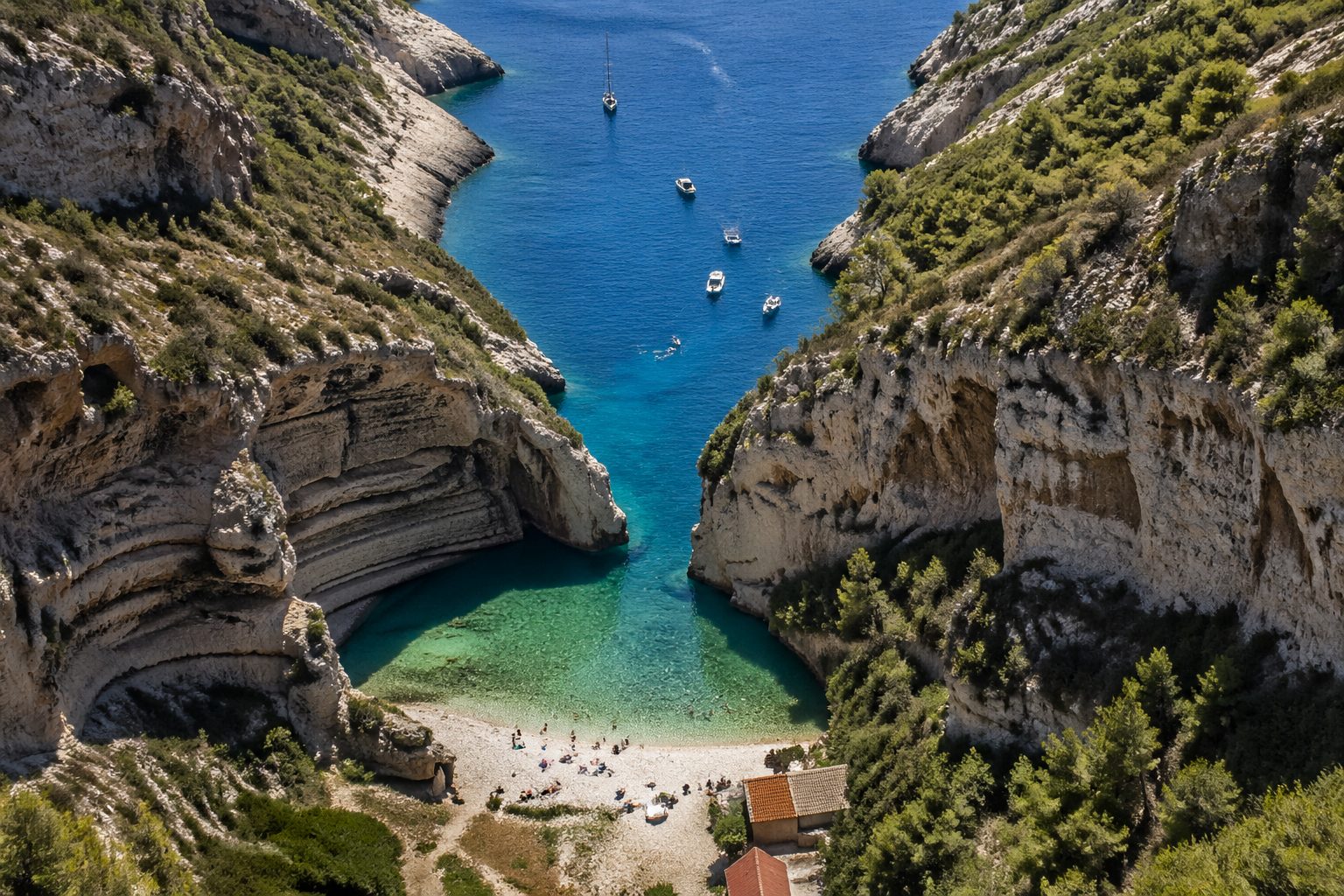
Stiniva Beach, on the south side of the island, was voted Europe’s best beach by European Best Destinations in 2016 and the title still mostly fits. A narrow gap between two cliff-walls opens onto a perfect pebble cove the size of a city block, swimming pool blue, accessible by a fifteen-minute scramble down a goat path or by boat tour from Komiža. Go before ten in the morning or after five in the evening; midday brings the day-trip catamarans from Split and Hvar in formation.
The Blue Cave on the small island of Biševo, half an hour by boat from Komiža, glows electric cobalt for about ninety minutes a day when the sun strikes the underwater entrance at the right angle. Boat tours run sixty to ninety euros per person and GetYourGuide lists several. Pair it with the Stiniva and Green Cave swimming circuit for a full day on the water.
Food and wine on Vis lean fiercely local. Vugava is a white grape that exists almost exclusively on Vis, paired naturally with the island’s Plavac Mali reds. Eat peka — lamb, octopus or veal slow-cooked under a bell-shaped iron lid buried in embers — at Roki’s Konoba in the Plisko Polje vineyard interior, or at Konoba Stončica on the small bay east of Vis Town. Both require booking three to four hours ahead. The reward is a meal you will measure other meals against for a long time.
Dubrovnik: The South-End Bookend
Dubrovnik works best as a bookend to the trip rather than a middle stop. The catamaran from Korčula runs about three hours and the coach via the new Pelješac Bridge — opened in 2022, the bypass that finally lets you reach Dubrovnik without crossing the Bosnian border twice — takes around two and a half. Either way, treat the city as the closing chord and fly out from Dubrovnik airport (DBV) rather than backtracking to Split.
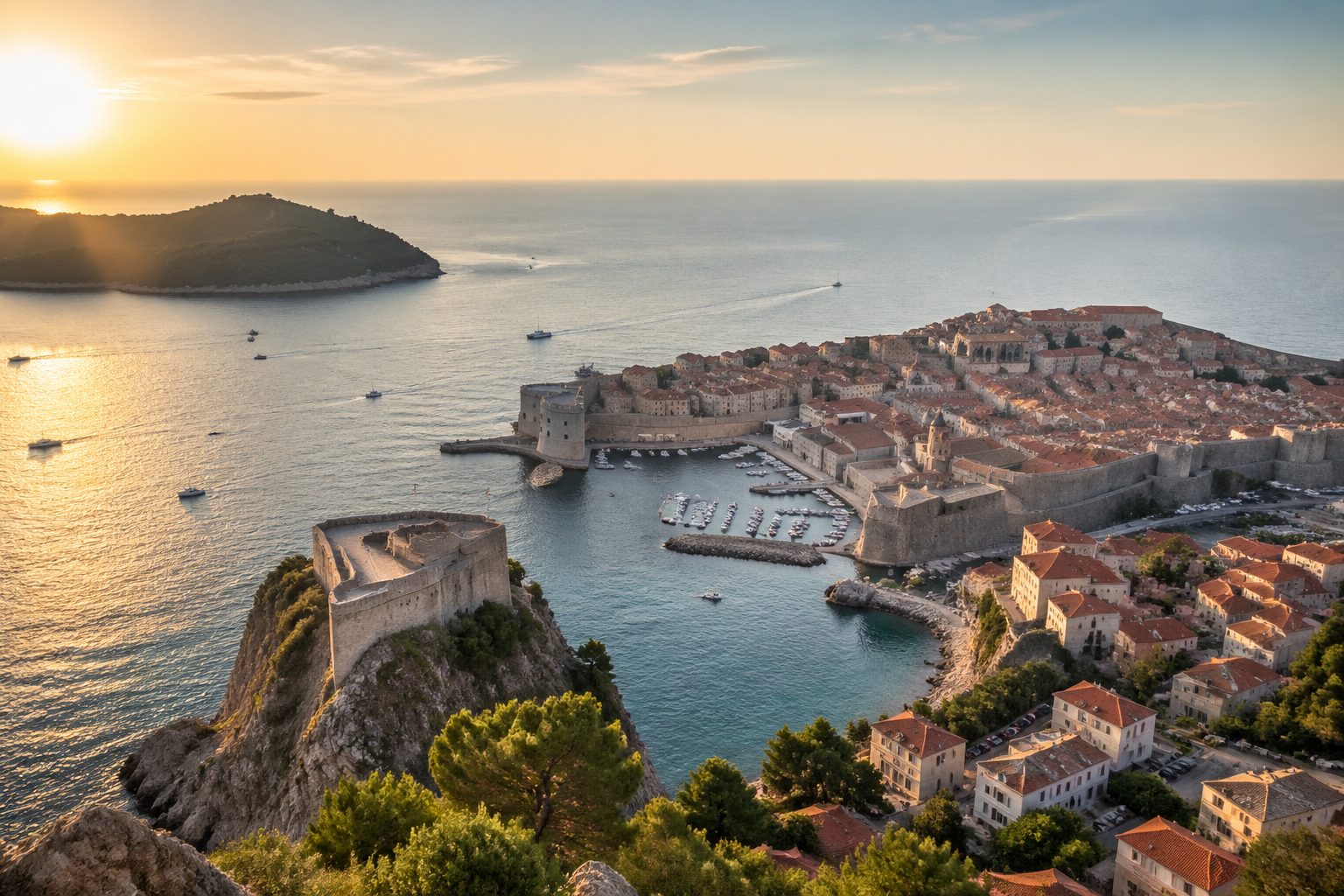
The Old Town walls deserve the hype. Two kilometres of fortification, thirty-five euros to enter, two hours to walk slowly with stops, and the views across terracotta rooftops and out to Lokrum and Cavtat are the reason cruise ships keep arriving. That last detail is the whole problem. In peak summer four to six ships dock simultaneously and twelve thousand day-trippers can crowd into walls that were built for fifteen hundred residents. The walking-the-walls timing rule is hard: gates open at eight in the morning, and the first ninety minutes are the only window where you will not be walking single-file behind a tour-group flag. Stradun, the limestone main artery polished slick by centuries of footfall, is the same calculation. Eight in the morning, glorious. Eleven, claustrophobic.
Where you sleep changes the trip. Hotel Excelsior on the cliff just east of the Old Town is the historic five-star (rooms 480 to 850 euros, balcony views directly onto the walls), all marble and old-money calm. Stradun Heritage rentals inside the walls are atmospheric and walk-everywhere convenient (180 to 360 euros, cobblestone-suitcase trade-off). For value, the Lapad peninsula fifteen minutes by bus from the Old Town offers neighborhood feel, swimming bays at the end of every street, and apartment rentals at 90 to 160 euros. Booking.com inventory is widest in Lapad and the Ploče district just east of Old Town.
Climb the Mt Srđ cable car at sunset for the postcard shot. Walk Cavtat thirty minutes south for a quieter base with its own Mestrović museum and a calmer harbor. Take the fifteen-minute ferry to Lokrum island for the botanical gardens, the abandoned Benedictine monastery and the iron throne replica from Game of Thrones tucked into a back room.
Suggested 10-Day Island-Hop Itinerary
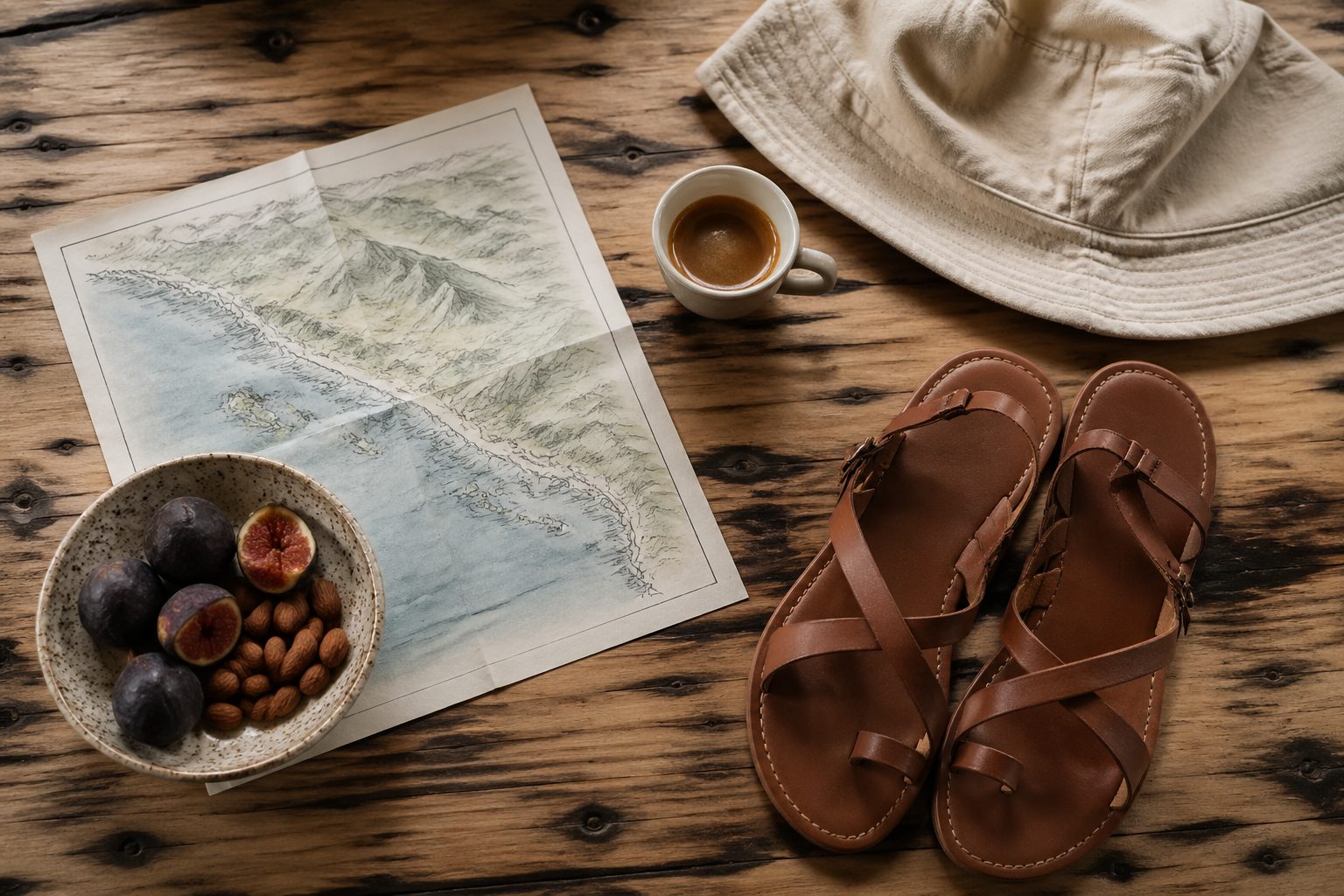
Days one and two settle you into Split. Land at SPU, taxi to a palace-walls apartment, walk the Peristyle, climb Marjan for sunset, dinner at Konoba Marjan. Day two takes Trogir in the morning (forty-five minutes by Bus 37 from the city), Klis Fortress in the afternoon, and a long late dinner of grilled sardines on Bačvice beach.
Day three is your first crossing. Morning Krilo Split to Hvar Town, around an hour, check into your harborside hotel by midday. Afternoon swim at Pokonji Dol or rent a small open boat for a self-drive Pakleni circuit. GetYourGuide lists guided Pakleni boat day-tours from Hvar Town with stops at Carpe Diem Beach Club and Palmižana for around seventy euros if the rental option feels ambitious. Day four is the Stari Grad pivot — taxi north for the UNESCO old town, the lavender drive across the central plain, and dinner at Konoba Menego before catching the last bus back.
Day five takes the late-morning Krilo Hvar to Korčula, about two hours. Walk the fishbone grid before dinner. Day six is wine country: a hired-driver loop or GetYourGuide tour through Lumbarda for Bire, Krajančić and Toreta, swim Vela Pržina in the afternoon, watch the Moreška sword dance at nine in the evening if it is a Monday.
Day seven is the choose-your-own-adventure pivot. Option A: Krilo Korčula to Mljet, thirty-five minutes, day trip the national park lakes, return to sleep in Korčula. Option B: Krilo Korčula direct to Dubrovnik, three hours, settle into Lapad. Option C, the Vis detour for travellers with an extra day to spend: Krilo back through Hvar to Vis, four hours total, two nights. Add days nine and ten to the itinerary if you choose C.
Days eight and nine in Dubrovnik. Walk the walls at eight on day eight before the cruise crowds, Mt Srđ cable car at sunset, dinner in Cavtat. Day nine is a Lokrum half-day with afternoon recovery time at a Lapad cove. Day ten flies out of DBV. The whole loop covers four named islands and the two best mainland anchor cities, with three ferry crossings, no rental car required, and enough flexibility to swap a Vis side-quest in if shoulder-season inventory permits.
Croatia Island Hop Budget: Real 2026 Numbers in EUR
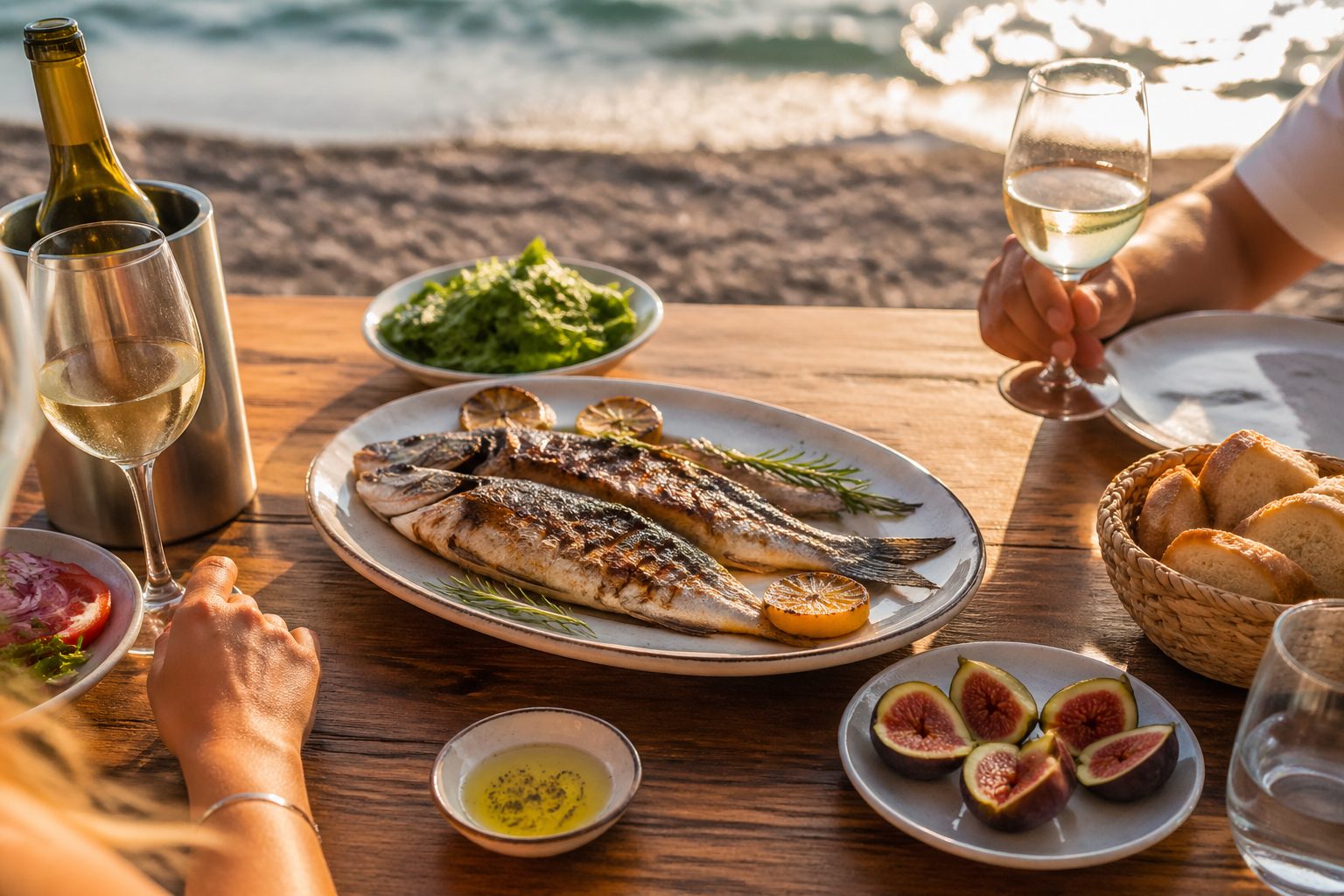
A ten-day couples hop, two travellers sharing a room, mid-tier comfort, sketches out cleanly in 2026 euros. Hotels and apartments for nine nights — split roughly two in Split, two on Hvar, two on Korčula, two in Dubrovnik plus a wildcard — run 2,100 to 2,900 euros total at the four-star and quality-apartment tier. Booking.com inventory typically comes in five to ten percent under headline rack rates; Vrbo wins on apartment value when you want a kitchen and laundry.
Ferries are the smallest line item. Three Krilo crossings (Split-Hvar, Hvar-Korčula, Korčula-Dubrovnik) come in around ninety to a hundred and thirty euros total for two passengers, all-in. Book through the operator app or via Omio if you are also adding a Zagreb-Split overnight train or a Dubrovnik-onward bus into the cart.
Food lands at 800 to 1,100 euros across the ten days for two. That assumes one or two peka konoba dinners (around 60 to 90 euros for two with wine), several seafood-and-pasta dinners at the 50-to-70 mark, a few casual lunches of grilled sardines and a glass of Pošip, and breakfast almost always assembled from a Konzum, Tommy or Plodine supermarket — a six-euro spread of yogurt, fig jam, prosciutto and a still-warm burek beats most hotel breakfasts and saves twenty euros a morning.
Wine tastings at four wineries across Hvar and Korčula (Tomić on Hvar, Bire and Krajančić on Korčula, plus one of the Pelješac stops if you take the coach to Dubrovnik) total around 160 euros for two. Museum and city-wall entries — Diocletian’s cellars, the Korčula cathedral treasury, the Dubrovnik walls — add up to around 90 euros. Boat day-trips for Pakleni and Mljet together cost around 220 euros for two through GetYourGuide. Inter-island water-taxis and short transfers run another sixty. A roaming-friendly Croatian SIM card costs fifteen euros.
Grand total, two people, ten days, ex-flights: roughly 3,535 to 4,765 euros, or 1,770 to 2,380 per person. The save-money rules are simple. Book everything, especially catamarans, online and at least thirty days ahead. Eat at konobas in the back streets, not at the Riva-front restaurants where superyacht crews are grabbing quick lunches at marked-up prices. Carry a refillable water bottle (Croatia tap water is excellent everywhere). And if shoulder-season works for your calendar, mid-May through mid-June and the second half of September deliver the same swimming weather at thirty to forty percent off summer rates, with thinner cruise crowds in Dubrovnik and actual table availability at the konobas you have been reading about.
Frequently Asked Questions
Mid-May through mid-June and the second half of September are the sweet spots. Sea temperature is swimmable (20-24°C), most konobas and ferries are running full schedules, and rates run 30 to 40 percent below July-August peaks. July and August deliver the warmest water and the most nightlife on Hvar but bring the heaviest crowds and require booking accommodation and Krilo catamarans 60 to 90 days in advance. Avoid late October through April unless you specifically want a quiet shoulder-shoulder visit — many island restaurants and boat tours close, and ferry frequencies drop sharply.
No. The Split-Hvar-Korčula-Dubrovnik route is built for foot passengers using Krilo and TP Line catamarans. A car is actively inconvenient on Hvar Town, useless inside Korčula’s pedestrian old town, and a parking nightmare in Dubrovnik. Rent a vehicle only if you plan to add a full mainland coast loop with stops in Zadar, Šibenik, Trogir or the Plitvice Lakes inland — and even then, return the car at Split before you start the islands. For day trips on the islands themselves, hire a scooter or use the Hvarbus and Korčula local buses.
For July and August departures, 30 to 60 days ahead is the rule. Krilo catamaran reservations are mandatory and routinely sell out for popular morning Split-to-Hvar and Hvar-to-Korčula sailings. Book through krilo.hr, jadrolinija.hr, tp-line.hr, or use Omio or Ferryhopper as a multi-operator aggregator. In May-June and September, 7 to 14 days ahead is generally enough. Off-season (October-April), buying at the harbor on the day usually still works, but check schedules carefully because winter frequencies drop to one or two boats per day on most routes.
It depends entirely on what you want from an island. Hvar is more glamorous, more connected (faster ferries, more flights via Brač), better for nightlife at Carpe Diem and Hula Hula, and has the Pakleni Islands as a built-in side-trip. It is also significantly more crowded and expensive in peak summer, with restaurant prices on the Riva that can shock first-time visitors. Korčula is quieter, cheaper, has the better-preserved medieval old town, the more interesting wine scene with Pošip and Grk, and the Mljet National Park day-trip option. Most travellers who spend two nights on each end up wishing they had given Korčula three.
Yes, if you can spare two nights and book accommodation early. Vis is the most authentic Dalmatian island still — no airport, no large hotels, harbor villages that feel like the 1980s with wifi. Stiniva Beach, the Blue Cave at Biševo, peka dinners at Roki’s Konoba, and Vugava wine grown nowhere else on earth are reasons to make the trip. The downsides are real: catamaran service is less frequent than to Hvar or Korčula, July-August Booking.com inventory is genuinely thin (book six months ahead), and there is no five-star resort if that is what you wanted. For a first Croatia trip with limited time, skip Vis and prioritize Korčula. For a second visit or a slow-travel trip, Vis is the highlight.
Three rules. First, walk the city walls at eight in the morning, not after eleven — gates open at 8 AM and the first 90 minutes are the only window without conga-line crowds. Second, sleep outside the Old Town in Lapad, Ploče or nearby Cavtat; the Old Town is for daytime exploration and dinner, not lugging suitcases over slick limestone. Third, check cruisetimetables.com or the port website for ship arrivals during your dates and plan your indoor museum visits (Rector’s Palace, Maritime Museum) for cruise-heavy afternoons while exploring the alleys and Stradun in the early morning. October through April is a different city entirely with almost no cruise traffic.
Peka is the Dalmatian slow-cooked dish where lamb, veal, octopus or chicken is layered with potatoes and herbs in a shallow pan, covered with a dome-shaped iron lid called a peka or sač, and buried in hot embers for two to three hours. The result is meltingly tender meat with smoky, rosemary-laced potatoes that absorb every juice. Order it at Konoba Menego or Konoba Lola in Hvar Town, Konoba Mate in Pupnat (Korčula), or Roki’s Konoba on Vis. Peka requires booking 3 to 4 hours ahead because the cooking time is real — never trust a restaurant that promises peka in twenty minutes.
