
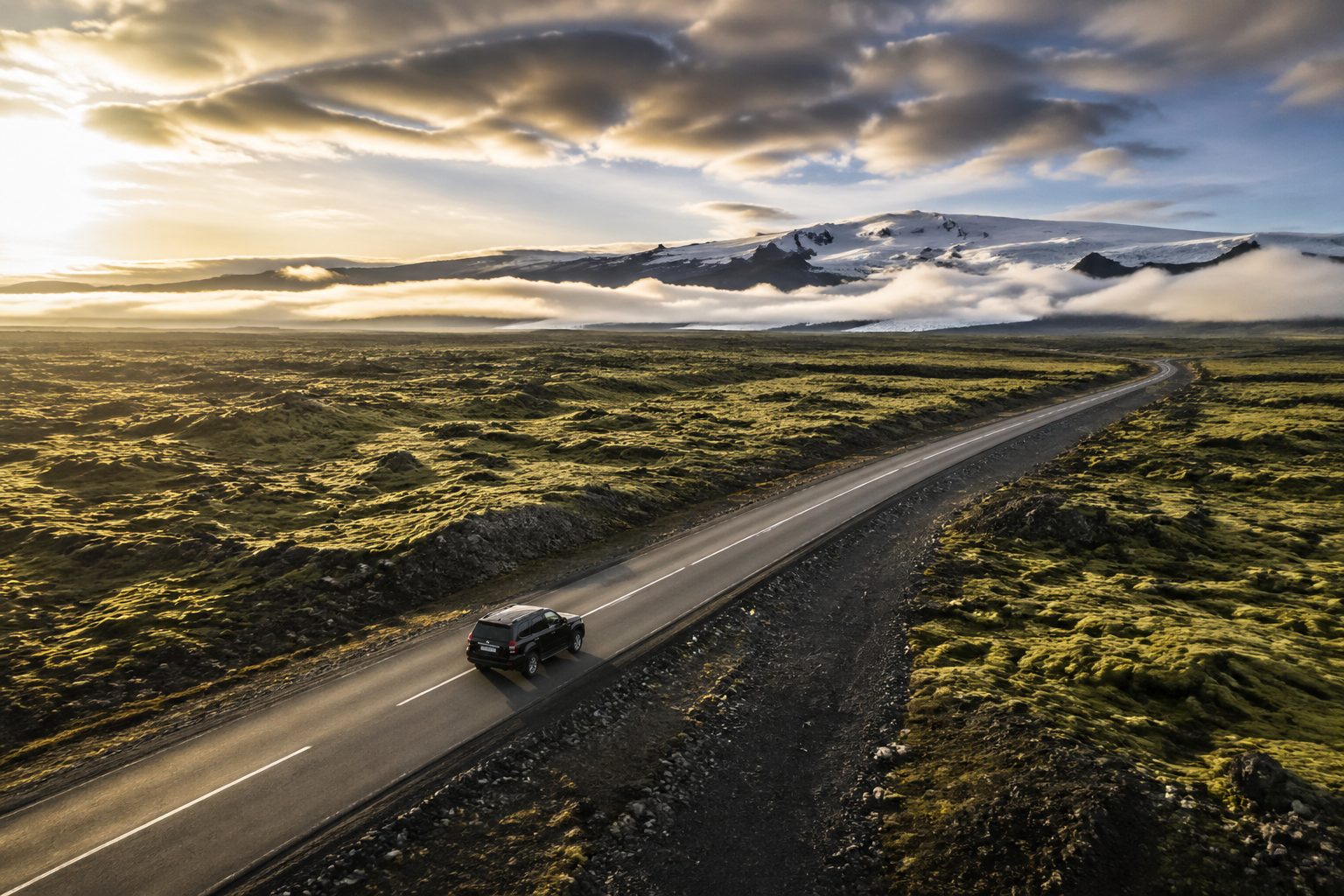
Why the Ring Road Is the Best Way to See Iceland in 2026
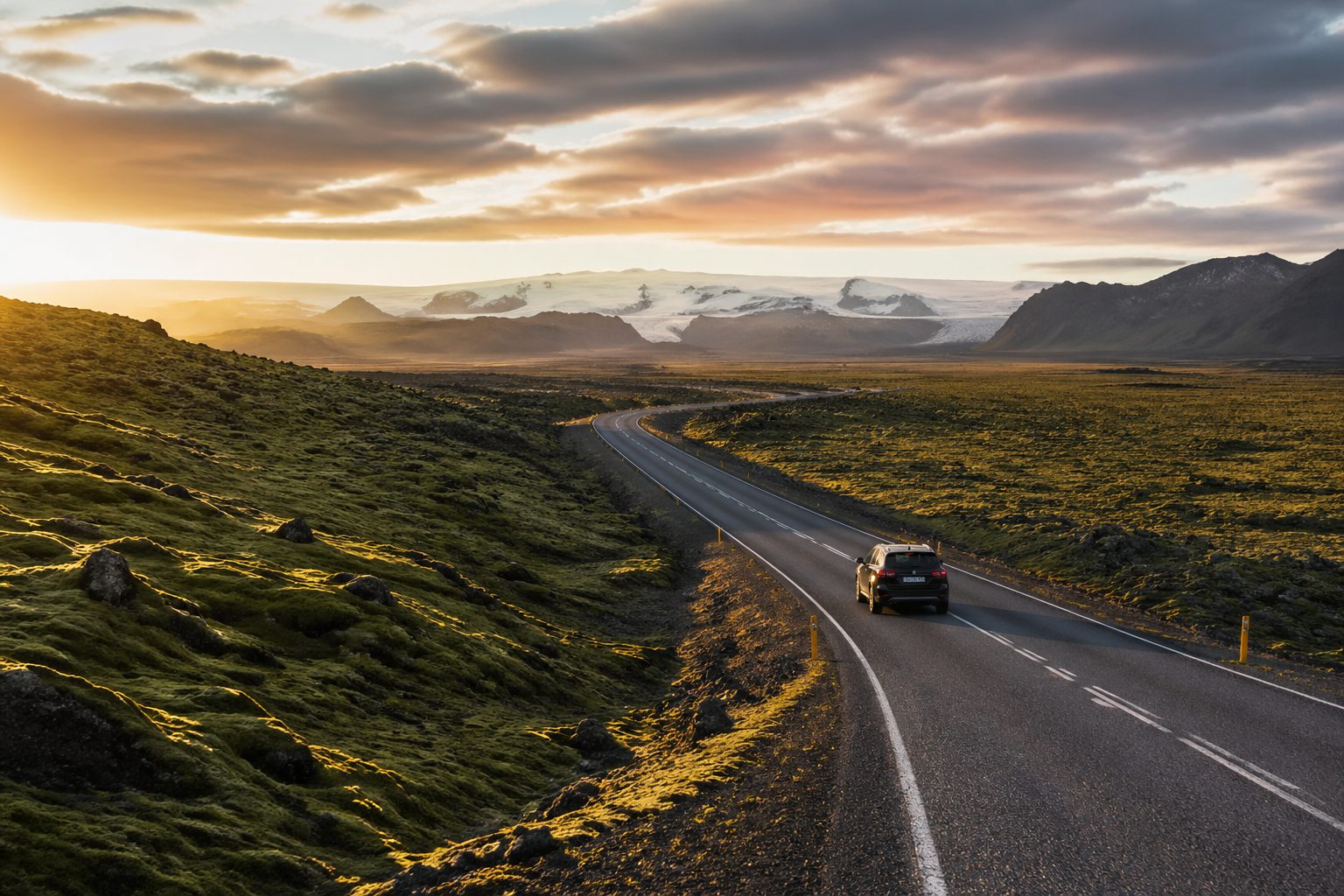
Picture yourself easing off the throttle at 2 a.m. on a stretch of empty asphalt south of Vík. The sun has not actually set; it is hovering somewhere between sunset and sunrise, painting the moss on the lava field a colour that does not really exist on a paint chip. There is no other car. There is no fence. There is just you, the long black ribbon of Route 1, and a wind that smells faintly of sulphur and salt. This is what the Ring Road gives you — not a sightseeing checklist, but a 1,332-kilometre conversation with a country that refuses to sit still.
The Ring Road is Iceland’s national highway, a single paved loop that wraps the entire island like a worn leather strap. As of 2026 it is fully sealed end to end. The last gravel section through the East Fjords was paved in 2024, and a new tunnel under Hvalfjörður trims roughly twenty minutes off northern transit times. The speed cameras have been refreshed, the signage is consistent, and the tourism board now publishes live road-condition data you can pull up on your phone before each leg.
You could see Iceland from a tour bus. You will not see what you came for. Coach circuits run on rigid schedules, dump forty-eight people at every photo stop, and skip the small detours where a hand-painted sign points to a hot spring you have never heard of. Day trips out of Reykjavík cover the Golden Circle and call it Iceland; that is like flying into Paris and saying you have done France.
A self-drive flips the equation. You decide when to chase the Northern Lights at 1 a.m. because the cloud cover broke. You decide to skip a famous waterfall because the parking lot is full of buses, and instead pull over at a nameless one a kilometre later that nobody is photographing. You stop for a sheep crossing. You stay an extra night in Höfn because the langoustine soup at Pakkhús was that good. The road does not run you. You run the road. Travelsfy was built for travellers who want exactly that kind of agency, and the Ring Road may be the single best argument for handing it to them.
Renting a Car in Iceland: 4WD or 2WD, Insurance, and Hidden Costs
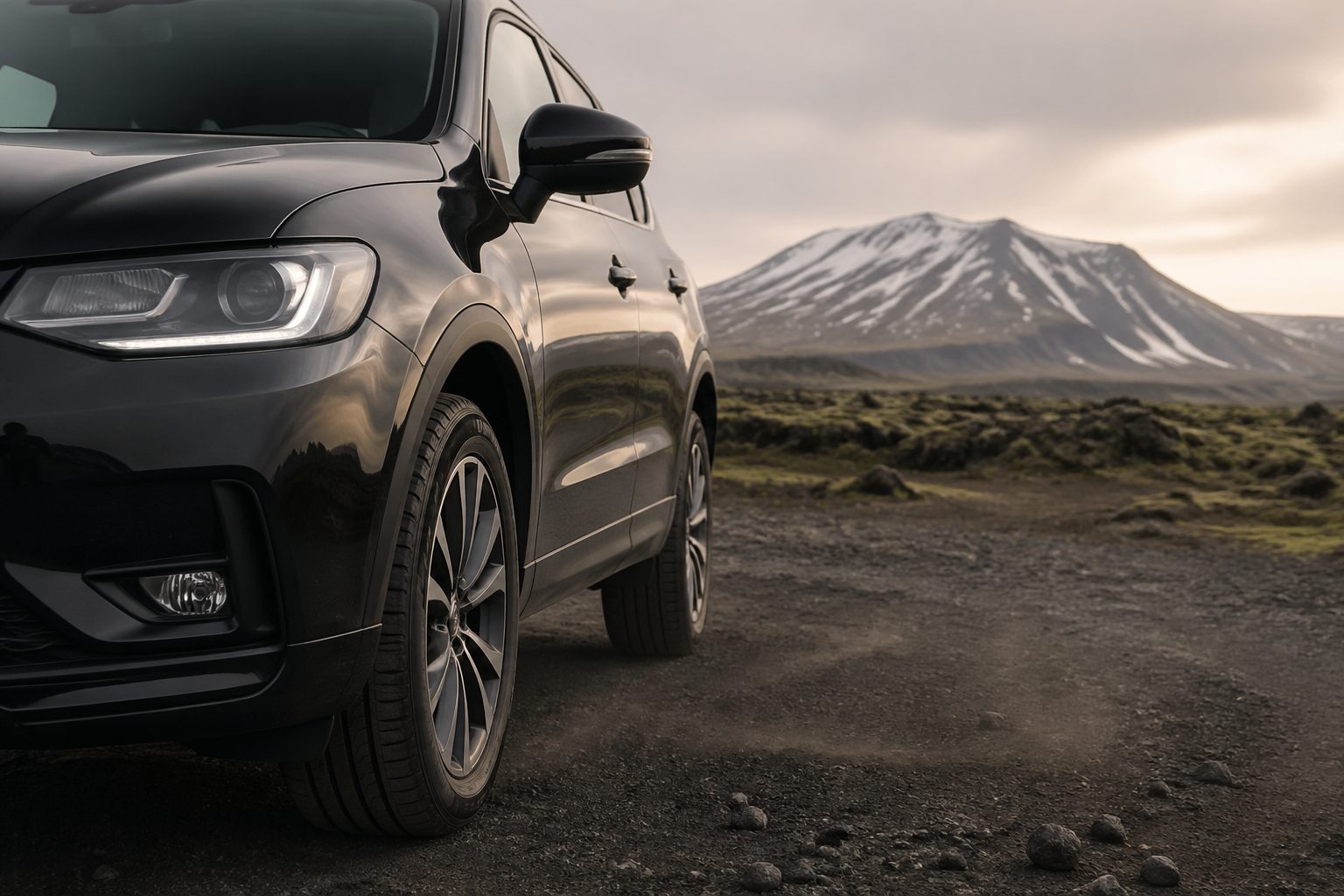
Step out of arrivals at Keflavík International, breathe in the cold ocean air, and brace yourself: the rental car is going to be the single largest line item of your trip. Iceland does not pretend otherwise. Once you accept that, the choices get much simpler.
For a summer Ring Road run between mid-June and early September, a 2WD compact is genuinely fine. Route 1 is paved, flat by mountain-road standards, and rarely closed in summer. Expect roughly €60 to €100 per day for something like a Dacia Duster or a Toyota Yaris. If you plan even a single highland detour onto an F-road — the F35 over Kjölur, the F26 across Sprengisandur, the spur into Landmannalaugar — you legally need 4WD or AWD. F-roads have unbridged river crossings and frost-heaved gravel that will eat a 2WD’s underbody and your damage waiver in the same afternoon. A mid-size 4WD like a RAV4 or Suzuki Vitara runs €130 to €220 per day in summer. Camper vans, which let you collapse the accommodation line item, sit in the €180 to €280 range.
Insurance is where the small print bites. Standard CDW covers collisions but not the two things Iceland excels at destroying: gravel chips on the windscreen and black-sand storms that strip paint to bare metal in minutes. You want Gravel Protection (GP) and Sand and Ash Protection (SAAP) on the contract, often €15 to €30 per day each. Skip them and you can be liable for thousands of euros if the wrong wind comes off Mýrdalssandur on the wrong afternoon.
We suggest you compare DiscoverCars rates side by side before you commit — they aggregate the reputable mid-sized Icelandic operators (Blue Car Rental, Lotus, Geysir, Reykjavík Cars) along with the international brands, and they let you bundle CDW, theft protection, and SAAP/GP at booking rather than getting upsold at the counter. Avoid the bare-bones third-party insurance pop-ups that promise to cover everything for a few euros — most of them will not pay out on Icelandic gravel claims, and you will not learn that until you file. Pay once, read the contract, and drive off knowing exactly what is covered.
Day 1-2: Reykjavik, the Golden Circle & Reykjanes Peninsula
You land at KEF on a Friday morning still smelling of airline coffee, collect the keys, and drive the 45 minutes into Reykjavík through a landscape that looks more like the surface of the moon than anywhere you have been. The new Hvalfjörður approach delivers you into the city centre fast. Park the car. You will not need it for 36 hours.
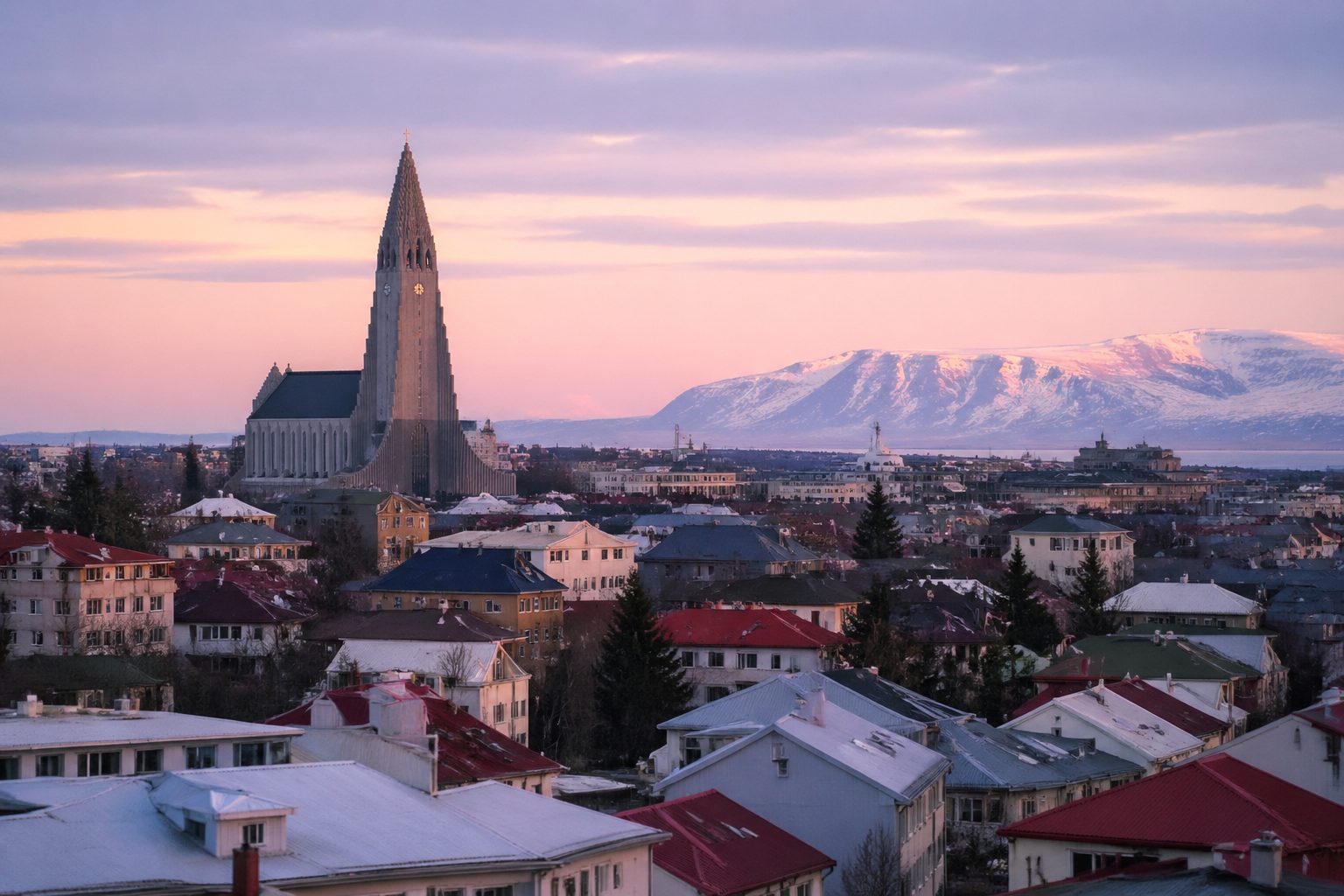
Reykjavík rewards walking. You will smell the harbour first — diesel, fish, wind off Faxaflói. Order a hot dog at Bæjarins Beztu like every prime minister and pop star who has ever passed through; ask for one with everything, eat it standing up, and pretend you were not just charged €5 for it. Wander to Sandholt for a sourdough loaf and a flat white that would hold its own in Melbourne. Hallgrímskirkja sits at the top of the hill, its concrete fluting modelled on basalt columns; the lift to the tower is €12 and worth it for the candy-coloured roofscape below. Down by the water, Harpa concert hall throws fractured light across its honeycomb glass facade. Dinner at Matur og Drykkur leans into Icelandic tradition without being a museum piece; book ahead.
Day two is the Golden Circle, and yes, every visitor does it, and yes, it is still extraordinary. Þingvellir National Park is free and probably the most geologically charged landscape you will ever stand in — the North American and Eurasian tectonic plates pull apart by about two centimetres a year right beneath your feet. The Geysir geothermal area smells of egg yolk and hisses; Strokkur erupts every six to ten minutes. Gullfoss is the kind of waterfall that sends you backing up a few steps without thinking about it.
Finish the day at Secret Lagoon (€25, geothermal river-fed, far less staged than the Blue Lagoon) or, if you doubled back to the city, Sky Lagoon with its infinity edge over the Atlantic. We suggest browsing GetYourGuide for combined Golden Circle plus lagoon tickets — bundling often saves about 15 percent and locks in pickup times. Push on to a guesthouse near Selfoss for night two so you wake up already pointed south.
Day 3-4: South Coast — Waterfalls, Black Beaches & Glacier Lagoons
Day three opens with mist. You leave Selfoss heading east on Route 1 and the south coast unspools — flat green pasture on the left, the cold flank of Eyjafjallajökull glacier on the right, and one waterfall after another tumbling off the old sea cliffs. Seljalandsfoss is the famous one you can walk behind; bring a waterproof shell because the spray is theatrical, and keep your phone in a dry pocket. Skógafoss, twenty minutes further, drops sixty metres in a single sheet and throws rainbows when the sun cooperates. There are 527 metal stairs to the top viewpoint. Climb them; the river above is its own quiet reward.
Reynisfjara is the black-sand beach you have seen on a thousand Instagram feeds, and it is the most genuinely dangerous tourist site in Iceland. Read the signs. The waves here are called sneaker waves for a reason — they reach forty metres further up the beach than the previous one without warning, and tourists die here every couple of years. Stay on the dry sand. The basalt columns of Garðar are stunning from twenty metres back. Lunch in Vík at the harbour-side café, then sleep at Hotel Vík í Mýrdal or, if you want sea sounds outside the window, Black Beach Suites.
Slot a Sólheimajökull glacier walk into the afternoon if you can — €100 to €130 per person, two-hour guided crampon hikes onto blue ice. We suggest browsing Booking.com inventory for Vík; the village fills up fast in summer and the cancellation-flexible rates are worth a few extra euros for weather hedge.
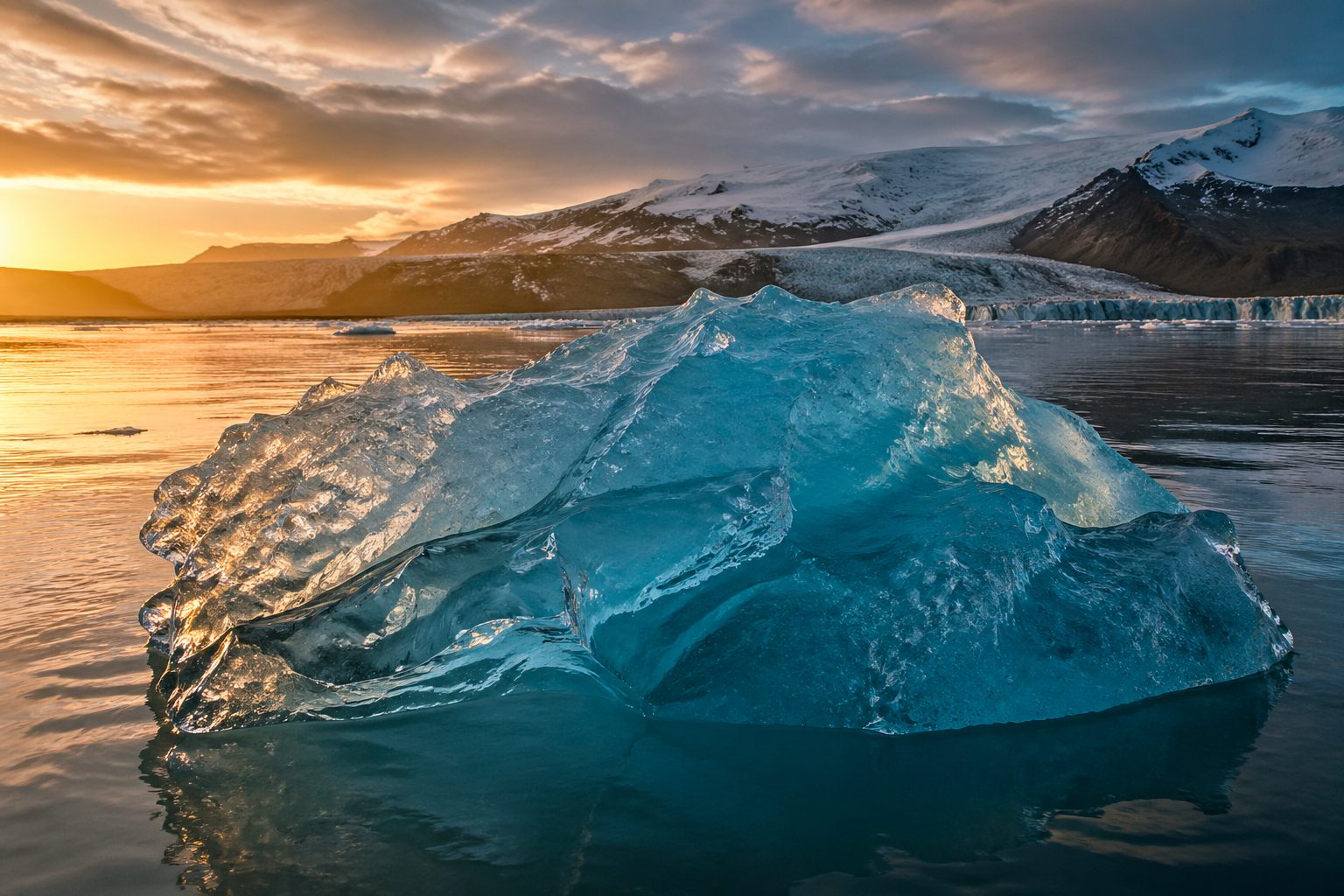
Day four pushes east into Vatnajökull National Park. Stop at Skaftafell for the Svartifoss hike — about ninety minutes return through birch scrub to a waterfall framed by black hexagonal basalt that looks designed by an architect. Then Jökulsárlón, the glacier lagoon where house-sized icebergs calve off Breiðamerkurjökull and drift toward the sea. The Zodiac boat tours (€60) get you close enough to hear the ice creak. Diamond Beach sits across the road — chunks of glacier polished by the surf, glittering on volcanic sand. Push on to Höfn for the night and order langoustine at Pakkhús; this is Iceland’s lobster town and it is not subtle about it.
Day 5-6: East Fjords & North Coast
You wake in Höfn and the air tastes of iodine and woodsmoke. From here the road bends north into the East Fjords, and the rhythm of the trip changes. The fjords are slower, narrower, more intimate. The road hugs the water, ducking into one inlet and out the next, sometimes for twenty kilometres at a stretch with no other car in sight. This is where most coach tours give up and cut inland. Do not cut inland.
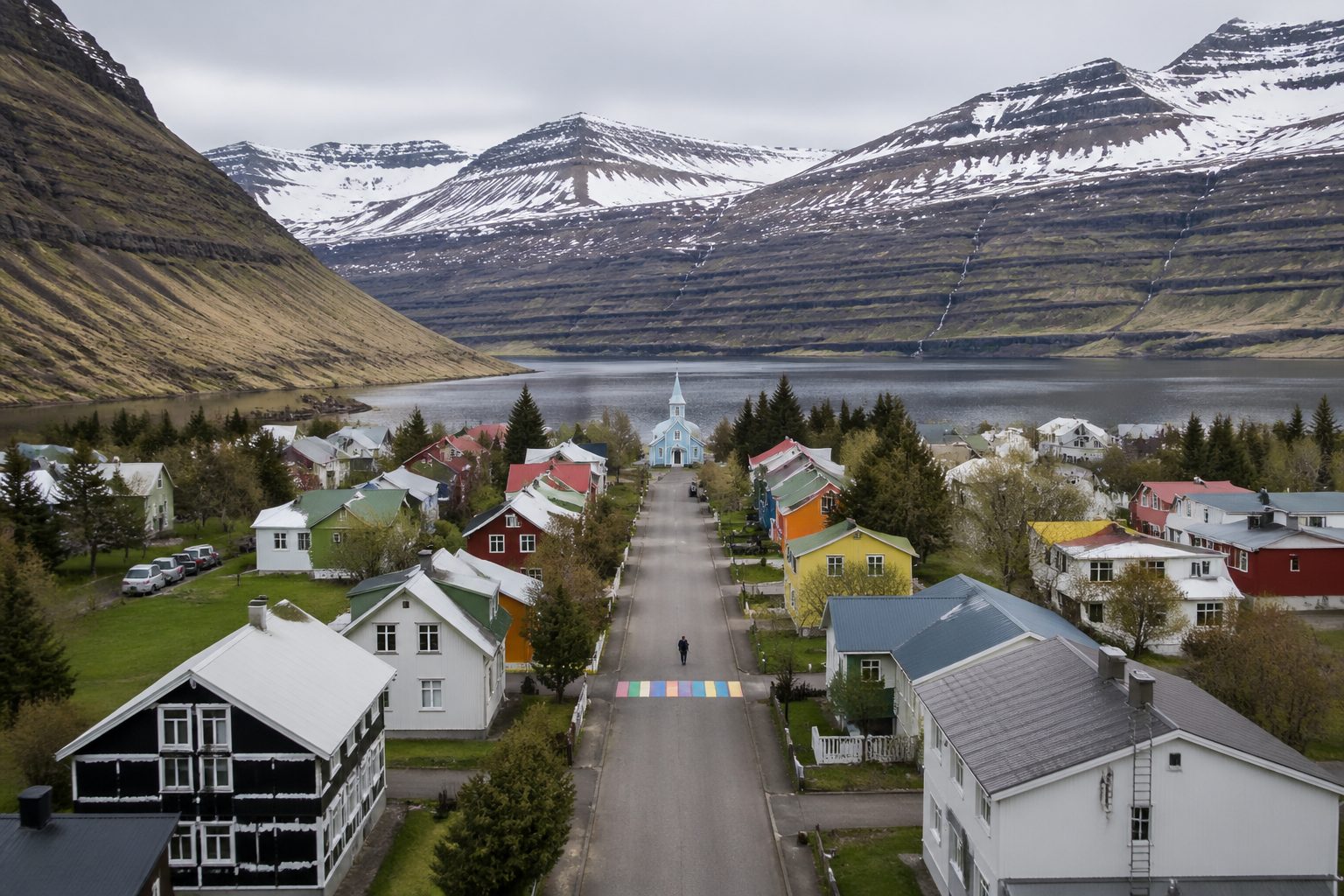
Stöðvarfjörður is worth the small detour for Petra’s Stone Collection — a private home turned mineral museum, started by a local woman over eighty years and now curated by her grandchildren. It costs €12 and feels like wandering through someone’s life. Push on to Seyðisfjörður, ten kilometres of switchbacks down off the plateau into a fjord so steep it looks photoshopped. The town’s main street is painted as a literal rainbow leading to the blue church; the seasonal Smyril Line ferry from here connects to the Faroe Islands and Denmark, which is a good fact to file away for a future trip. Sleep in Egilsstaðir if you want amenities or in Seyðisfjörður itself if you want quiet.
Day six is the day you remember why Iceland is called the land of fire and ice in the same sentence. Drive north to Dettifoss, Europe’s most powerful waterfall by volume — 193 cubic metres of grey glacial water per second crashing into a basalt canyon. The F862 paved access from the west is the easier road; F864 on the east side is gravel and harder on a 2WD. Walk the short trail upstream to Selfoss, Dettifoss’s quieter sister, then carry on to the Mývatn lake region.
Mývatn is alien country. Hverir is a field of bubbling mud pots and steam vents that smell exactly like a chemistry lab fire drill. Námafjall ridges rise behind in ochre and rust. Finish the day at Mývatn Nature Baths (€55) — the milky-blue cousin of the Blue Lagoon, half the price, a quarter of the crowds, and a view across the lake that empties your head. Sleep at Sel-Hotel Mývatn lakeside or push another hour to Akureyri if you want a town for the evening.
Day 7-8: Akureyri, Whale Watching & Highland Excursions
Akureyri sits at the head of Iceland’s longest fjord and acts like a small European capital with a population of nineteen thousand. The traffic lights are heart-shaped — a mood the city adopted after the 2008 financial crisis to keep spirits up, and never took back down. Walk the botanical gardens, free and surprisingly lush given the latitude. Duck into Jólahúsið, the year-round Christmas shop in a red-and-white painted farmhouse on the outskirts, even if you usually hate Christmas shops; this one has earned it.
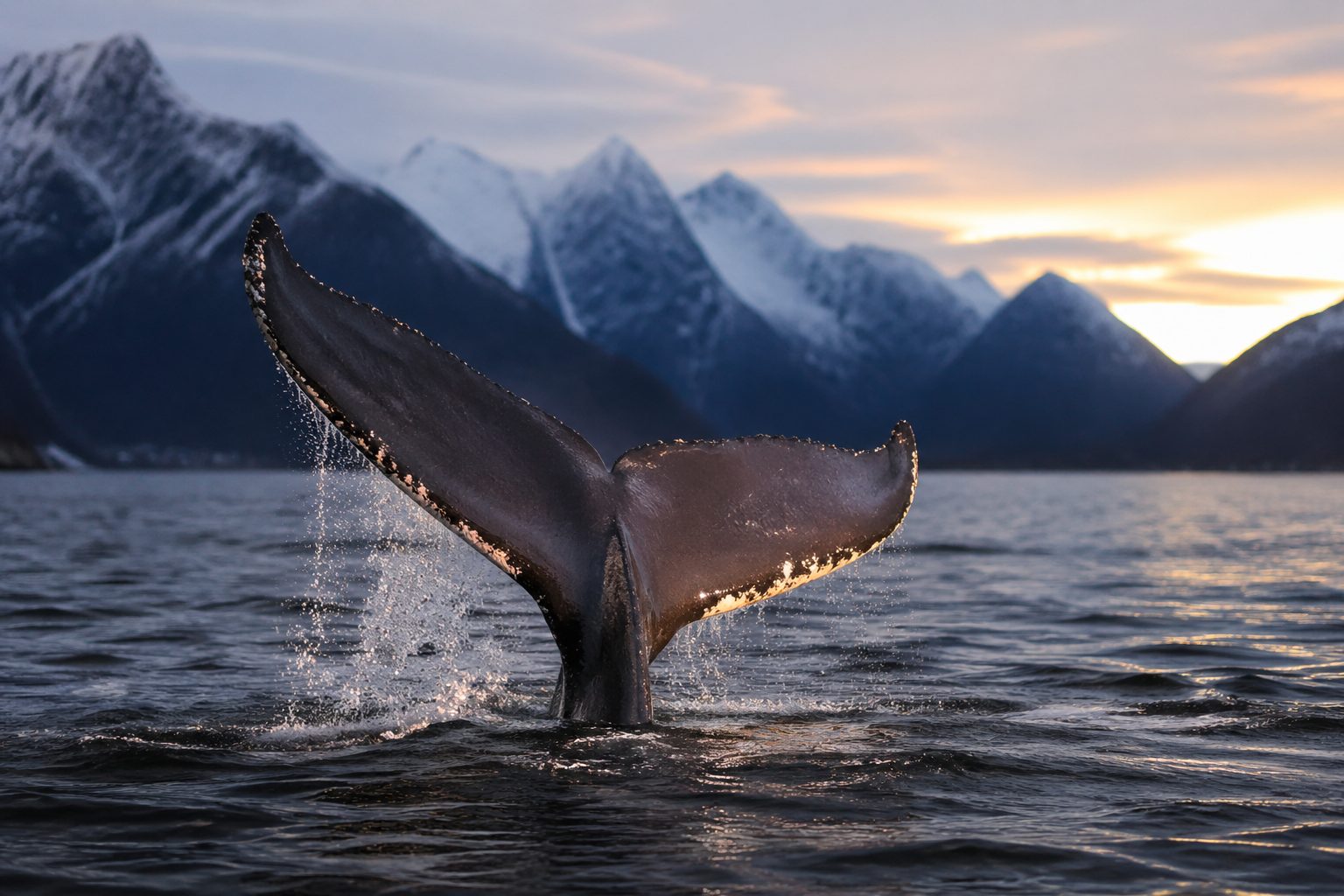
The real reason to be on the north coast is Húsavík, an hour east. Húsavík is the whale-watching capital of Europe and arguably of the world. The boats are wooden schooners — North Sailing runs a carbon-neutral electric-hybrid fleet that glides out of the harbour without engine noise, which is exactly the right way to meet a humpback. Tours run roughly €110 per adult, three hours, peak season May through September. Sightings include humpback, minke, white-beaked dolphin, harbour porpoise, and the occasional blue whale. We suggest browsing GetYourGuide and Klook side by side for whale tours — pricing is similar but cancellation windows differ, and weather cancellations are a real possibility. Goðafoss waterfall sits on the way back; pull over for thirty minutes.
Day eight is your highland day if you have a 4WD and confidence behind the wheel. Askja caldera is a five-hour each-way F-road epic — unbridged river crossings, volcanic moonscape, a turquoise crater lake you can swim in if your nerve holds. Kerlingarfjöll is closer and gentler, a geothermal valley laced with hiking trails that steam in the morning. Both are extraordinary, both demand 4WD, both close in shoulder season.
If the highlands are not your trip, run the Tröllaskagi peninsula loop instead — a quieter Ring Road alternative that takes you past Hofsós, where the geothermal pool has an infinity edge that drops straight into the fjord and is, for many travellers, the single best swim in Iceland. The pool is open year-round and costs about €8. Sleep in Sauðárkrókur or one of the small farmhouse hotels in West Húnavatnssýsla; the West is starting to feel close.
Day 9-10: West Iceland & Snæfellsnes Peninsula
The Snæfellsnes Peninsula is called Iceland in miniature, and the cliché is earned. Within ninety kilometres you will see a glacier-capped volcano, basalt sea cliffs, a lava field, a black-pebble beach, a fishing village, and a church that looks like it was drawn by a child with strong opinions about geometry. Day nine starts early. From your last stop in the West, drive west on Route 54.
Búðir black church is the obvious first photograph — a coal-coloured wooden chapel sitting alone on a lava field with the Snæfellsjökull glacier behind it. Press on to Arnarstapi, where the cliffs are perforated by a natural arch called Gatklettur and the basalt formations look extruded by a pasta machine. The walking trail from Arnarstapi to Hellnar runs about 2.5 kilometres along the cliff edge and is one of the best short coastal walks in Europe.
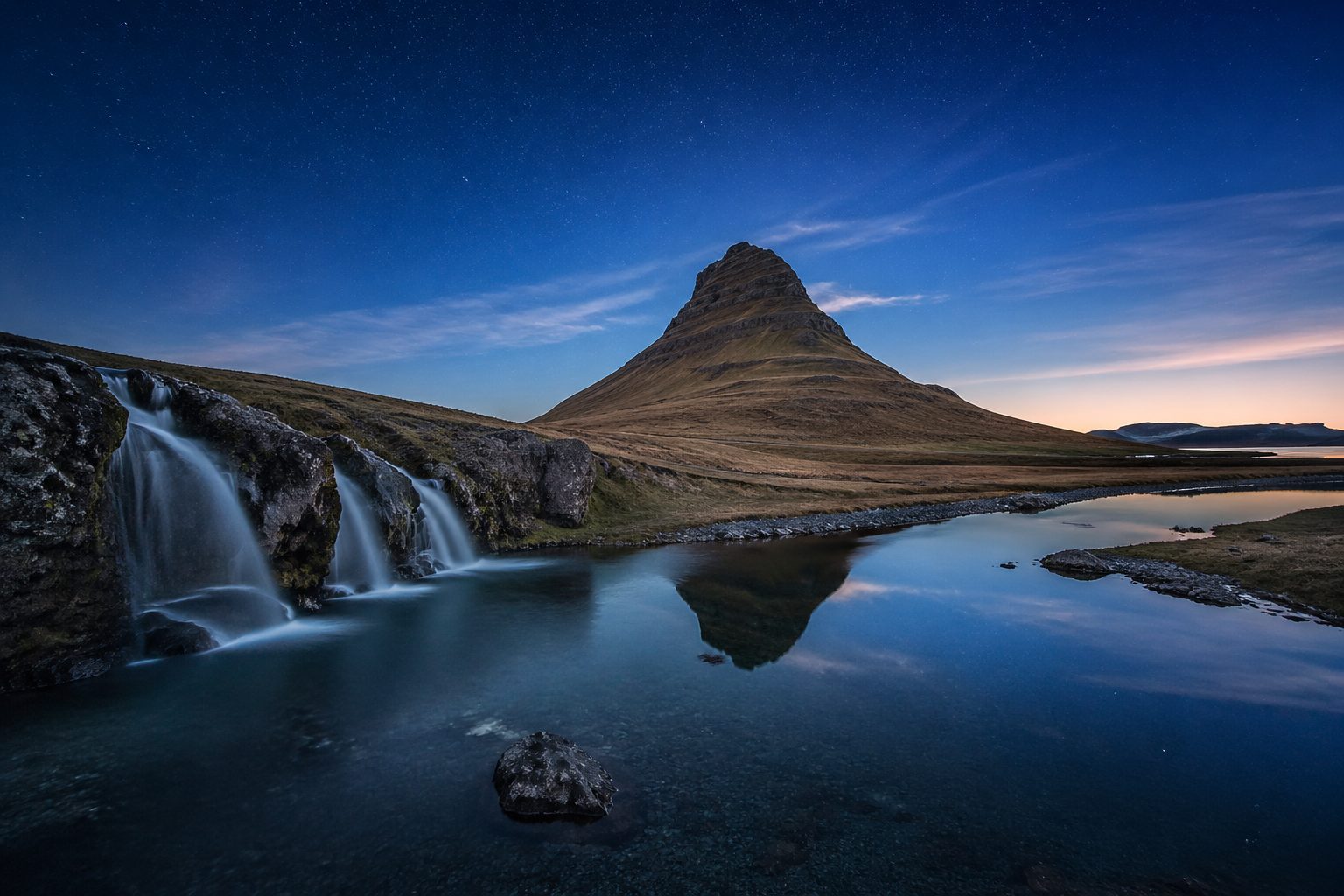
Snæfellsjökull is the glacier-volcano Jules Verne chose as the entrance to the Center of the Earth in 1864. You can drive the Útnesvegur loop around its base or, with the right tour and equipment, summit it. Kirkjufell — the arrowhead-shaped mountain that became the most photographed peak in Iceland after Game of Thrones used it as a backdrop — sits on the north side of the peninsula at Grundarfjörður. The waterfall in front of it, Kirkjufellsfoss, is small but frames the mountain perfectly. Sleep in Stykkishólmur (the harbour town with the modernist church on the hill) or in a guesthouse near Hellnar.
Day ten is your decompression. Drive south through Borgarnes and stop at the Settlement Center, a small museum that walks you through the Saga of Egil and the Viking colonization of Iceland in about ninety minutes. It is excellent. Twenty minutes further, the Krauma geothermal spa at Deildartunguhver — Europe’s most powerful hot spring — has six baths fed by mineral water cooled with glacial runoff. Soak. Drive back to Reykjavík along the new Hvalfjörður tunnel route. We suggest browsing Booking.com inventory for the peninsula well in advance; Snæfellsnes has a fraction of the rooms of the south coast and books out fast in summer. Drop the car at KEF, board the plane, and start arguing with your travel companion about when, not if, you come back.
Best Time to Drive the Ring Road: Season-by-Season Reality Check
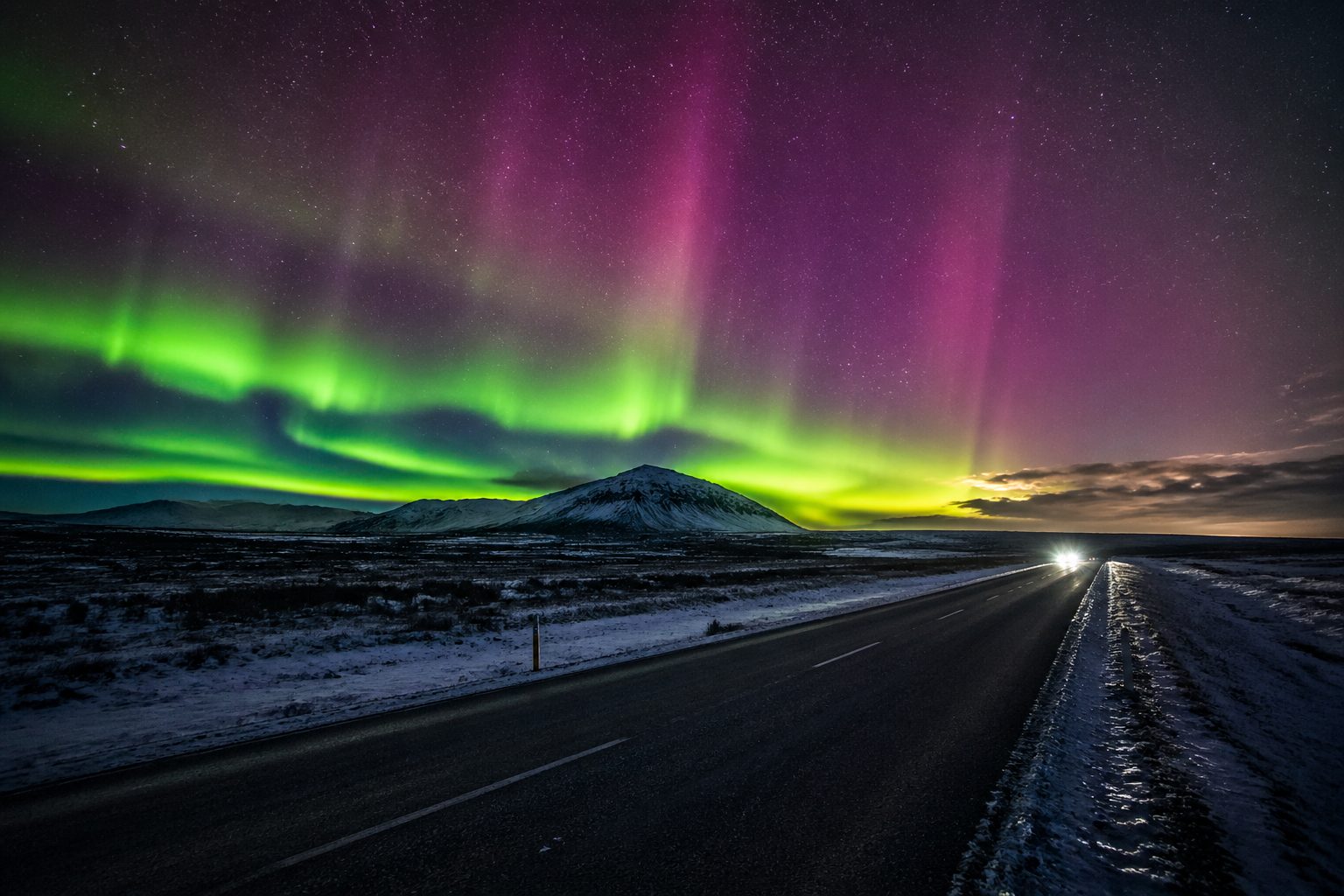
Iceland sells its summer hard, and summer earns the marketing. From mid-June through mid-August the sun does not really set; it makes a slow lazy arc, dips behind the horizon for an hour or two, and comes back up. You can hike at midnight. You can drive a stretch of empty Eastfjord coast at 1 a.m. with the sky still pink. Every road on the map is open, including the F-roads into the highlands, which generally clear of snow by mid-June and close again in early September. The trade-offs are real: every campsite is full, every popular hotel needs to be booked four months out, prices are at peak, and there are no Northern Lights because there is no darkness. If you are coming for the aurora, do not come in summer.
Shoulder season — May and September — is where experienced Iceland travellers cluster. Crowds drop by half. Prices on cars and accommodation slide 20 to 30 percent. The waterfalls run higher because spring melt is still feeding them in May. From late August onward the nights start coming back, and by mid-September the first auroras of the season appear. The catch is the highlands: F-roads may not have opened yet in May, and they start closing in early September. If you must drive an F-road, build flexibility into the calendar and check road.is the morning of.
Winter, October through March, is for travellers who know what they are signing up for. The Ring Road stays officially open and is plowed regularly, but storms close stretches of it without warning, sometimes for two or three days at a stretch. The Northern Lights are at peak strength on clear nights. Daylight at the December solstice is about four to five hours total, and the rest is twilight or dark. You need real winter driving experience — black ice on lava fields is genuinely treacherous, and rental contracts will not cover certain wind-related damages above a threshold (sustained winds over twenty metres per second are not unusual). Iceland Search and Rescue runs safetravel.is, and filing a travel plan with them before you head off the south coast in winter is not a bureaucratic suggestion. It is how they find you.
Iceland Ring Road Budget: Real 2026 Numbers in EUR + USD
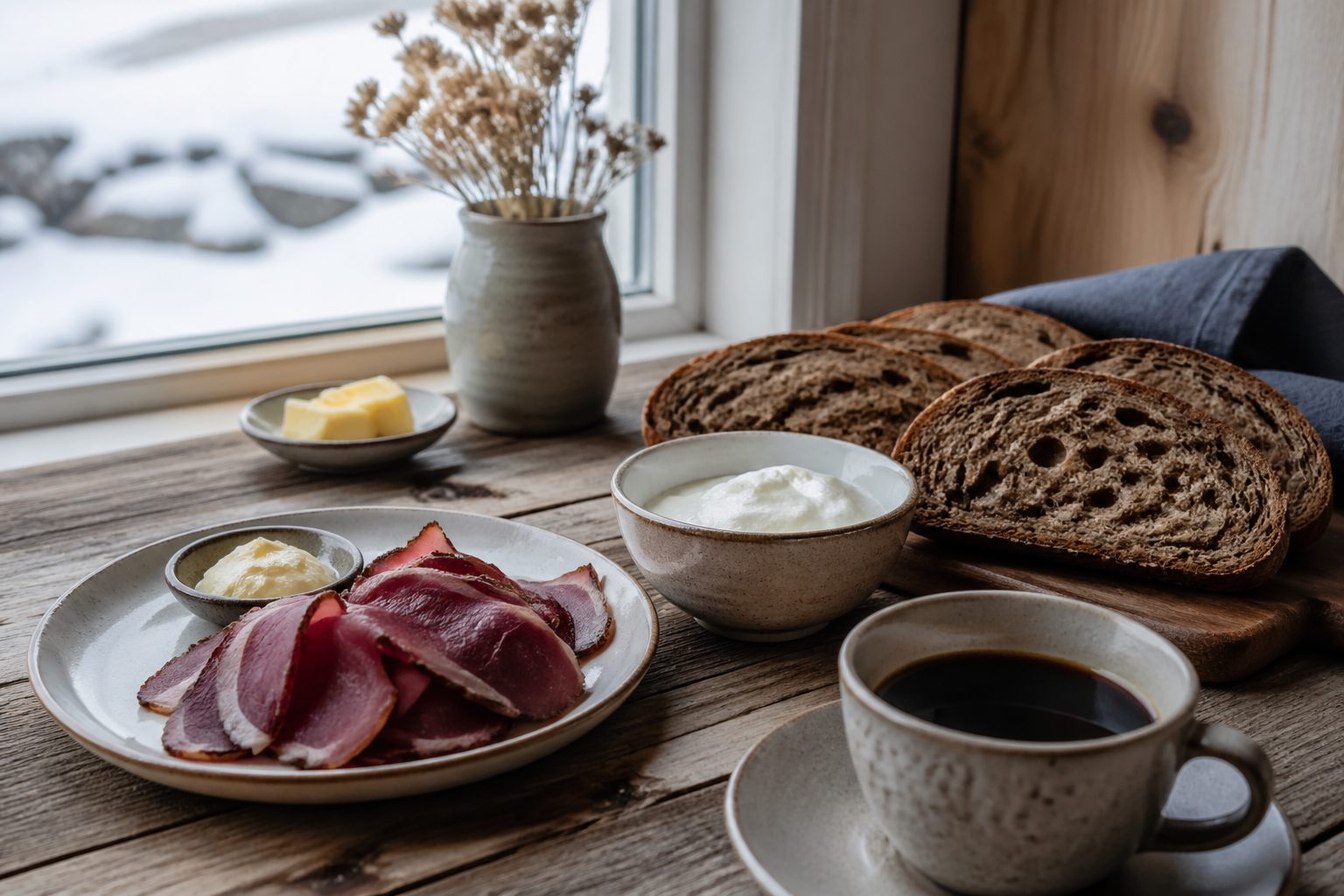
Iceland is expensive. Pretending otherwise is how budgets blow up at day six in a Vík supermarket, holding a microwave pizza that costs €18. Here is a clear-eyed ten-day couples budget for 2026, in EUR with USD parity at roughly 1.08, before international flights.
Car rental, compact 4WD with full insurance bundle (CDW, theft, GP, SAAP) for ten days: €1,400 to €1,900, or about $1,500 to $2,050. Accommodation, nine nights mid-tier (think guesthouses, three-star hotels, the occasional farmhouse stay): €1,800 to €2,400, or $1,950 to $2,600. Petrol — diesel is the more economical engine choice for a Ring Road run — about €280 ($300) for the full loop including detours. Groceries to cover five breakfasts, five lunches, and three supermarket dinners: €350 ($380). Restaurant dinners on the remaining seven nights, with two splurges: €560 ($605). Tour activities — one glacier walk, one whale tour, two lagoon entries, one Jökulsárlón Zodiac trip: €480 ($520). Total, excluding international flights: roughly €4,870 to €5,560, or $5,255 to $6,005, for two people for ten days.
Now, where to claw money back. Bónus is the cheapest supermarket chain (the pink piggy bank logo), Krónan and Nettó are close behind. A picnic from Bónus costs about a third of the same calories from a gas-station kiosk. Iceland has dozens of free natural hot springs — Reykjadalur (a forty-five-minute hike up a steam-vented valley near Hveragerði), Hrunalaug (a stone-walled pool a short drive from the Golden Circle), and Seljavallalaug (a 1923 swimming pool tucked under the south-coast cliffs) cost zero euros and rival the paid lagoons for atmosphere. Vínbúðin is the state-run liquor store and the only sensible place to buy beer or wine; bar prices in Reykjavík are punishing. Pack a thermos and refill from any cold-water tap in the country — it is geothermal-region tap water, often glacier-fed, and outperforms anything bottled.
Finally, two affiliate-style notes worth your time. Compare DiscoverCars rates against the rental counter at KEF before you fly out — the gap is often €300 or more on a ten-day booking, and the bundled insurance saves you another €150 versus buying it at pickup. We suggest browsing Booking.com inventory by region rather than by date; flexible-cancellation rates are 5 to 10 percent more but they hedge against a closed road. Iceland will still cost what it costs. Just do not pay for it twice.
Frequently Asked Questions
Ten days is the comfortable minimum for a full Ring Road loop with the Snæfellsnes Peninsula included. You can do the 1,332-kilometre circuit in seven days if you skip Snæfellsnes and the East Fjord detours, but you will be driving five to six hours most days and missing things. Twelve to fourteen days is ideal if you want to add highland F-roads, Westfjords, or longer hikes.
No. Route 1 is fully paved as of 2024 and a 2WD compact handles it fine in summer between mid-June and early September. You only need 4WD or AWD if you plan to drive any F-road into the highlands (F35, F26, the spurs to Landmannalaugar or Þórsmörk) or if you are travelling in winter or shoulder season when ice and snow can hit the main highway.
A realistic mid-tier 10-day budget for two people, excluding international flights, runs roughly €4,870 to €5,560 (about $5,255 to $6,005). That covers a 4WD rental with full insurance, nine nights of mid-tier hotels and guesthouses, fuel, groceries plus seven restaurant dinners, and key paid activities like a glacier walk, whale tour, two lagoons, and a glacier-lagoon Zodiac.
Mid-June through mid-August offers the easiest driving conditions, all roads open, and 24-hour daylight, but no Northern Lights and peak prices. Late August through late September is the sweet spot for most travellers — fewer crowds, prices roughly 20 to 30 percent lower, the first auroras returning, and most highland routes still accessible. Winter (October to March) is for experienced winter drivers willing to plan around storm closures.
Reynisfjara is safe to visit but not safe to approach the water. The beach has so-called sneaker waves that surge dramatically further up the sand than the previous wave, with no warning, and tourists have been swept out to sea and killed there. Stay on the dry sand, well back from the wave line, read the warning signs, and do not turn your back on the ocean to take photos. The basalt columns are stunning from a safe distance.
Yes, especially in peak summer (June to August). Húsavík’s main operators like North Sailing fill their morning and afternoon departures days ahead, and weather cancellations are common, so flexible-cancellation tickets are worth booking. Tours typically run €110 per adult and last about three hours, and sightings include humpback, minke, white-beaked dolphin, and occasionally blue whale during peak migration weeks.
Standard CDW alone is not enough. You also want Gravel Protection (GP) for windscreen and paint chips from loose gravel, and Sand and Ash Protection (SAAP) for damage from black-sand storms that strip paint to bare metal. Both add €15 to €30 per day each but are essential for any Ring Road trip. Theft protection rounds out the bundle. Skip the dubious third-party policies sold at the airport counter.
