
Why Tuscany Rewards a Self-Drive More Than Any Other Italian Region
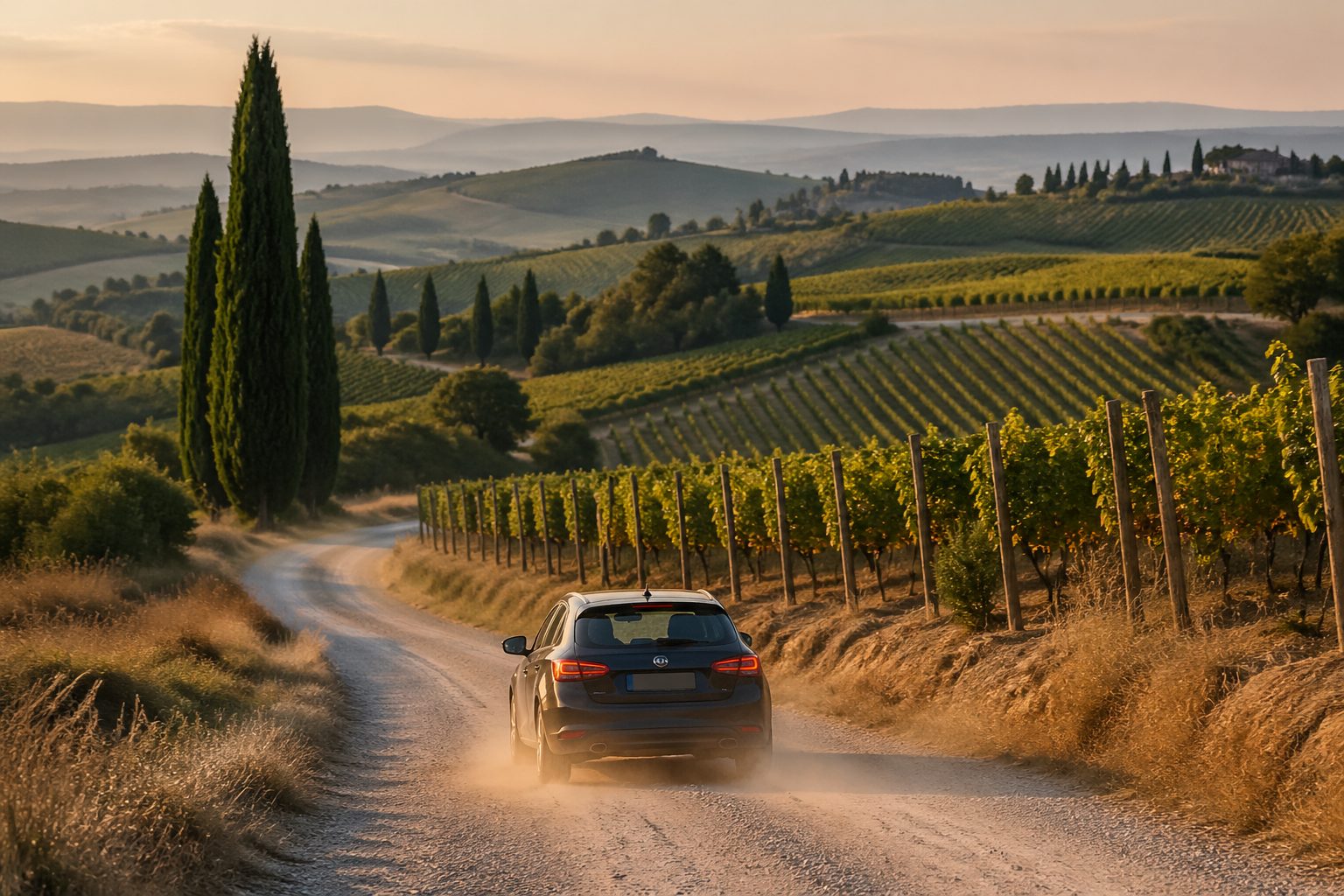
You will smell the new fennel pollen first — a sweetness like aniseed and grass kicked up by the tires as you turn off the SR222 onto a strada bianca. Then the gravel crunch under low-profile rentals, the terracotta-colored late-afternoon light bouncing off a stone farmhouse wall, and somewhere down the slope a tractor pulling crates of just-cut Sangiovese during vendemmia. You cannot reach this Tuscany by train.
The geography itself argues for a steering wheel. Florence sits at the top, Siena in the middle, Montalcino and Montepulciano holding down the south, and between them roughly 280 hilltop villages scatter across four distinct DOCG wine regions inside a 100-kilometer radius. The rail network connects only the headline acts — Florence, Siena, Pisa, Lucca, Arezzo. The rest, where the actual wine country lives, runs on twisty regional state roads (SR and SS) that link family-run cantinas, working agriturismi, the Sagra del Cinghiale festivals you find by accident in some 400-person village, and the small enotecas where the woman pouring you a Vernaccia is also the producer.
A car turns a 10-day Tuscan trip into something you can actually steer toward your interests. Wine-focused travelers can string together Greve, Castellina, Montalcino, Montepulciano on the same itinerary. Food travelers can wedge in Pienza for pecorino, San Miniato for autumn truffles, and Panzano for Dario Cecchini’s bistecca. Couples with one slow afternoon can detour to Bagno Vignoni or the Saturnia hot springs without hunting for buses that may run twice a day.
A few things changed for 2026 worth knowing before you book. Florence, Siena and Lucca all tightened their ZTL camera networks — the limited-traffic zones that protect historic centers — so the standard tourist mistake of nosing a rental into the centro storico now produces fines faster and more reliably. The Strade del Vino consortium opened several new signposted routes in Maremma, the wilder coastal-southern Tuscany that locals quietly prefer to overrun Chianti in August. And tractor traffic during the September and October harvests now extends later into the morning on smaller roads. None of this is reason to skip a self-drive. All of it is reason to plan one with both eyes open.
Renting a Car for Tuscany: Manual vs Automatic, Pisa vs Florence Pickup
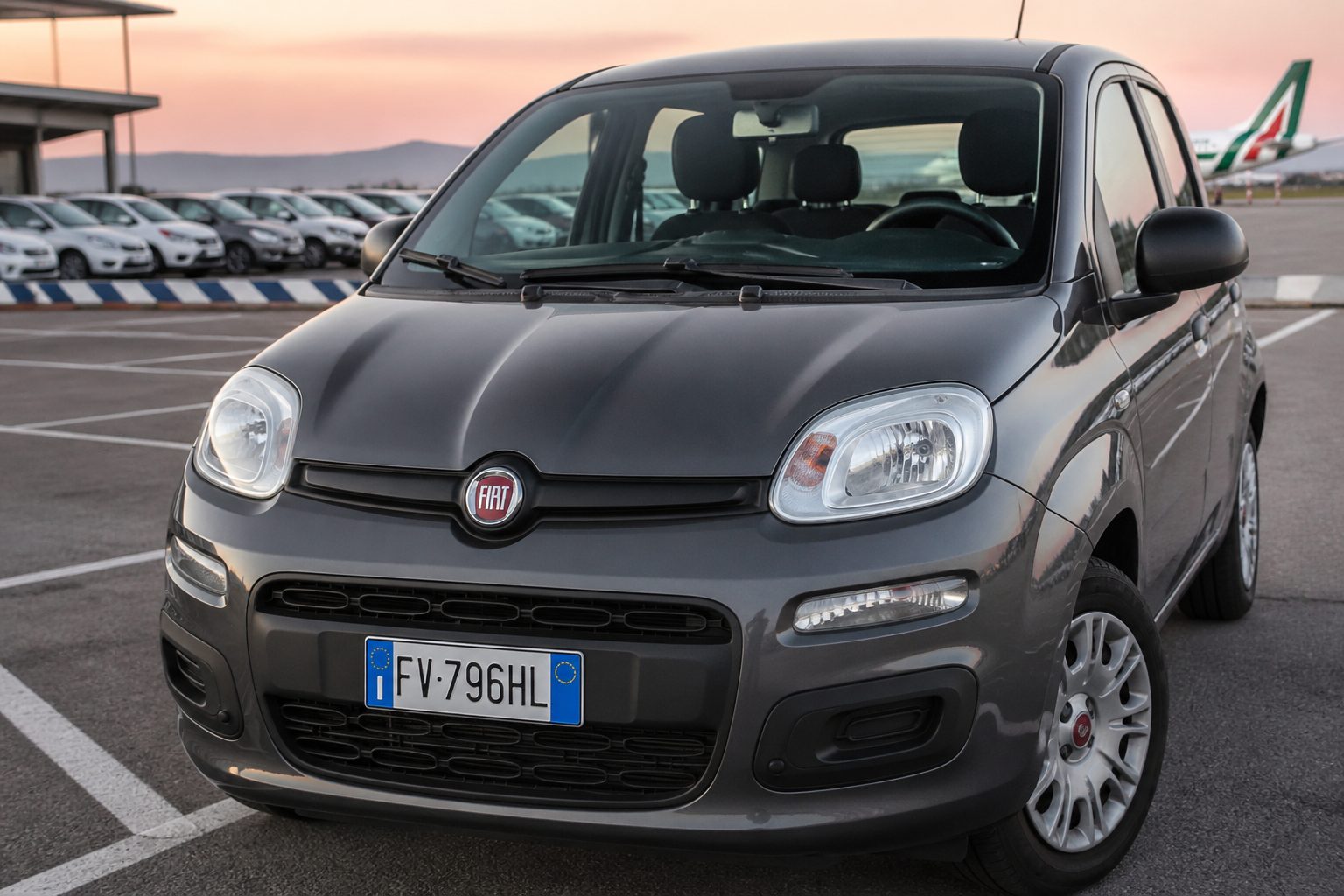
Italians overwhelmingly drive stick. That single fact decides most of the price you will pay for a rental. A compact manual transmission booked from Pisa San Giusto airport (PSA) often runs 25 to 40 euros a day for a basic Fiat Panda or Renault Clio. The same week in an automatic — which Italian rental fleets stock thinly and price as a premium — frequently lands at 60 to 110 euros a day, two or three times as much. If you can drive a manual, drive one. If you cannot, book six months ahead, not six weeks, because automatic stock vanishes from May onward.
Pickup point matters as much as the gearbox. Pisa San Giusto is usually the cheapest gateway and a 90-minute motorway run to Chianti. Florence Peretola (FLR) is more convenient if your itinerary starts in Florence, with compact manuals around 30 to 50 euros a day. Rome Fiumicino (FCO) makes sense only if you intend to anchor your trip in southern Tuscany — Montalcino, Pienza, Maremma — and skip the north. Avoid in-city Florence pickup unless you are arriving by train. Hertz and Avis depots near Santa Maria Novella station look convenient on a map, but you cannot drive a rental into the centro storico to load luggage; you will end up using a paid garage anyway.
Documents matter. An International Driving Permit (IDP), about 20 dollars from AAA in the United States, is legally required to drive in Italy on a foreign license. Enforcement is uneven, but the moment you are stopped or in a fender-bender, no IDP turns into a real problem with the carabinieri and an unhappy insurer. Get one. Bring it.
Then there is the ZTL — Zona a Traffico Limitato. A round black-and-white sign with a red border and the letters ZTL means no entry without a permit. Cameras log the plate. The fine, mailed to the rental company and forwarded to you four to six months later with a handling charge, runs 80 to 160 euros per crossing. Tour buses get caught daily; rentals get caught hourly. Park in a signposted parcheggio outside the walls — Garage La Stazione and Parking Genio in Florence, Parcheggio Il Fagiolone in Siena, Parcheggio Cattedrale in Lucca — and walk in. Compare DiscoverCars rates across Pisa, Florence and Rome before you book; the same model can swing 30 percent between airports on the same dates.
Chianti Classico: The Gallo Nero Heart of Tuscan Wine
Chianti Classico is the historical core — the original strip between Florence and Siena, defined by edict in 1716, and today a 70,000-hectare DOCG with around 600 producers stamping every bottle with the Gallo Nero, the black rooster seal. The region’s spine is the SR222, the Chiantigiana, which curls south from Florence through Greve in Chianti, Panzano, Castellina, and Castelnuovo Berardenga. You can drive the whole length in two hours without stopping. Nobody does, and you should not.
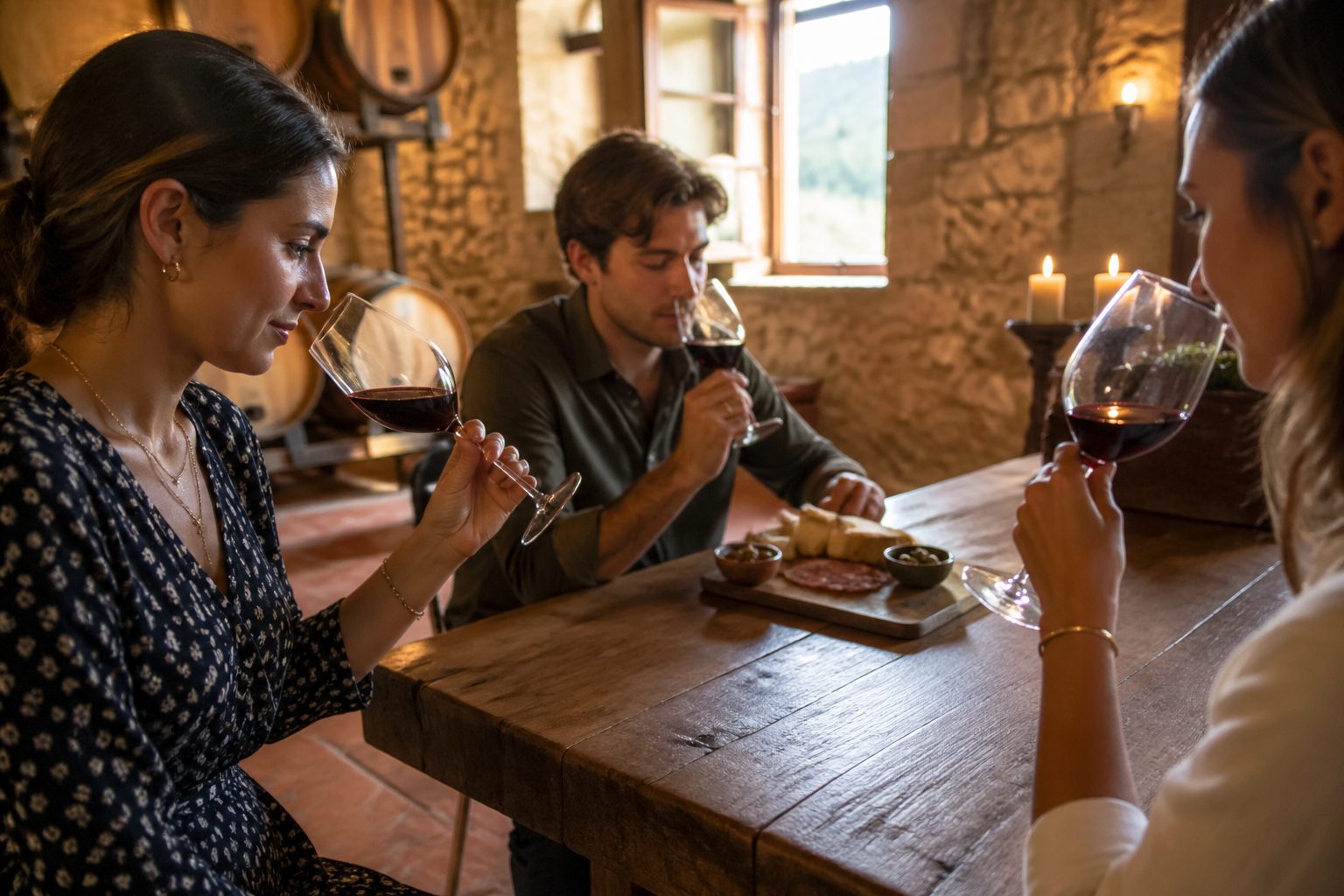
Few areas of Italian wine reward forward planning more. The cantinas worth your afternoon take reservations only, often two to four weeks ahead in shoulder season and longer in summer. A short list to anchor an itinerary: Castello di Ama in Lecchi, where the Pallanti family pairs serious Sangiovese with a contemporary art collection that includes Anish Kapoor and Louise Bourgeois — the one-hour tasting runs around 45 euros and is worth every cent. Felsina in Castelnuovo Berardenga for old-vine Riserva. Fontodi in Panzano, certified organic, family-run, with the Flaccianello cru bottled separately. Castello di Volpaia, an entire medieval village restored as a winery, parts of the wall dating to the 8th century. Fattoria di Lamole, planted on terraced mountainside above 600 meters, makes a notably structured Chianti you cannot easily replicate at lower altitudes.
Where you sleep is half the experience. Working agriturismi — farms with a handful of rooms, breakfast under a pergola, occasional cooking classes during vendemmia — anchor most return trips. Borgo Petrognano near Barberino Tavarnelle runs four-night minimums in high season at around 280 euros a night for a family suite, with a pool and the kind of sleepy panorama that makes you cancel the next day’s plans. Le Filigare near San Donato in Poggio is smaller, quieter, with rooms above the family’s working winery. Booking.com tends to carry strong Chianti agriturismo inventory across price tiers, often with the same direct-with-owner rates you would find on the property’s website but with the cancellation flexibility built in. Reserve early — the well-priced rooms in late June and September go six to nine months out.
Brunello di Montalcino: Tuscany’s Most Powerful Red
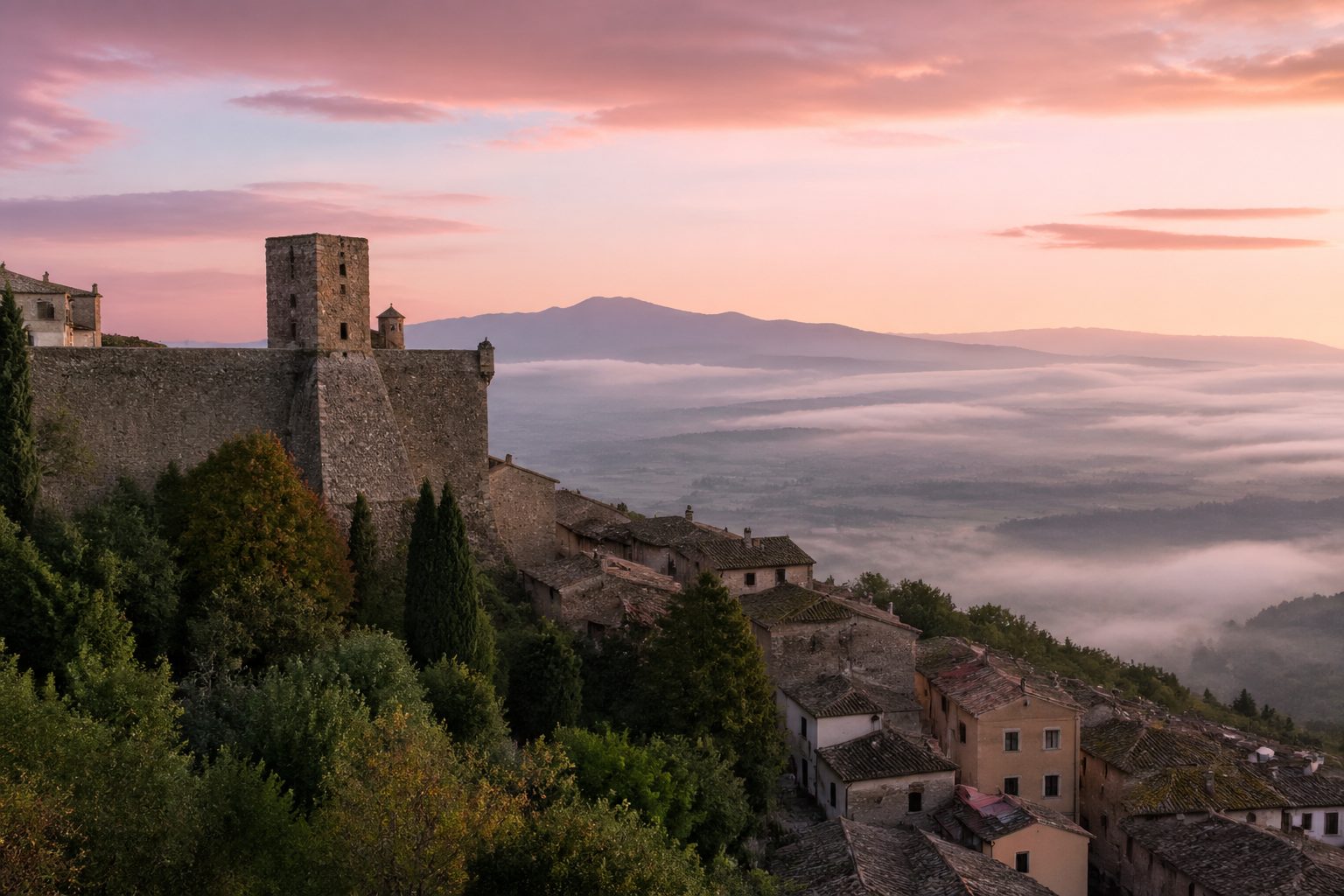
Forty-one kilometers south of Siena, the road climbs the last switchback and Montalcino appears the way medieval hilltop towns are supposed to — a tight cluster of stone walls, terracotta roofs, a Fortezza on the far edge, all of it perched at 564 meters with the Val d’Orcia falling away on every side. Five thousand people live here. They produce one of the most expensive red wines on earth.
Brunello di Montalcino is 100 percent Sangiovese Grosso, aged a minimum of five years before release, two of those in oak. It is the wine that pulled Tuscany’s reputation upmarket through the 1980s and 1990s, after generations when Chianti meant the straw-covered fiasco bottle on a checkered tablecloth. A few estates worth the drive: Biondi-Santi at Il Greppo, the family that codified Brunello in 1888, where a cellar tour with vertical tasting runs around 120 euros and includes bottles from the producer’s library going back decades. Castello Banfi, the modern flagship across 2,800 hectares with a serious onsite restaurant and an enoteca that sells back-vintages by the glass. Casanova di Neri, whose Cerretalto vineyard regularly draws three-figure scores. Argiano, rebuilt under the Sturini family with a 2018 vintage that sat number one on Wine Spectator’s 2023 Top 100. Salvioni in town — micro-production, Roberto Cioffi’s project, allocations sold long before they leave the cellar.
Leave time for Montalcino itself. The medieval ramparts circle the town in roughly 45 minutes on foot, with views out across the Tuscan Maremma in clear weather. The Fortezza Enoteca inside the 14th-century fortress walls runs a blind tasting flight, four wines from rotating estates, around 18 euros, an honest crash course before you commit to a producer visit.
For sleeping, two ends of the spectrum work. Castiglion del Bosco — Massimo Ferragamo’s estate, now part of Marriott’s Luxury Collection — is the ultra-premium option at 600 euros and up per night, golf course on site, three restaurants. Or rent a room in an independent agriturismo like Le Ragnaie or Sant’Antimo Country Suites for a third of the price and a more honest sense of the place. Booking.com inventory in Montalcino is thinner than in Chianti — book earlier, especially for stays during the September Sagra del Tordo or the October vendemmia weekends.
Vino Nobile di Montepulciano & Val d’Orcia
There is a confusion worth clearing up immediately. Vino Nobile di Montepulciano is the third Tuscan red DOCG, made from Sangiovese (locally called Prugnolo Gentile) in and around the hilltop town of Montepulciano. Montepulciano d’Abruzzo, sold for ten euros at every American supermarket, is a different grape grown in a different region 250 kilometers east. They share a name and almost nothing else.
The town of Montepulciano sits on a long ridge above the Val di Chiana, all Renaissance facades stacked tightly along the Corso. You can walk it end to end in 20 minutes, and almost every cellar opens off that single street. Avignonesi, biodynamic since 2009, runs guided tours through a beautifully restored estate just outside town with a vinsantaia loft worth seeing in autumn. De’ Ricci hides medieval underground cellars literally beneath the central piazza — eight stories of vaulted brick descending into the hill, the deepest still in active use. Boscarelli a few kilometers south stays small and family-run, the kind of estate where Luca de Ferrari might pour your tasting himself.
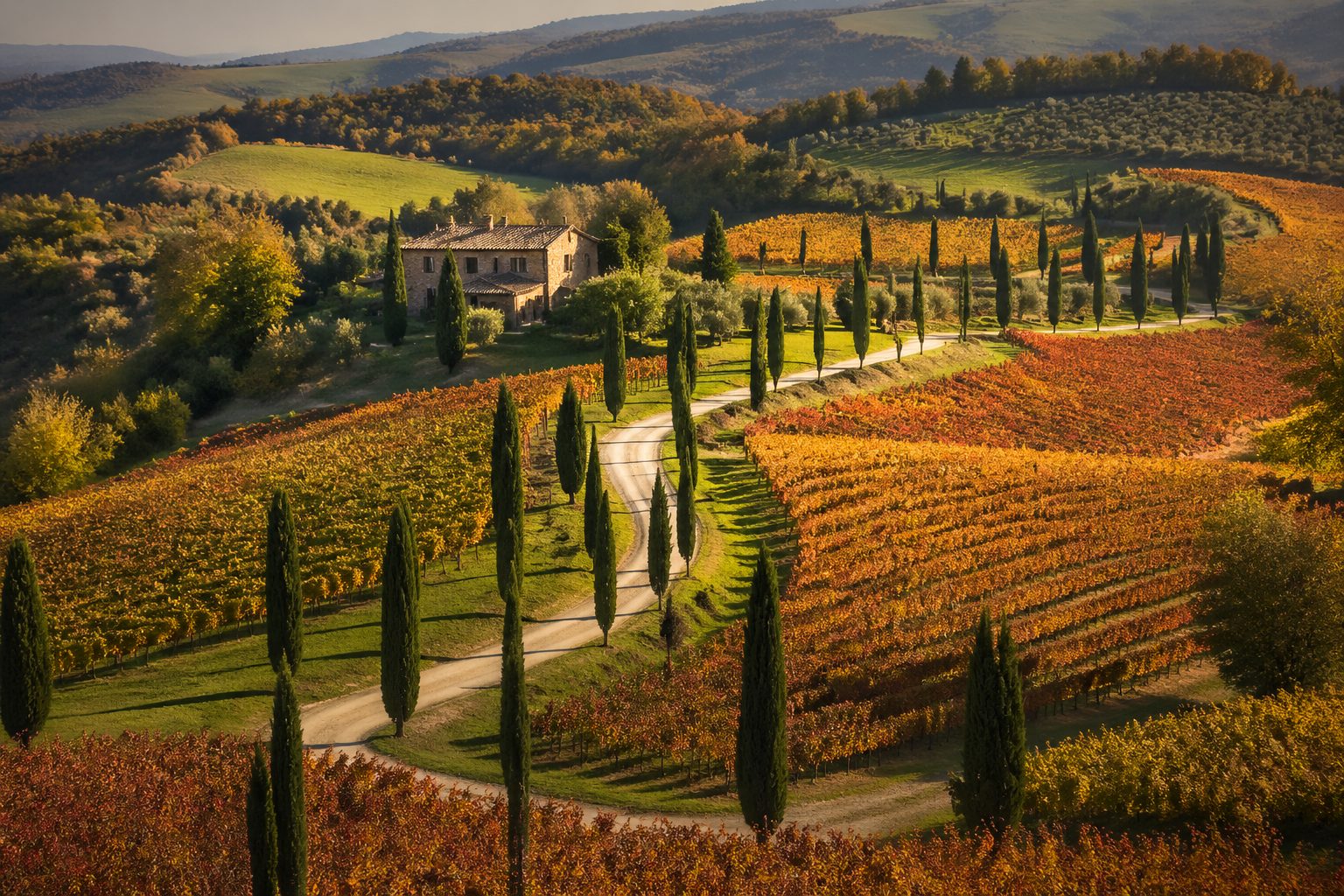
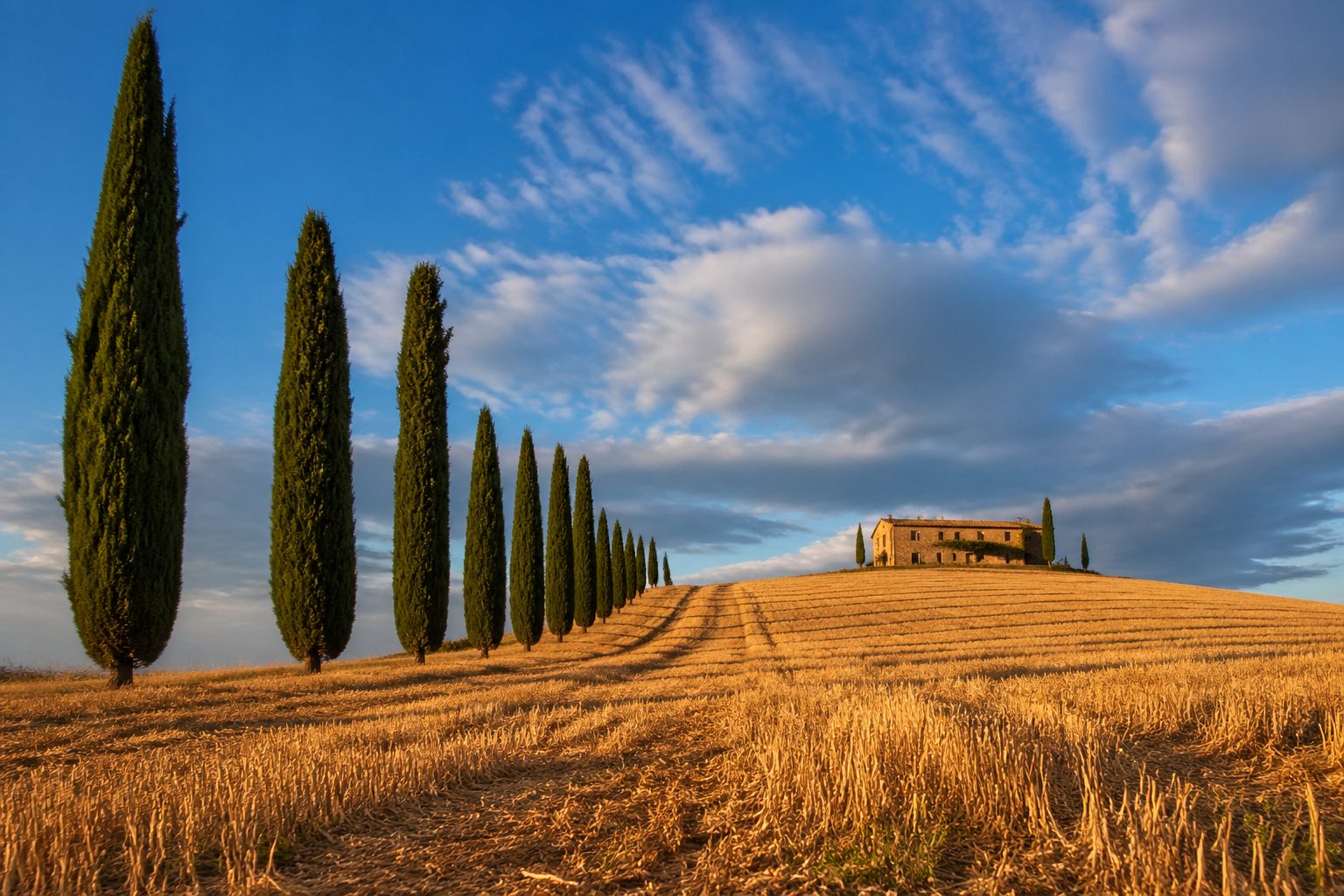
What sells most travelers on this slice of Tuscany is not the wine but the surrounding Val d’Orcia. The UNESCO World Heritage landscape — golden wheat hills, isolated cypress lines on ridge crests, a single stone chapel framed against open sky — is the photograph everyone has seen. It is also a real place you can drive through in an afternoon. Anchor on three towns: Pienza, the planned Renaissance miniature laid out by Pope Pius II in the 1450s, today the source of the strongest pecorino sheep cheese in Tuscany; San Quirico d’Orcia, which holds the Cappella della Madonna di Vitaleta, the most photographed building in the region; and Bagno Vignoni, a tiny village built around a 15th-century thermal pool that occupies the entire central piazza in lieu of a fountain. The water is 51 degrees Celsius at source, and the spa across the road runs day-pass packages starting around 35 euros.
GetYourGuide carries solid coverage of Val d’Orcia driving tours, Pienza cheese-and-wine pairings, Bagno Vignoni spa packages, and the increasingly popular Brunello-and-Vino-Nobile combined tasting itineraries — useful if you want a guide for the language or just a day off the steering wheel.
Where to Stay: Agriturismi, Borgo Hotels & Villas
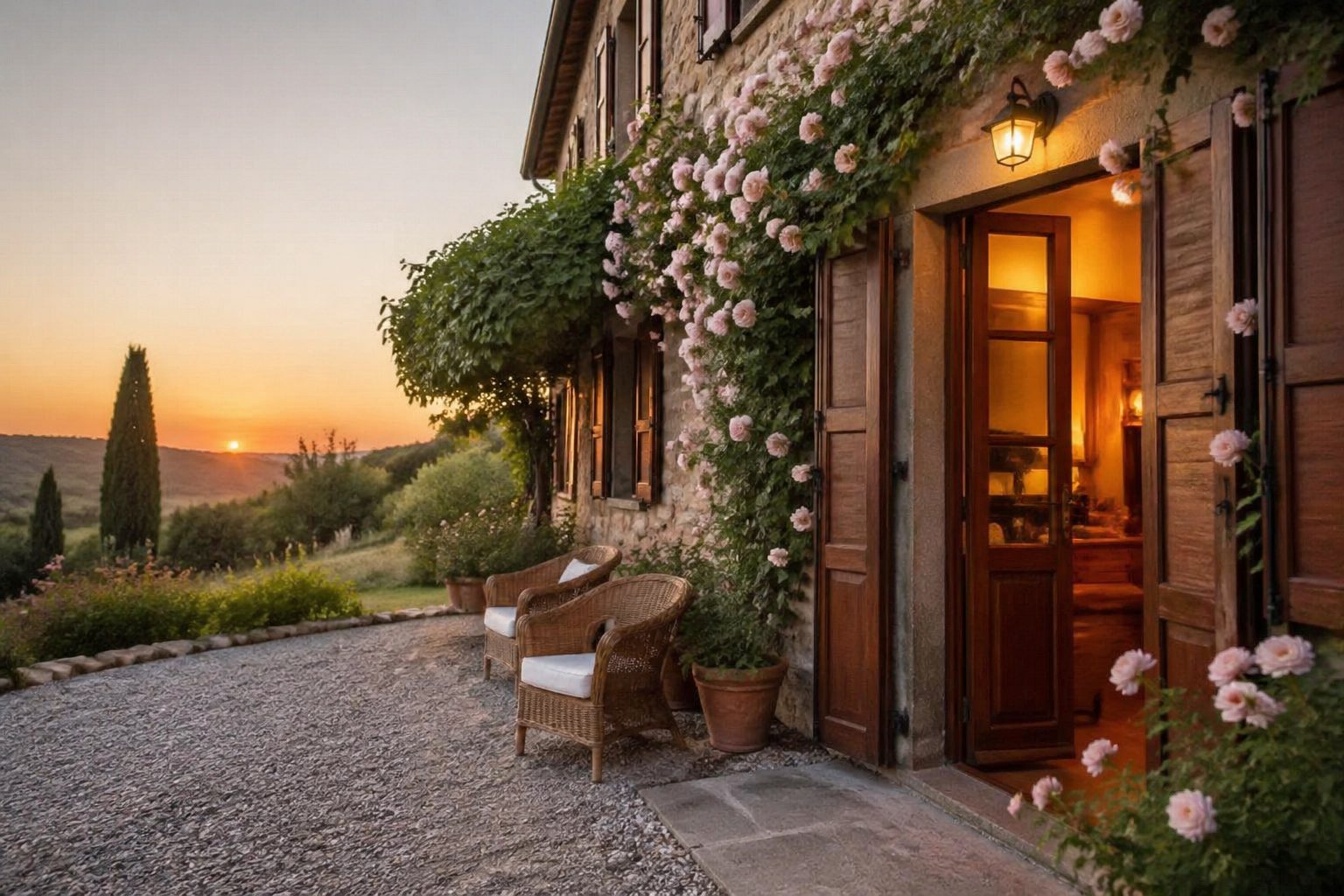
Tuscany sleeps three different ways. Choosing among them shapes the trip more than your wine itinerary does.
Agriturismo is the working-farm option. The category is regulated — by Italian law a true agriturismo must be a functioning agricultural property, with the rooms and meals as a sideline, not the other way around. Expect breakfast included, often produced on the property: yogurt from the family’s flock, honey from hives down the slope, jam from the orchard. Many run cooking schools weekly in summer, and during the September and October vendemmia some let guests help pick. Mid-range pricing in high season runs 130 to 220 euros a night for a B&B-style double, with self-catering apartments slightly higher. This is the most defensible value tier in Tuscany. Booking.com inventory is deep across Chianti, Val d’Orcia and Montalcino, and the cancellation flexibility matters when summer plans shift.
Borgo hotels are the next step up — entire renovated medieval villages converted into single-property luxury hotels. Castello di Casole near Casole d’Elsa, Borgo San Felice in Chianti, and Castello di Reschio across the Umbrian border each occupy authentic restored hamlets, with multiple restaurants, spa facilities, and rooms built into former workshops or chapels. Pricing climbs accordingly: 450 to 1,800 euros a night depending on season and category. They are unique experiences, but the gap between borgo and a high-tier agriturismo is more about service tempo than authenticity.
Private villas are the third path, the right call for groups of six to twelve. A 10-bedroom restored farmhouse with private pool, daily housekeeping, and a chef on call runs 600 to 3,000 euros a night through Vrbo, Tuscany Now & More, or curated Travelsfy partner programs. For four couples splitting costs, the per-person price often beats two hotel rooms.
A few timing rules apply across all three. July and August are peak — booked solid six to nine months out, prices at their annual high, daytime temperatures regularly above 35 degrees Celsius. April through mid-June and mid-September through October are the genuine sweet spots — better weather for vineyard walks, half the room rate, restaurants taking same-day bookings. November and February are quiet but functional; many family-run agriturismi close from mid-January through mid-March entirely.
Driving the Tuscan Roads: ZTL Zones, Strade Bianche & Speed Cameras
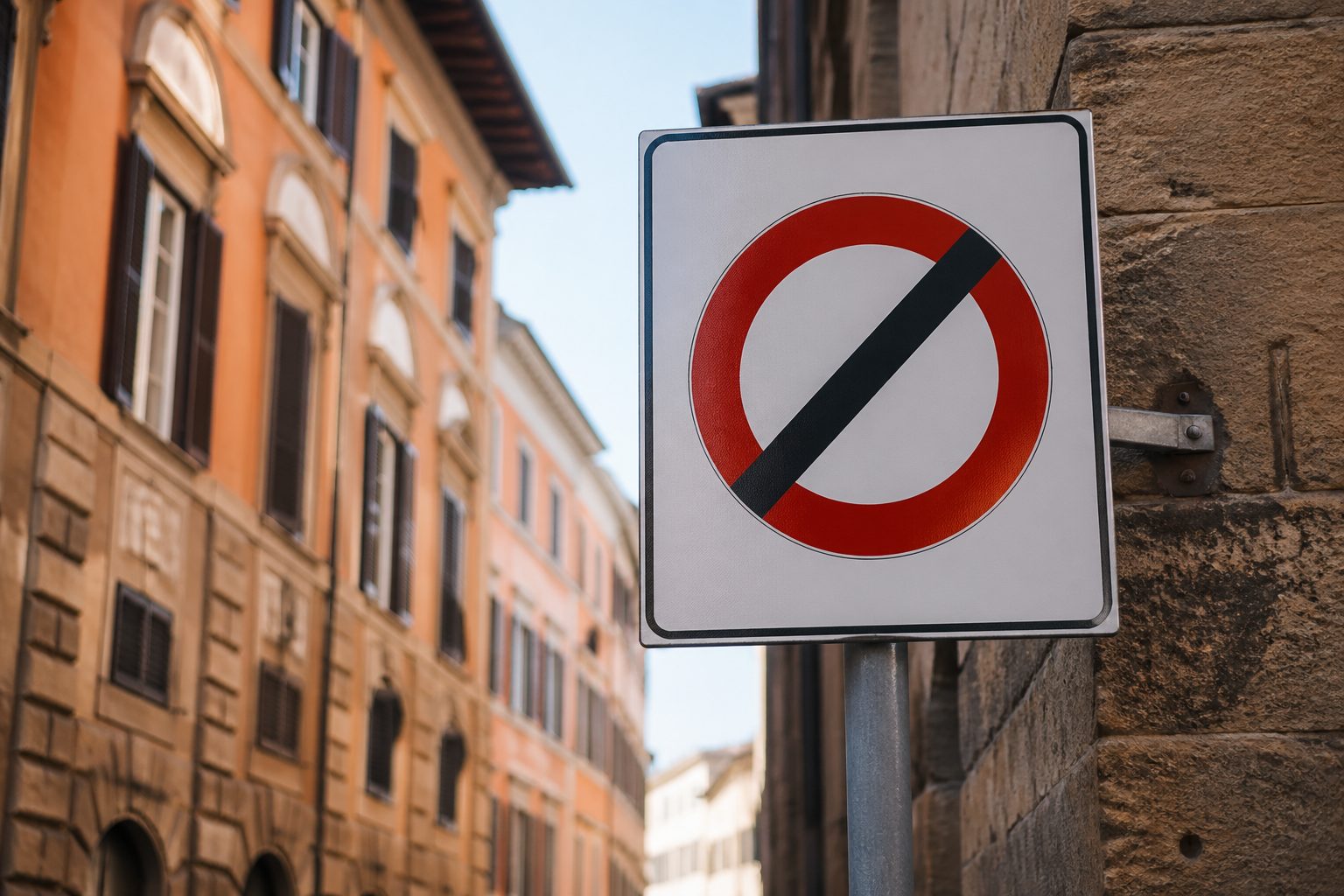
ZTL deserves its own paragraph because it is the single most expensive mistake foreign drivers make in Tuscany. Florence’s ZTL fines run 100 euros and up per camera trip, and there are dozens of cameras at multiple entry points. Crossing twice in a day — drive in, realize the mistake, drive out, drive back the right way — generates two fines, sometimes three, mailed home four to six months later with the rental company’s administrative surcharge stacked on top. Tour buses get caught daily. The fix is mechanical: park in a signposted parcheggio outside the walls — Garage La Stazione, Parking Genio, Parcheggio Beccaria — and walk. Same rule applies in Siena (Parcheggio Il Fagiolone, Stadio), Lucca (Parcheggio Cattedrale), and Pisa (Parcheggio Pietrasantina with the free shuttle to the Leaning Tower).
Outside the cities, Tuscan driving is more relaxed but has its own quirks. Strade bianche — literally white roads — are the unpaved gravel back roads connecting agriturismi and smaller cantinas. They look intimidating on a rental’s first encounter and they are completely fine. Stay between 40 and 60 kilometers per hour, expect washboard sections after rain, and ignore the rental’s tire-pressure warning if it pings briefly on rough surface; it usually self-clears within a kilometer.
Speed limits are well marked but not always intuitive. Autostrada (A1, A11, A12, with toll gates) runs 130 km/h. Superstrada (free dual-carriageways like the FI-PI-LI between Florence and Pisa) runs 110. State roads (SS and SR) drop to 90 outside built-up areas, 50 the moment you pass the white town-name sign. Be especially careful with the Tutor system on the autostrada — average-speed cameras measure your time across a 5- to 15-kilometer stretch, so braking for a single camera and then accelerating saves you nothing. Carabinieri also run mobile speed traps on weekends along the Chiantigiana and the SR2 Cassia.
Roundabouts (rotonde) are the dominant intersection design. Vehicles already in the rotonda have right of way; vehicles entering yield. Italian drivers signal late, often as they exit rather than before. Keep eight to ten meters of buffer in front, do not match the local approach to lane discipline, and you will be fine.
Tuscan Food: Bistecca, Pici, Ribollita & Truffles
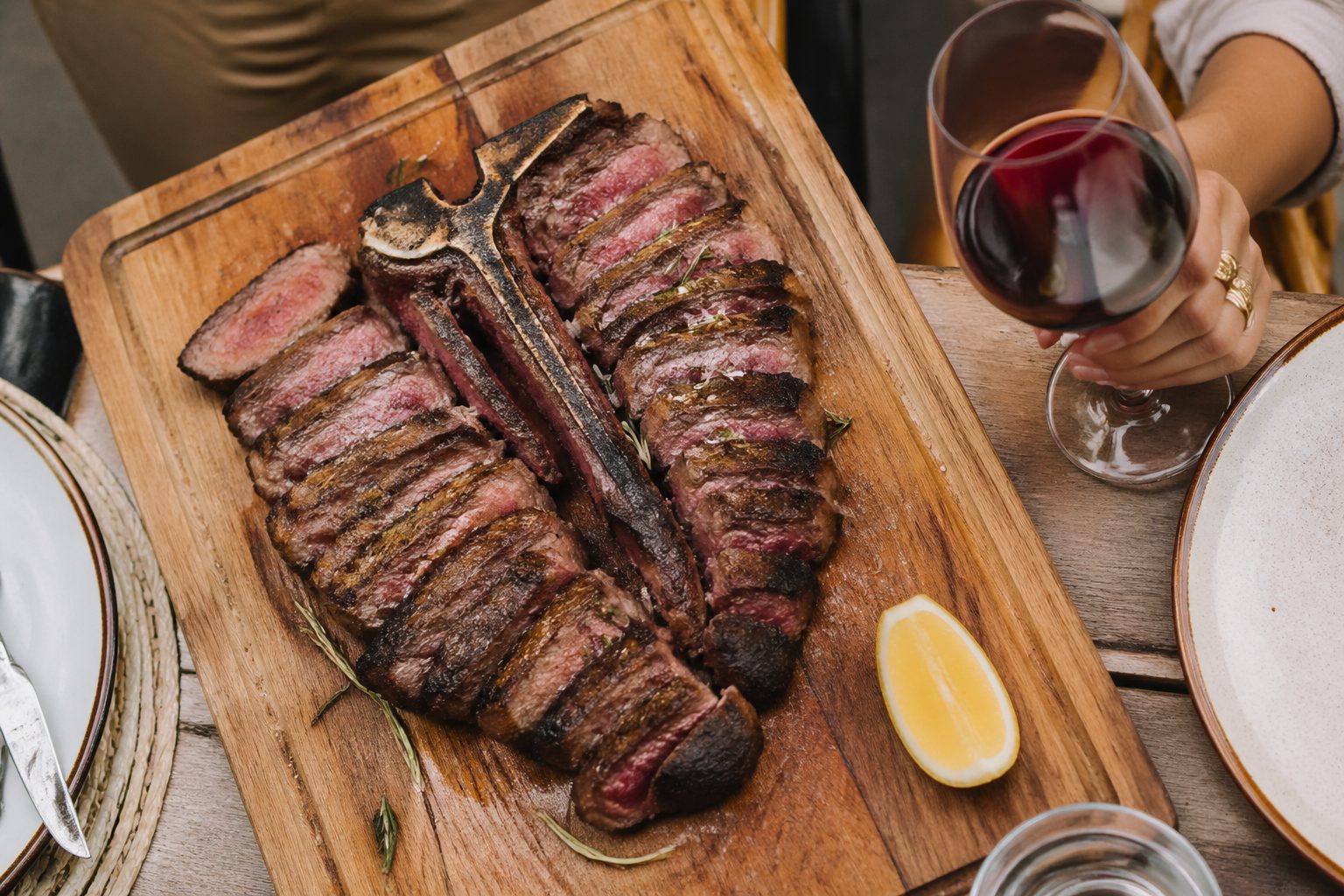
Bistecca alla Fiorentina is the headline. A three-finger-thick T-bone cut from Chianina cattle — the white, long-legged native breed grazed across the Val di Chiana — grilled rare over chestnut wood with nothing more than coarse salt, olive oil, and a wedge of lemon. A real Fiorentina weighs at least one kilogram, costs 70 to 110 euros, and is shared between two or three people. The cult addresses: Trattoria Mario behind Florence’s Mercato Centrale (cash only, lunch only, line forms by 11:30) and Officina della Bistecca in Panzano above Dario Cecchini’s butcher shop, where the prix-fixe steak feast is theatrical and worth the drive.
Pici is the regional pasta you cannot leave without trying. Hand-rolled fat spaghetti, slightly uneven in thickness, traditionally made with just flour and water — no eggs. Pici al ragù di cinghiale, with slow-simmered wild boar from the surrounding hills, is the autumn standard. Pici cacio e pepe, the simpler pecorino-and-pepper version, shows up on menus across the southern half of the region. Look for it especially in Pienza, Montalcino, and Montepulciano.
Ribollita — re-boiled — is the winter Tuscan stew that started life as bread-and-bean cucina povera, leftovers from the night before thickened the next day with stale bread and reheated until the texture goes from soup to spoonable. Done well, it is one of the great cold-weather dishes in European cooking. Done badly, in a tourist-strip restaurant, it tastes like baby food. Cross-check: the menu is in Italian first, the waitstaff speaks Italian comfortably with anyone who tries, and there are no laminated photos of the dishes.
A few specifics worth chasing: San Gimignano saffron, the only Italian saffron with DOP status, used in everything from pasta sauces to gelato. White truffles in October and November, peaking around the San Miniato truffle festival in mid-November, where a 30-gram tuber sells for 150 euros and shaved over a 12-euro pasta becomes the meal of the trip. Pecorino di Pienza, the aged sheep cheese, often served with pear compote or chestnut honey. And Vin Santo with cantucci — small almond biscotti dipped in the sweet aged dessert wine. Skip restaurants with a pizza-and-pasta tourist board on the sidewalk and a host actively pulling people in. The good places do not need to.
Tuscany Self-Drive Budget: Real 2026 Numbers
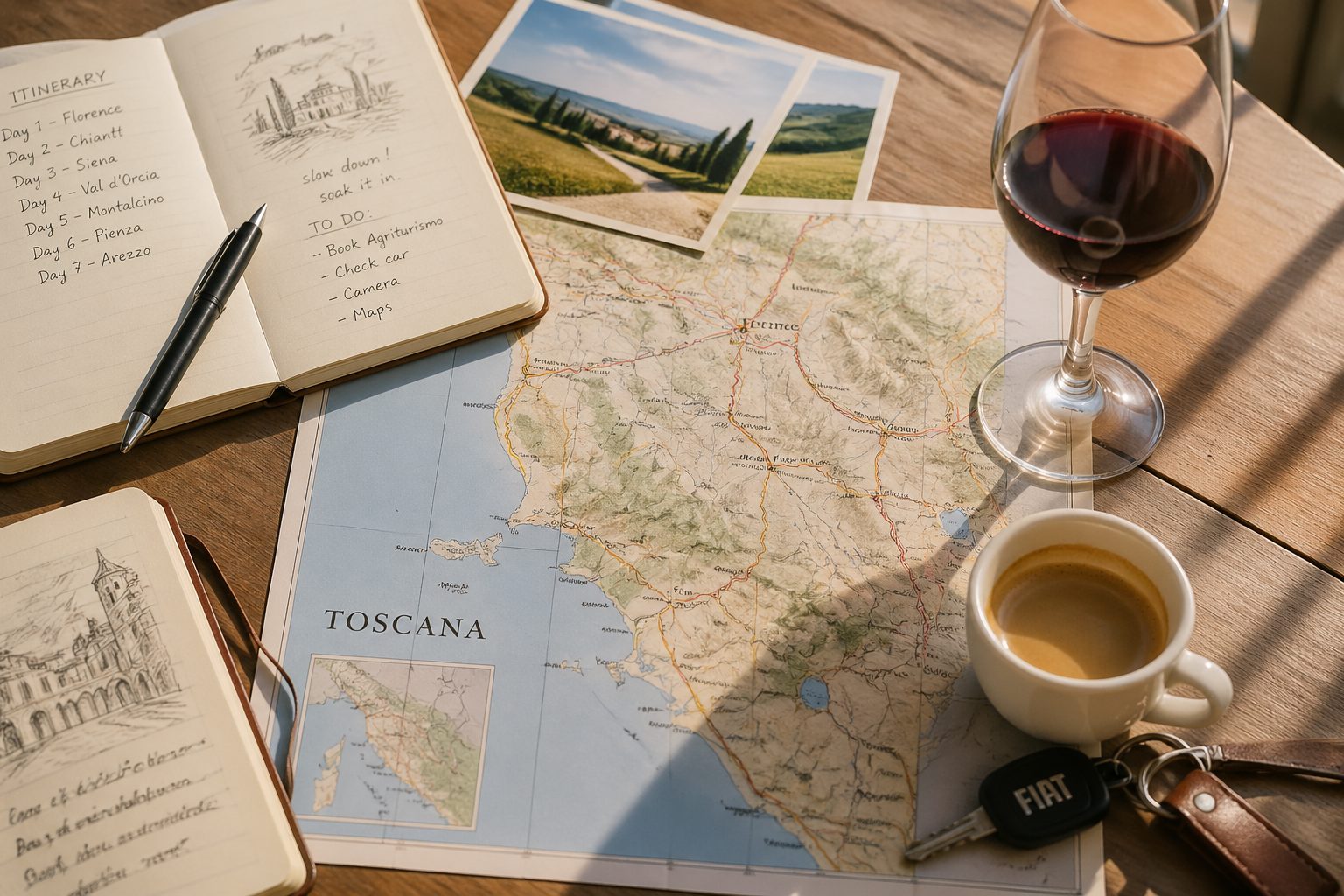
An honest 10-day couples self-drive, mid-tier comfort, no shortcuts on the eating or the wine. All numbers in US dollars at current exchange.
Manual compact rental from Pisa with full insurance and a young-driver waiver: 350 to 500 dollars for the 10 days. Petrol, two-thirds the trip on regional roads with one round-trip motorway leg: 150 dollars. Highway tolls on the autostrada: about 60 dollars depending on routing. Parking in city ZTL alternative garages and at attractions: 90 dollars across the trip.
Accommodation is the largest line. Nine nights in mid-tier agriturismi at 200 to 310 dollars a night runs 1,800 to 2,800 dollars, breakfast included almost everywhere. Restaurants — nine dinners spread across Chianti trattorias, a Brunello tasting menu, one bistecca night, two casual pasta dinners: 900 dollars. Groceries for breakfasts you skip and lunches on the road: 120 dollars at Esselunga or Coop. Six winery tasting visits at 35 to 60 dollars each: 240 to 360 dollars. One Florence or Siena city day with the Uffizi or the Duomo climb plus a real lunch: 120 dollars.
Total, ex-flights, lands between 3,830 and 5,200 dollars for two people across 10 days. The wide spread is mostly accommodation choice — the difference between a 200-dollar agriturismo room and a 450-dollar borgo room compounds across nine nights.
Three saving moves that work without compromise. First, shop the Esselunga or Coop supermarket once for 4-euro Chianti bottles to drink at the agriturismo terrace; the same 25-dollar imports you find in the United States are stocked here for a quarter of the price. Second, eat your largest meal at lunch when most restaurants run a fixed-price menu del giorno at 18 to 25 euros, then keep dinner light. Third, skip the Florence-base hotel entirely and stay at a Chianti agriturismo from night one — breakfast included on the terrace, a pool you actually use, and the drive into Florence for sightseeing days is 35 minutes through real countryside instead of fighting taxi traffic from the train station. Compare DiscoverCars rental rates against the agriturismo Booking.com inventory before you commit; a swing of 5 dollars a day on the rental and 30 dollars a night on the room ends up worth 350 dollars across a 10-day trip.
Frequently Asked Questions
Legally, yes. Italy requires an IDP alongside your home-country license for non-EU drivers. Enforcement at the rental counter is patchy — most agencies do not ask — but if you are stopped by carabinieri, involved in an accident, or making an insurance claim, the missing IDP turns into a real problem and can void your rental insurance. Pick one up from AAA in the United States for about 20 dollars before you fly. It takes 15 minutes and is valid for one year.
For 7 to 10 days, two bases work better than one. Five or six nights in central Chianti — somewhere between Greve and Castellina — covers Florence day trips, the SR222 wineries, Siena, and San Gimignano comfortably. Then move south for three or four nights in the Val d’Orcia, near Montalcino or Montepulciano, to do Brunello, Pienza and the southern landscape without a daily two-hour commute. One base means too much driving; three or more means most of the trip is unpacking.
Mid-September to mid-October is the sweet spot — vendemmia harvest is happening, the light is gold, daytime temperatures sit around 22 to 26 degrees Celsius, and accommodation prices drop noticeably below the July-August peak. Late April through early June is the next best window: warm days, green hills, wildflowers, fewer crowds. Avoid August if you can — peak heat, peak prices, and many family-run cantinas close their tasting rooms for ferragosto holidays the second and third week of the month.
Almost never at the producers worth visiting. The serious estates — Castello di Ama, Biondi-Santi, Fontodi, Avignonesi, Casanova di Neri — take reservations only, often through their own websites with a credit-card hold. Book two to four weeks ahead in shoulder season, six weeks or more for July through early October. Walk-in tasting rooms exist in larger towns like Greve, Montalcino and Montepulciano, and the Fortezza Enoteca in Montalcino is a useful drop-in option, but the experiences worth your afternoon all require a calendar.
Chianti for variety and density, Brunello for depth and prestige. Chianti Classico has roughly 600 producers within a 30-minute drive of any given village, which means you can taste five different houses in a day without stress. Montalcino has fewer estates spread further apart, and the wines are more uniform in style — concentrated, structured, age-worthy 100-percent Sangiovese Grosso. First-time visitors usually prefer a Chianti base with a one-day or two-day push south to Montalcino. Wine-collector travelers often invert that ratio.
Your rental car license plate is automatically logged by the camera. The fine — typically 80 to 160 euros per crossing, plus the rental company’s administrative fee of 30 to 60 euros — is mailed to the rental agency, then forwarded to your home address four to six months later. There is no on-the-spot penalty and no way to plead it down once you are home. Some travelers attempt to ignore the bill; collection agencies do pursue it across borders. The clean fix is to never enter — park in signposted garages outside the historic centers and walk in. If you do realize mid-drive that you have crossed a ZTL, do not double back; that just generates a second fine. Continue to the nearest legal exit and call your hotel for routing advice.
Plan on 3,800 to 5,200 dollars for two travelers across 10 days, excluding international flights. That covers a manual-transmission rental car with full insurance, mid-tier agriturismi accommodation with breakfast, six winery tasting visits, nine dinners out, fuel, tolls, parking, and one full city day in Florence or Siena. The single largest variable is accommodation tier — a 250-dollar agriturismo versus a 600-dollar borgo hotel compounds quickly across nine nights. Manual transmission rather than automatic on the rental saves roughly 300 to 600 dollars across the same 10 days.
