
Why Kyoto Reads Differently Than Tokyo — and Why You Need at Least 5 Nights
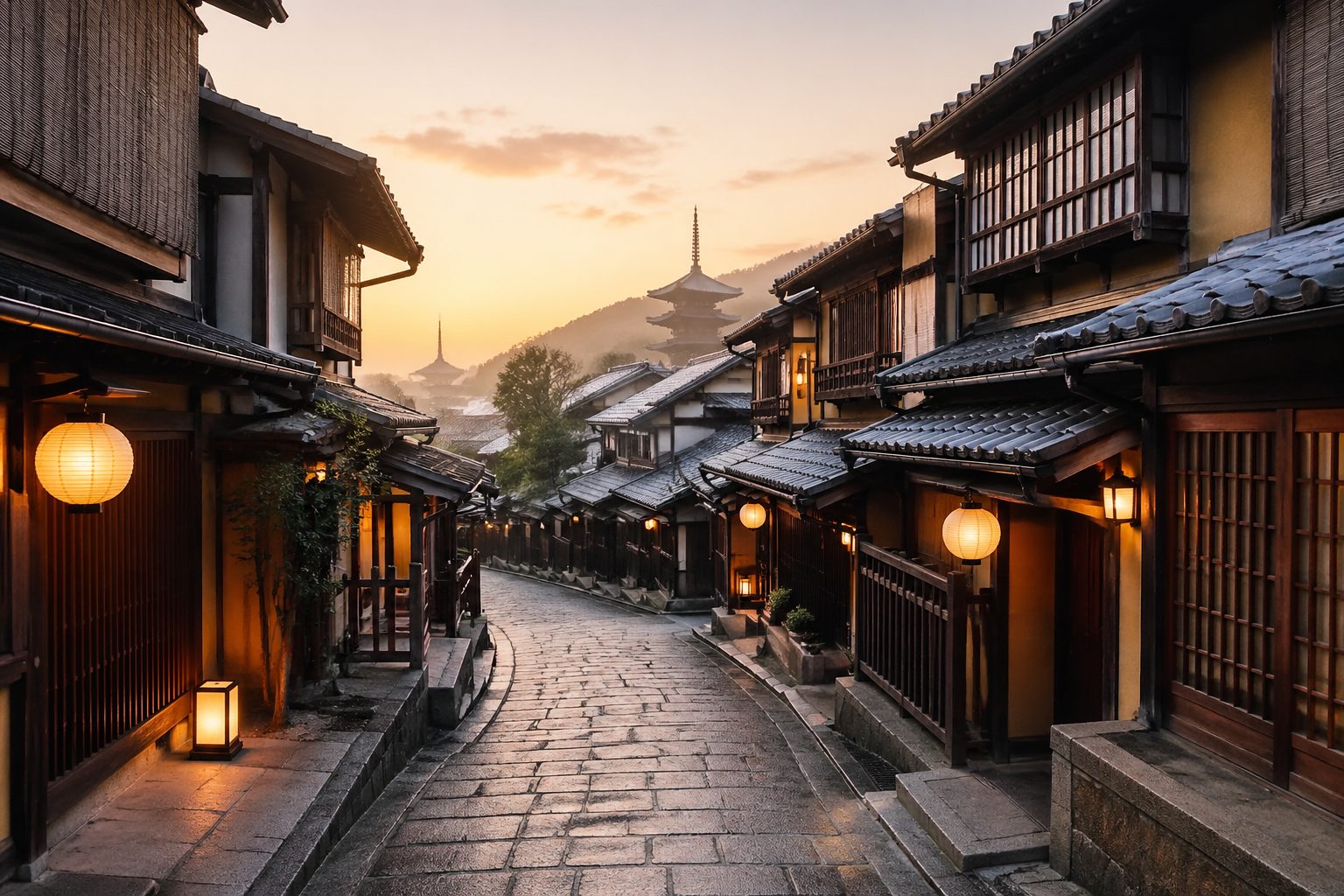
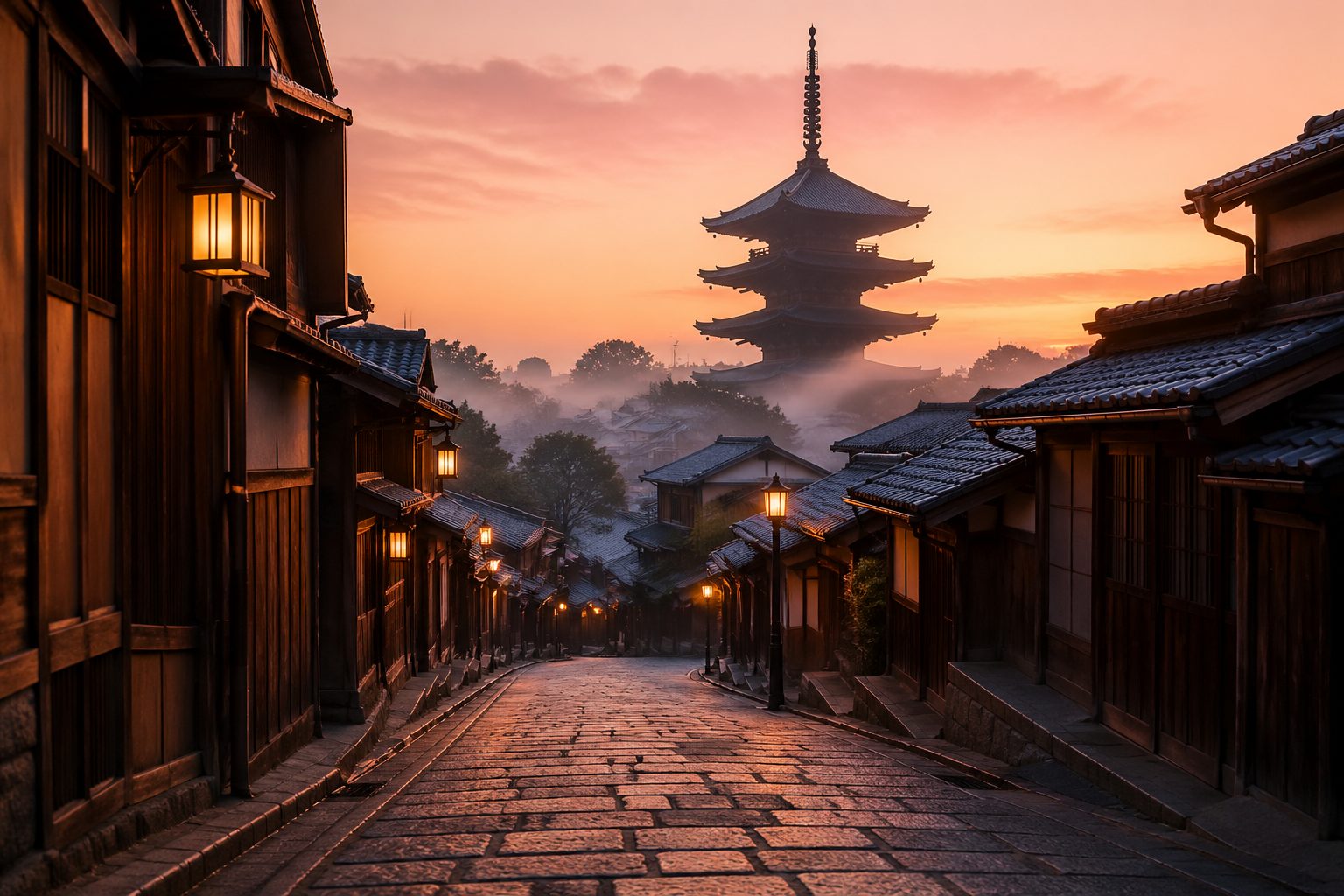
At 5am on your first morning, before the city has woken, a temple bell will sound somewhere up in the eastern hills. You will hear it through the paper-screen window of a ryokan room you booked three months ago, and you will smell hinoki cypress from last night’s bath still drifting up through the wood. Step outside and the only sound on a stone-flagged Higashiyama lane is the clack of a single pair of wooden geta sandals against polished granite. By 9am that same lane will be unwalkable. By 5am it belongs to the city it was a thousand years ago.
This is the part of Kyoto that does not translate into a one-day stopover from Tokyo. Kyoto was Japan’s imperial capital from 794 to 1868 — 1,074 years of art, religion, craft, and ritual concentrated into one valley basin. The numbers are absurd: roughly 1,600 Buddhist temples, 400 Shinto shrines, 17 UNESCO World Heritage sites packed inside the city limits. It is also the only major Japanese city Henry Stimson personally removed from the WWII atomic-bomb target list, partly because he and his wife had honeymooned there. So everything here is original — the wood, the gardens, the hand-painted screens, the kilned roof tiles. You are not visiting reproductions.
Five nights is the minimum because Kyoto runs on a slow rhythm. Real Higashiyama temple-walking is dawn-to-mid-morning, then a long lunch, then a quiet afternoon visit, then geisha-district streets at dusk, then a kaiseki dinner that takes two and a half hours. You cannot speed-run that. Two nights gives you three temples and exhaustion. Five nights gives you Higashiyama, Arashiyama, Kinkaku-ji and Daitoku-ji, a Fushimi Inari sunrise, a half-day kaiseki experience, a Nara day-trip, and one slow morning where you do nothing but drink matcha in a garden.
A few honest 2026 realities. Post-pandemic visitor surge has made Kiyomizu-dera and the Arashiyama bamboo grove jammed with tour buses by 9am — sunrise visits are no longer optional, they are required. A new tourist accommodation tax is rumored for late-2026 implementation. And the geisha-district photography ban in private alleys around Pontocho and Hanami-koji is now actively enforced, with ¥10,000 on-the-spot fines and signs in four languages. You can still photograph the main streets. The narrow private lanes off them — leave the camera in the bag.
Where to Stay: Ryokan vs Boutique Hotel vs Machiya Townhouse
Three styles of stay split the city, and they are genuinely different products. Pick wrong and the trip feels off.
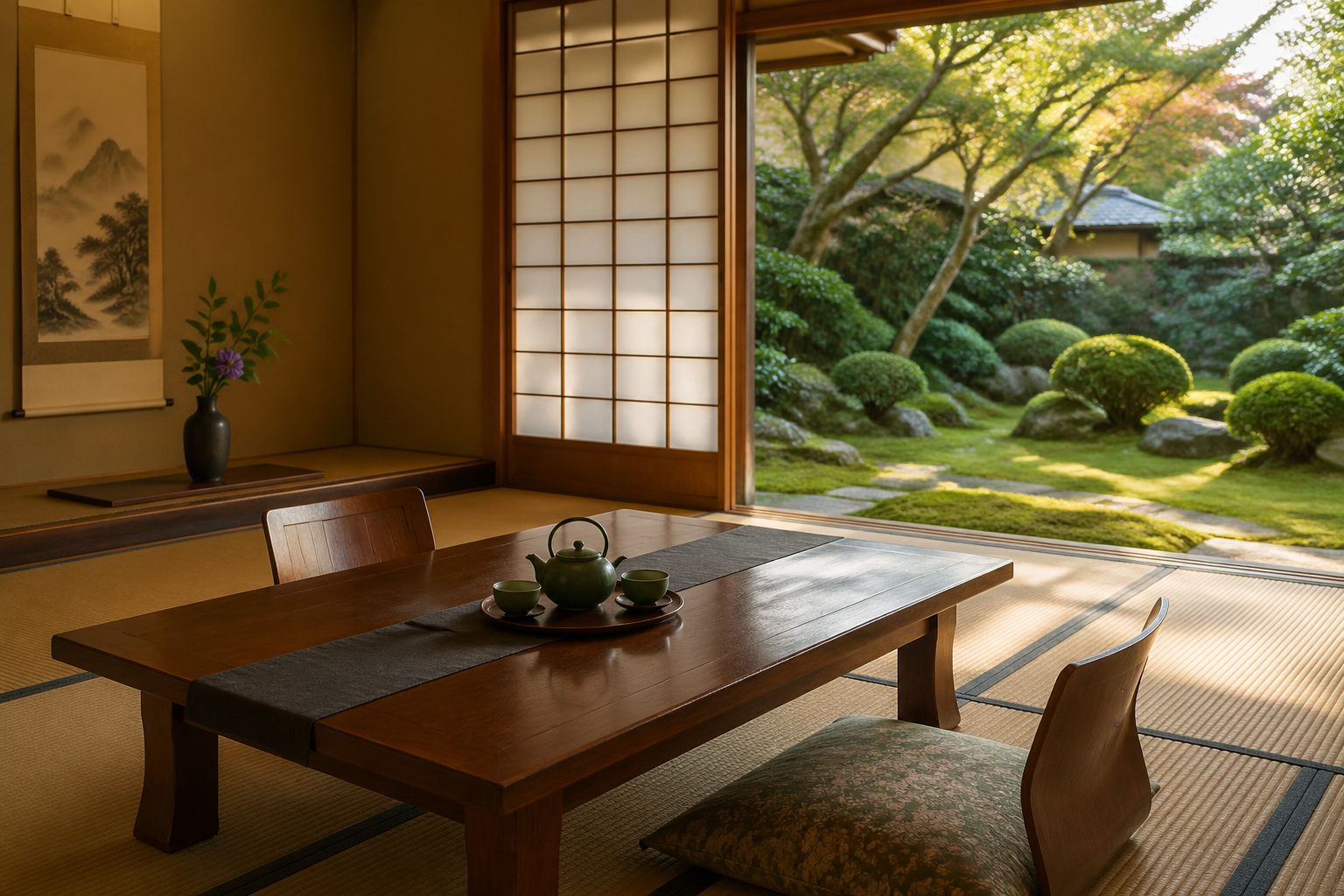
Ryokan. The traditional Japanese inn — tatami-mat floors, futon laid out by an attendant after dinner, multi-course kaiseki served in your room, a hinoki or stone onsen bath downstairs, attendants in kimono. This is the iconic Kyoto experience and the one you will remember in ten years. The price ladder is real. Ultra-luxury starts at Tawaraya, founded 1709, 11 generations under one family, only eight rooms — and rates run roughly $1,200 to $2,000 per night including dinner and breakfast. That is not a typo. Hiiragiya, the next-door rival of similar pedigree, runs $700 to $1,400. Gion Hatanaka sits at $580 to $980 with one of the most accessible reservations in the high tier. Mid-range ryokan exist and are wonderful — expect $300 to $450 per night in Higashiyama, Gion, or near Kyoto Station, almost always with kaiseki dinner and Japanese breakfast bundled in. Factor that into the trip total: a $400 ryokan night is usually two restaurant meals plus the room.
Boutique hotel. Western beds, Western bathrooms, concierge, gym, late check-in. The Mitsui Kyoto (Nijo Castle, $700-1,200), Park Hyatt Kyoto (eastern hills view, $900+), Hotel Granvia at Kyoto Station ($280-450) for travelers who want efficiency over atmosphere. Mix-and-match works well — two ryokan nights for the experience, three boutique-hotel nights for sleep and convenience.
Machiya. Restored century-old wooden townhouses, rented whole, typically four to six guests, full kitchen, traditional furo soaking bath, two floors. Prices run $250 to $600 per night for the whole house, which makes them excellent value for couples traveling together or families. They are scattered through Higashiyama, Nakagyo, and Gion-adjacent backstreets — a short walk to temples but tucked into residential lanes where you fall asleep to the sound of nothing.
Book ryokan and boutique hotels through Booking.com — coverage is strong and ryokan listings now include the kaiseki-inclusive prices upfront, which used to be opaque. Sakura week (last week of March, first week of April) and koyo autumn-leaves season (mid-November to early December) require reservations six months in advance.
The Five Essential Temple Areas: Higashiyama, Arashiyama, Kinkaku-ji, Daitoku-ji, Fushimi
Higashiyama, the eastern hills district, is one continuous full-day walk and the spine of any first Kyoto trip. Start at Kiyomizu-dera (entry ¥500) at 6:30am — yes, that early — to walk the wooden veranda before the tour buses unload. Descend the preserved slopes of Sannenzaka and Ninenzaka, two of Japan’s most photographed streets, with shop awnings still half-shuttered. Pass Yasaka Pagoda for the postcard frame. Stop at Kodai-ji, which on autumn evenings runs after-dark illuminations through its bamboo grove that almost nobody knows about. Cut through Maruyama Park to Yasaka Shrine, then drift down into Gion proper. That is one Kyoto day, and your knees will know it.
Arashiyama, the western edge, is best done on a separate morning. The bamboo grove is genuinely stunning — twenty meters tall, green-fluorescent in dappled light, the wind rattling the canes — but it is also genuinely a circus. Be there by 6:30am or 7am. By 9am the path is shoulder-to-shoulder. Combine it with Tenryu-ji (¥500, head Zen temple of the Rinzai school) and Okochi Sanso, the silent-film actor’s hillside villa where the ¥1,000 entry includes a bowl of matcha overlooking the Hozu valley.
Kinkaku-ji, the Golden Pavilion (¥500). Yes, it is the most-photographed temple in Japan. Yes, the crowds are real. Go anyway, around 9am, when the gold-leaf cladding catches morning sun and reflects whole onto the pond. It is the image of Kyoto for a reason.
Daitoku-ji is the underrated answer. A walled compound of 22 sub-temples in the northwest, two of which — Daisen-in and Ryogen-in — open small Zen meditation gardens to the public. You will be one of perhaps six people sitting on the wooden veranda watching raked gravel and a single moss-covered stone for half an hour. This is the Kyoto people fall in love with.
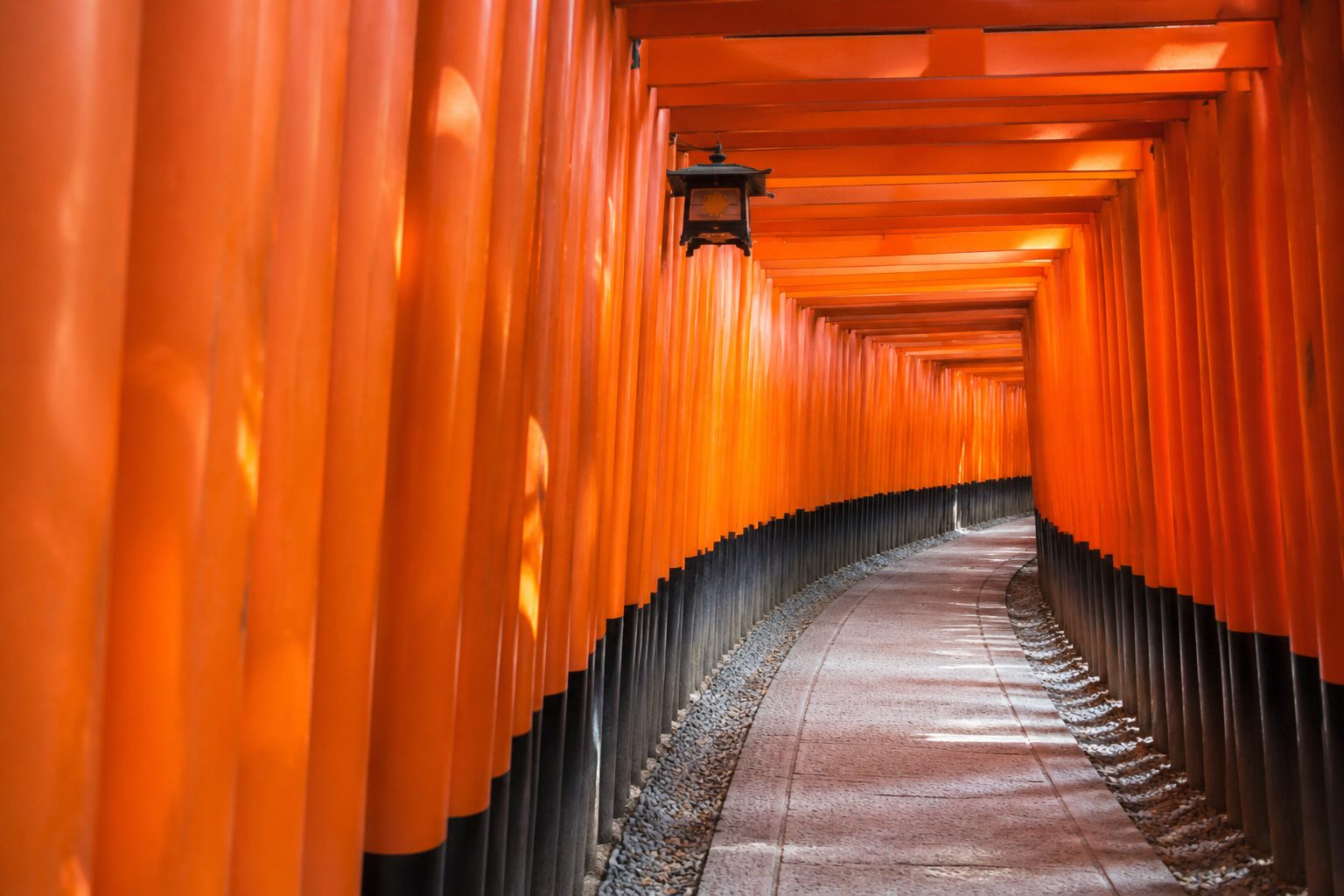
Fushimi Inari Shrine, southern suburbs, is free and open 24 hours. Ten thousand vermilion torii gates climbing Mount Inari in tunnel formation — the full loop is about four hours up and down. Sunrise at 5:30am or sunset at 17:30 are the only times the photos are not full of strangers’ shoulders. Klook handles temple-area combo tickets and shuttle add-ons; GetYourGuide runs the small-group temple walking tours if you want a guide who can translate the iconography.
Tea Ceremony, Kaiseki Dining & The Geisha Districts
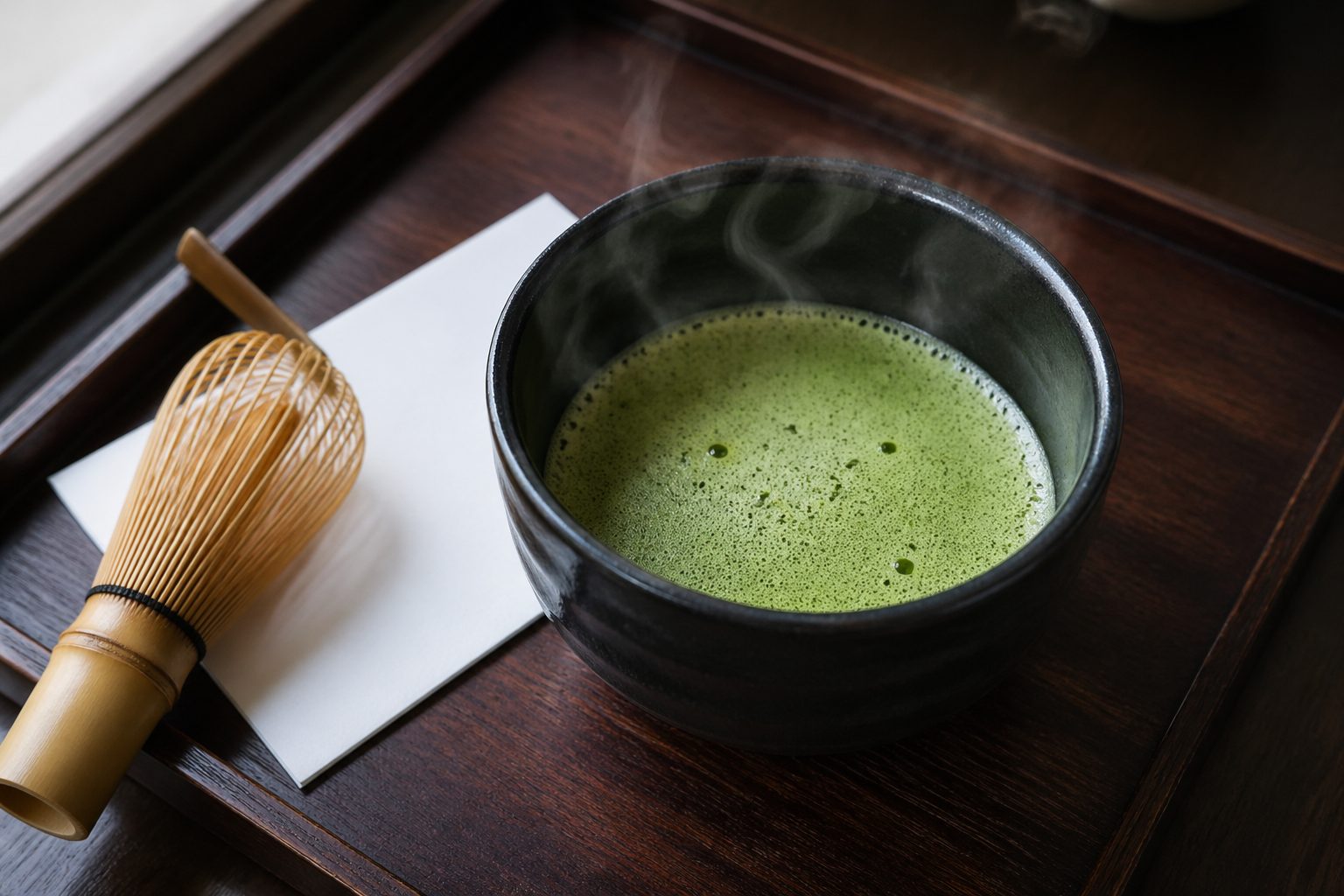
A proper chanoyu, or tea ceremony, is forty-five minutes of choreography that has not changed in four hundred years. The host kneels, opens a folded silk cloth, ladles hot water into a black-glaze tea bowl, whisks powdered matcha into a green-fluorescent froth, rotates the bowl twice, and presents it. You bow, rotate it twice the other way, drink in three sips, and praise the bowl. Camellia Flower in Higashiyama runs the most accessible version for visitors — ¥3,500 per person for a one-hour group session in English, beginner-friendly without being condescending. En Tea Ceremony in central Kyoto offers a similar product with a smaller group cap. For serious students, the Urasenke Foundation, headquarters of the largest tea school in Japan, runs visitor programs by appointment.
The geisha districts are where Kyoto people-watching becomes addictive. Pontocho, a single narrow lane between Kawaramachi and the Kamo River, lights its red-paper lanterns at dusk and turns into a corridor of teahouses, tiny restaurants, and the occasional kimono-flash of a maiko in transit. Gion Shimbashi, on the other side of the river, is the older preserved quarter — wooden machiya, willow trees, a stone bridge over a canal. Walk Hanami-koji, the main Gion street, at 5:30 to 6:30pm and you will probably see a geiko or maiko hurrying to her first appointment of the evening. The rules in 2026 are firm: photos on the main streets are fine; photos in the narrow private side-alleys are illegal and enforced. Watch where the no-camera signs are. If you want a guaranteed photograph, book the spring Miyako Odori dance performance at Gion Kobu Kaburenjo, ¥4,000 to ¥7,500, April only.
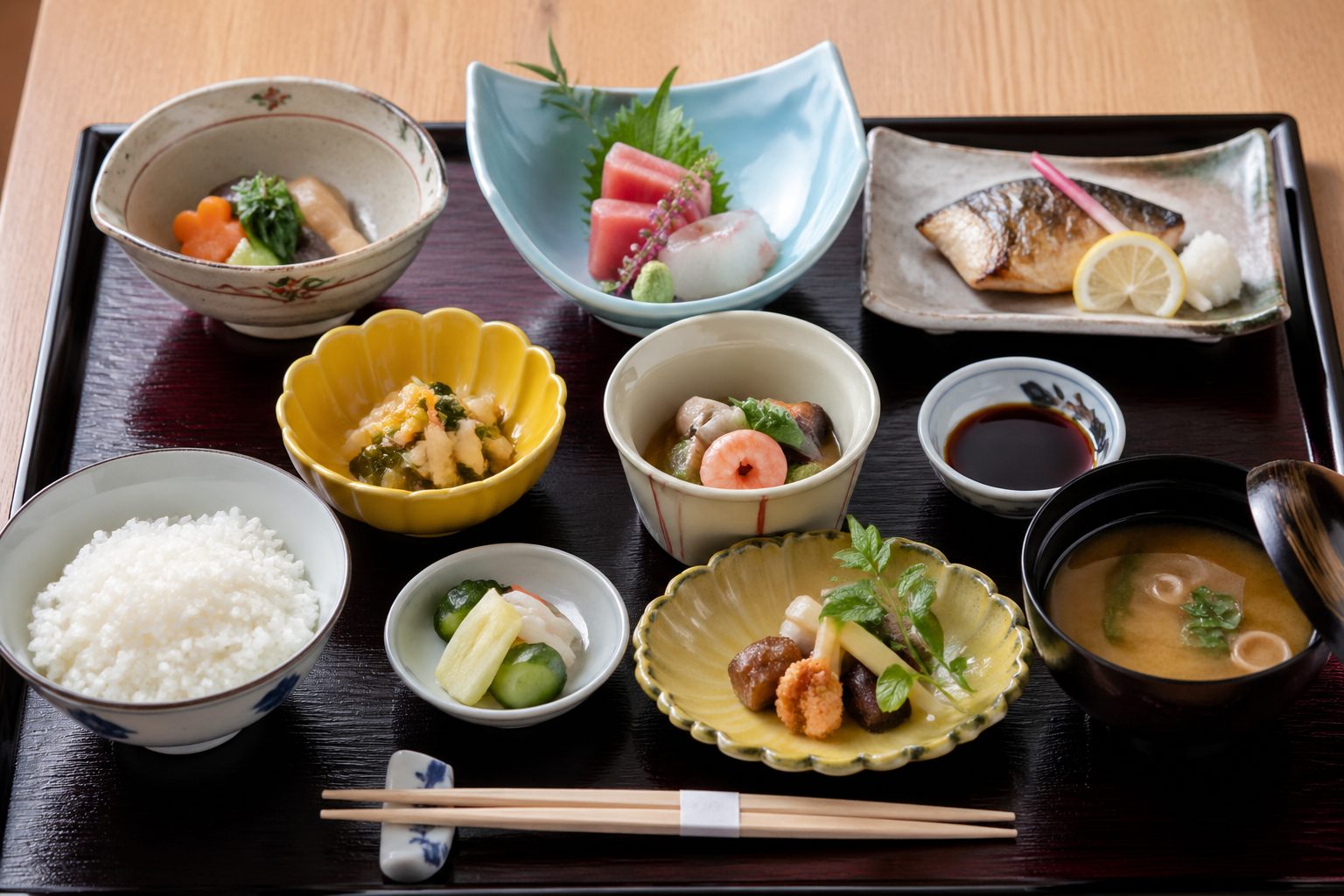
Kaiseki, multi-course seasonal Japanese haute cuisine, is the meal most people fly to Kyoto to eat once. The legends: Kikunoi (3 Michelin stars, ¥30,000+ per person, dinner books two to three months ahead). Roan Kikunoi, the sister restaurant near Pontocho, ¥18,000, easier to land. Hyotei, founded over 400 years ago as a teahouse outside Nanzen-ji, runs a ¥18,000 garden-pavilion lunch that is the most accessible way to eat at a 400-year-old institution. Book through GetYourGuide-partnered booking services or directly through hotel concierge — independent reservations from overseas are difficult. Klook bundles tea-ceremony plus kaiseki packages for travelers who want a single click.
Day Trips from Kyoto: Nara, Uji, Hiei-zan, Himeji
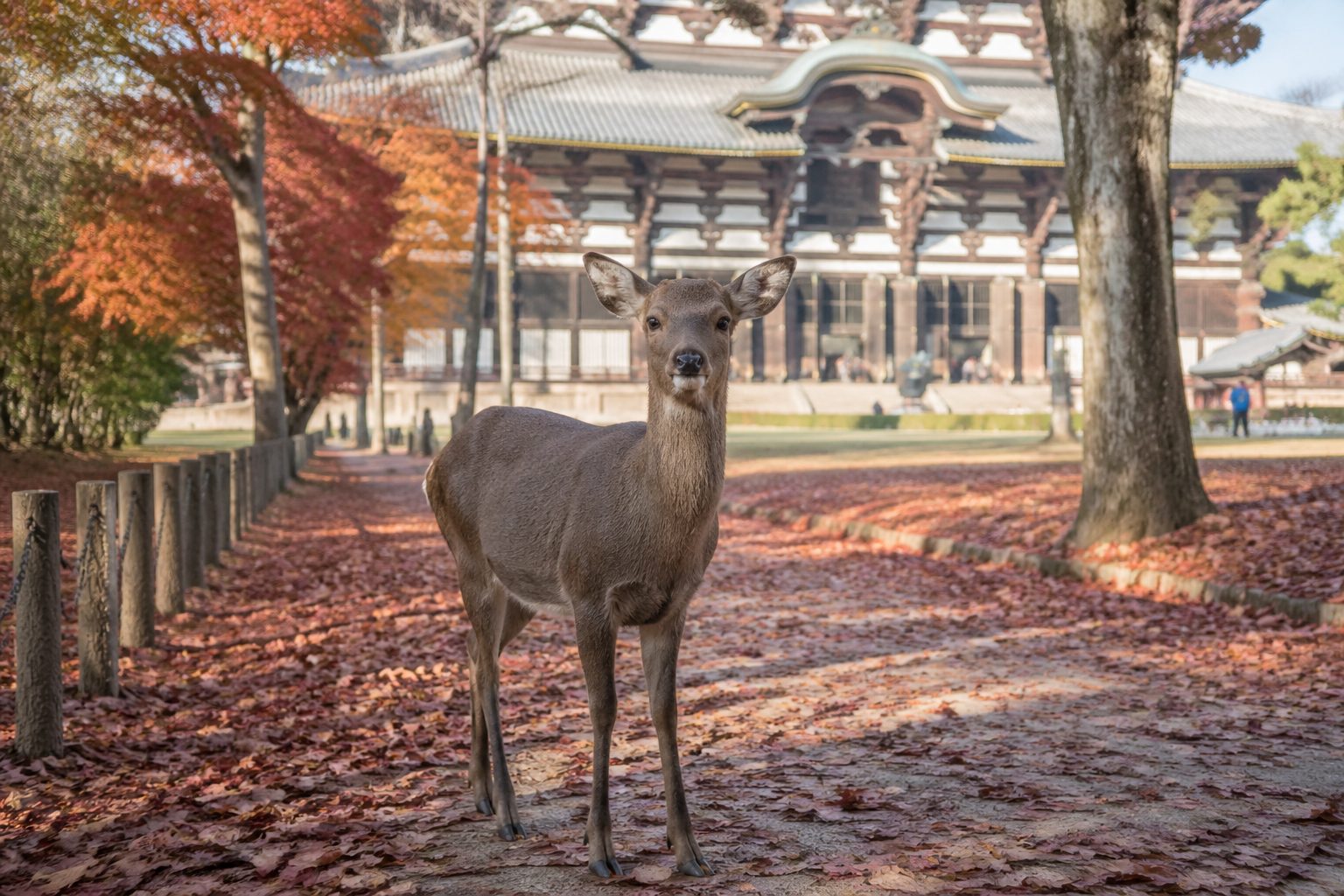
Kyoto sits in the middle of one of the densest cultural day-trip ranges in Asia. Four trips earn the rail fare.
Nara, 45 minutes south on the Kintetsu line. Japan’s first permanent capital, 710 to 794, before the court moved to Kyoto. The headline is Todai-ji and its Daibutsu, a 14-meter bronze Great Buddha cast in 752 — still the largest bronze Buddha in the world, housed in the largest wooden building in the world. From there walk to Kasuga Taisha, three thousand stone and bronze lanterns lining the forest paths. Nara Park itself is a 1,200-acre reserve with more than 1,000 sika deer roaming free, considered messengers of the Shinto gods. They will bow to you for rice crackers (¥200 a pack from the stalls) and they will absolutely follow you. One full day, train back by 17:00.
Uji, 30 minutes south on the JR Nara line. Two reasons to go: Byodo-in temple, the Phoenix Hall pictured on the back of the ¥10 coin, founded in 1052 and one of the only Heian-era wooden buildings still standing; and matcha. Uji is the Japanese green tea capital. The riverside walk is lined with century-old tea shops where you can drink graded matcha for ¥800 to ¥2,000 a bowl, and the Tokoen and Nakamura Tokichi houses both run accessible green-tea tasting flights.
Hiei-zan, Mount Hiei. Cable-car plus ropeway up from Yase-Hiezanguchi to the Enryaku-ji temple complex, the 1,200-year-old headquarters of Tendai Buddhism. Three sub-areas (Todo, Saito, Yokawa), forested mountain paths between them, very few foreign visitors. A full slow day.
Himeji, 52 minutes by shinkansen on the Sanyo line. Himeji-jo is widely considered the most beautiful original castle in Japan — six stories, gleaming white plaster, never destroyed, never replaced with concrete. Combined with the adjoining Koko-en garden it is a half-day round-trip. Klook sells JR Pass-equivalent regional passes plus discounted Nara and Himeji day tours; GetYourGuide runs the English-language guided Nara day-trips that take the deer-park-and-Todai-ji confusion out of the equation.
Getting Around Kyoto: Subway, Bus, Bicycle, Ride-Hail
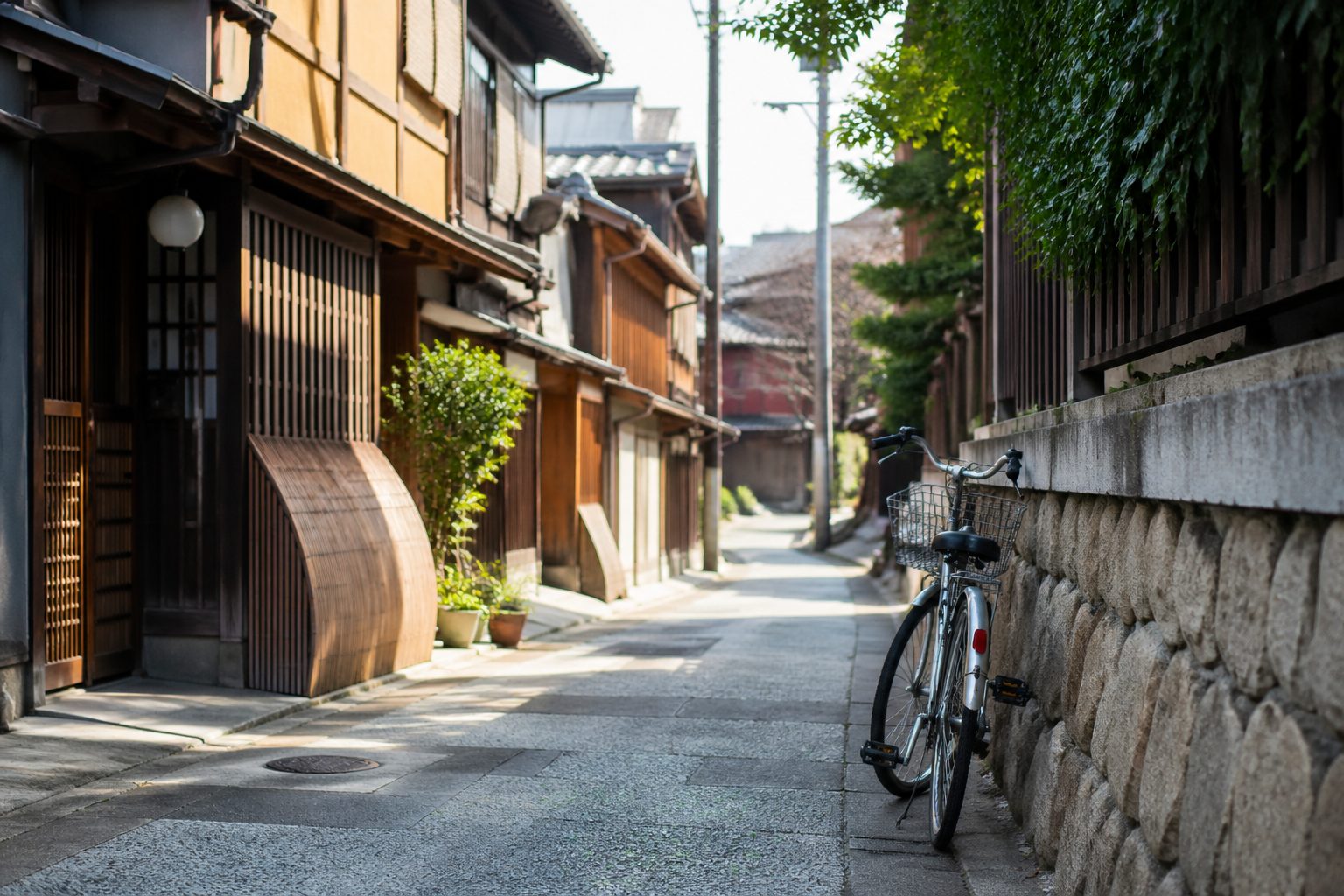
Kyoto’s transport map looks chaotic and, honestly, partly is. Two subway lines do most of the cross-town heavy lifting. The Karasuma line runs north to south through the city — Kyoto Station up through downtown to the Imperial Palace and beyond. The Tozai line runs east to west and drops you at Higashiyama Station, which is the gateway to the eastern temple walk. Single fares run ¥220 to ¥350 by distance.
The bus network is dense, reaches every temple, and is famously slow during peak season. A single ride is ¥230 flat across the city core; a one-day bus pass is ¥700 and pays for itself if you take three rides. The catch is that buses on Higashioji Street and around Kiyomizu-dera can sit motionless for twenty minutes in October and April. Walking is often faster.
Kyoto is flat, compact, and one of the best cycling cities in Japan. Rent through KCAT or the Kyoto Cycling Tour Project, roughly ¥1,000 per day for a basic city bike. The catch is parking: police actively remove illegally parked bikes, and you must use one of the marked municipal bike lots (¥150 per day). The bike pays off enormously in Arashiyama, along the Kamo River bike path, and circling the Imperial Palace grounds.
For Arashiyama, take the JR Sagano line from Kyoto Station — 15 minutes, ¥240. It drops you a five-minute walk from the bamboo grove. Avoid taxis during morning and evening peaks; gridlock on Higashioji and around Kiyomizu can turn a 10-minute fare into a 40-minute ride.
The single piece of advice that simplifies everything: load an ICOCA prepaid card at any station kiosk, or set up a Suica or PASMO in Apple Wallet on your phone, and tap on every train, subway, and bus in the city without thinking about it. Top up at convenience stores. The card also works at Kyoto Station kiosks, vending machines, and most konbini, so it doubles as cash for snacks and bottled green tea.
Best Time to Visit Kyoto: Cherry Blossoms, Autumn Leaves & Off-Season Reality
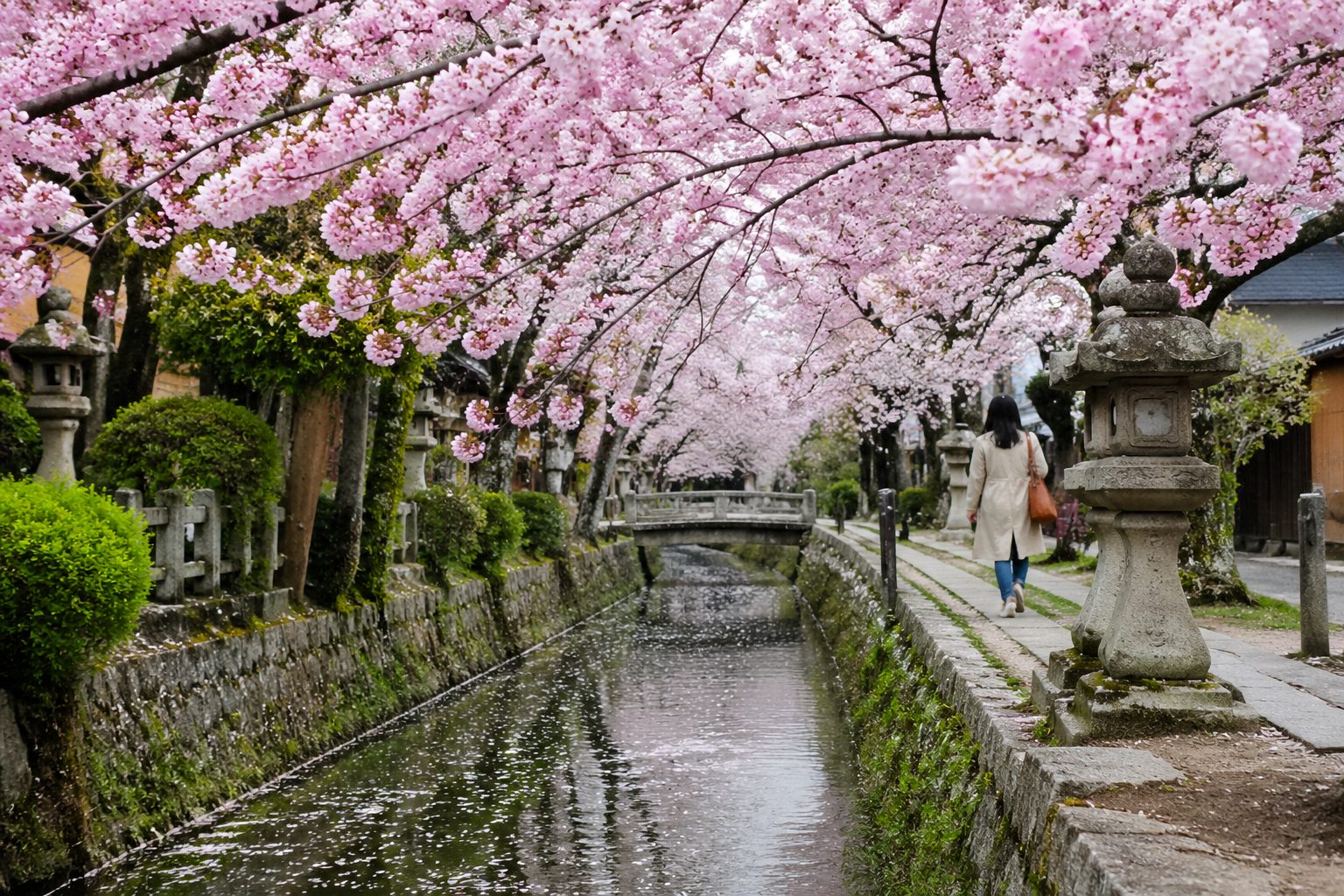
There are two seasons everyone wants and four seasons that are quietly better.
Sakura, cherry blossom, peaks the last week of March into the first week of April most years — the 2026 forecast tracks similar. Maruyama Park at night under floodlit weeping cherries, the Kamo River banks for picnics, the Philosopher’s Path along its small canal lined with 500 trees. The crowds are extreme. Hotel rates double. Ryokan reservations require six months of lead time. Plan accordingly or do not plan it at all.
Koyo, autumn leaves, runs mid-November into the first week of December. Tofuku-ji’s wooden viewing bridge looking over a maple-fired ravine is the photograph. Eikan-do and Kiyomizu-dera both run after-dark illuminations through their koyo gardens. Same crowd density as sakura, same hotel surge.
The off-season sweet spots most foreign visitors miss. Late May, after Golden Week ends, before tsuyu rainy season fully sets in — gardens are violently green, temple moss is glowing, crowds are domestic only. Early September, where humidity drops in the first week and late-summer light hits the temple roofs like film stock. Domestic travelers are back at work; foreign cherry-and-leaves chasers are not yet there. Quiet, warm, cheaper.
Winter, December through February, is Kyoto’s actual secret. Snow on the gold leaf of Kinkaku-ji, even rarely, is one of the most photographed images in Japan. Gion teahouses light their lanterns earlier. The kaiseki menus shift to crab and yellowtail. Many ryokan run half-price specials. You will need a coat — Kyoto winters drop to 2 to 5 degrees Celsius — but you will have temples to yourself.
The weeks to actively avoid: Golden Week (April 29 to May 5), when every Japanese family travels domestically en masse; Obon (mid-August), the ancestral homecoming holiday; and New Year (January 1 to 3), when shrines are mobbed for hatsumode first-prayer visits. During these stretches local trains, hotels, and restaurants all run hard, and prices spike for what is effectively the worst experience of the year.
Kyoto 5-Night Trip Budget: Real 2026 Numbers in JPY + USD
Here is what a realistic five-night Kyoto trip for two adults actually costs in 2026, separated from international airfare.
Lodging. Two nights at a mid-tier ryokan with kaiseki dinner and breakfast included at roughly $300 per night equals $600. Three nights at a boutique hotel — Granvia, Mitsui, Hyatt-tier — averaging $220 per night equals $660. Lodging total: $1,260.
Food. The two ryokan nights bundle dinner and breakfast, so those are sunk. One independent kaiseki dinner at the Roan Kikunoi or Hyotei lunch tier is roughly $350 for two including drinks. Twelve other meals across the trip — six dinners at ¥3,000 to ¥6,000 per person, six lunches at ¥1,200 to ¥1,800 per person — comes to about $520 total. Cheap conbini coffees, vending-machine green tea, and matcha-shop stops run another $40. Food total ex-ryokan-bundled: $910.
Experiences. Tea ceremony at Camellia Flower for two: $50. Two cultural experiences (kimono walk, calligraphy class, sake tasting): roughly $90 combined. Temple entries across 8 to 10 temples averaging ¥500 each: about $75 for two people. Experiences total: $215.
Transport in-region. ICOCA loaded with ¥6,000 each ($40 per person, $80 for two) covers all subway, bus, and JR-line travel inside the city plus most short hops. Nara day-trip rail plus Todai-ji and Kasuga entries: $90 for two. Total local transport: $170.
Getting to Kyoto. Tokyo to Kyoto shinkansen one-way is roughly ¥14,000 per person, so $240 round-trip per person, $480 for two — unless you buy a 7-day JR Pass at $370 per person, which makes sense only if you also do Hiroshima or Tokyo-Kyoto-Tokyo. For Kyoto-only, just buy single-trip shinkansen tickets.
In-region grand total for two: roughly $3,035, plus or minus $300 depending on ryokan choice and meals. International flights from US gateways run an additional $1,400 to $2,800 per person. Money-savers that genuinely work: take kaiseki at lunch instead of dinner (same quality, half the price), book ryokan through Booking.com during the off-season, skip the JR Pass for a Kyoto-only trip, and bundle temple-area tickets through Klook day-passes.
Frequently Asked Questions
Five nights is the minimum for a first trip. Two nights covers Higashiyama in a rush and you leave exhausted. Five gives you Higashiyama, Arashiyama, Kinkaku-ji and Daitoku-ji, a Fushimi Inari sunrise, a kaiseki dinner, a Nara day-trip, and one slow morning in a temple garden. Seven nights is better if you also want Uji or Himeji.
Yes, but only if you arrive before 7:30am. By 9am the main path is shoulder-to-shoulder with tour groups and the ‘sound of wind in bamboo’ that everyone talks about is drowned out by conversation. Sunrise visits, ideally 6:30 to 7:00am, give you the experience the photos sell.
On the main streets of Gion and Pontocho — Hanami-koji-dori, Shijo-dori, the river-facing side of Pontocho — photography is fine. In the narrow private alleys leading off those main streets, photography of geiko, maiko, or any private property is banned with on-the-spot fines of ¥10,000 since 2020 and actively enforced in 2026. Watch for the no-camera signs in four languages and respect them.
For at least one or two nights, yes. The full ryokan experience — tatami room, kaiseki dinner served in your space, futon laid out, hinoki onsen bath — is the part of Japan you cannot get from a hotel. A mid-tier ryokan at $300 to $400 per night including dinner and breakfast effectively replaces those meals. Mix two ryokan nights with three boutique-hotel nights for the best of both worlds.
Late May after Golden Week, the first week of September, and early-to-mid December. All three give you mild weather, deep green or first autumn-color gardens, ryokan availability without six-month lead times, and temples you can actually photograph without strangers in the frame. Avoid Golden Week (April 29 to May 5), Obon (mid-August), and New Year (January 1 to 3).
No. The 7-day JR Pass at roughly $370 per person only pays off if you do Tokyo-Kyoto-Tokyo or add Hiroshima. For a Kyoto-only or Kyoto-with-day-trips itinerary, single shinkansen tickets plus an ICOCA card for local transport is significantly cheaper. Run the numbers before you buy.
It is different, not better. Tokyo is contemporary Japan at maximum density — neon, food, fashion, technology. Kyoto is traditional Japan preserved as a living museum — temples, gardens, craft, ritual. Most first-time travelers do five to seven days split roughly half-and-half. Skip Kyoto and you have not seen old Japan; skip Tokyo and you have not seen modern Japan.
Yes, especially the famous ones. Kikunoi, the 3-Michelin-star reference, books two to three months ahead. Roan Kikunoi and Hyotei lunch take roughly three to four weeks. Hotel concierge desks at the Mitsui, Hyatt, and Granvia handle the reservation process for guests; independent online booking from overseas is difficult because most Kyoto kaiseki houses do not run English-facing reservation systems.
