
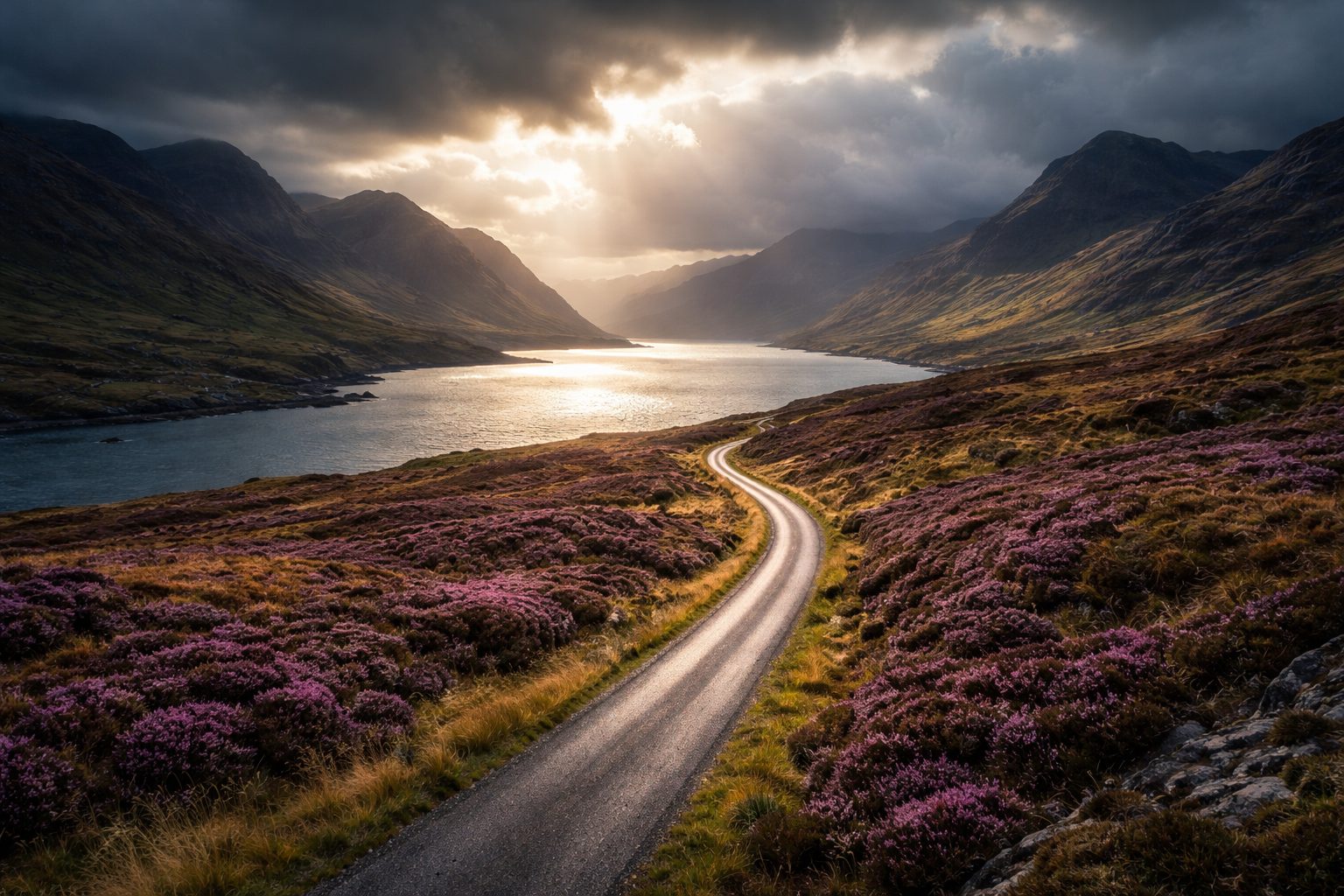
Why the Scottish Highlands Is the World’s Greatest Road Trip
You will feel it before you even reach the first summit — that particular tightening in the chest as the motorway dissolves into single-track roads threading between mountains that seem to have been placed there by some generous, restless god. The Scottish Highlands road trip is not merely a scenic drive. It is an encounter with geological time, with ancient Gaelic culture, with skies that change mood every twenty minutes and lochs so dark and still they feel sacred.
The statistics back up the superlatives. The North Coast 500 — Scotland’s answer to Route 66 — was named the world’s most scenic coastal route by Travel + Leisure in 2021 and has since been ranked consistently among the top five road trips on Earth. Stretching approximately 516 miles (830 kilometres) around the northern coast of Scotland, it passes through landscapes of such variety that you will question whether you are still in the same country: the black Torridonian sandstone cliffs of Wester Ross, the pristine white-sand beaches of Durness, the volcanic drama of the Quiraing on Skye, visible on a clear day from the mainland road.
What makes a Scotland self-drive 2026 so compelling right now is timing. Post-pandemic travel recovery has stabilised, and the Highlands have invested heavily in infrastructure — electric vehicle charging points now dot the NC500 route, tourism management schemes have introduced parking passes at the most vulnerable sites like Fairy Pools and the Quiraing, and a new network of ‘Slow Travel’ waymarked detour routes launched in 2024 incentivises exploration beyond the headline road. The region rewards those who wander.
There is also the wildlife. Scotland is home to 75% of the UK’s red squirrel population, with the Cairngorms National Park — at 4,528 square kilometres, the largest national park in the British Isles — sheltering red deer, osprey, golden eagle, wildcat, and occasionally even pine marten bold enough to approach a parked car. You will want to leave time to simply stop. The Highlands punish rushing and reward patience with scenes of impossible beauty.
For the traveller accustomed to the smooth certainties of major highways, the Highlands deliver constant, exhilarating surprise. A passing place sign forces you to reverse for a sheep. A sea mist rolls in from the Atlantic and turns a familiar road utterly alien. A barn owl crosses low through your headlights at dusk on the road to Tongue. These are not inconveniences — they are the whole point.
The NC500: Complete 7-Day Itinerary Starting from Inverness
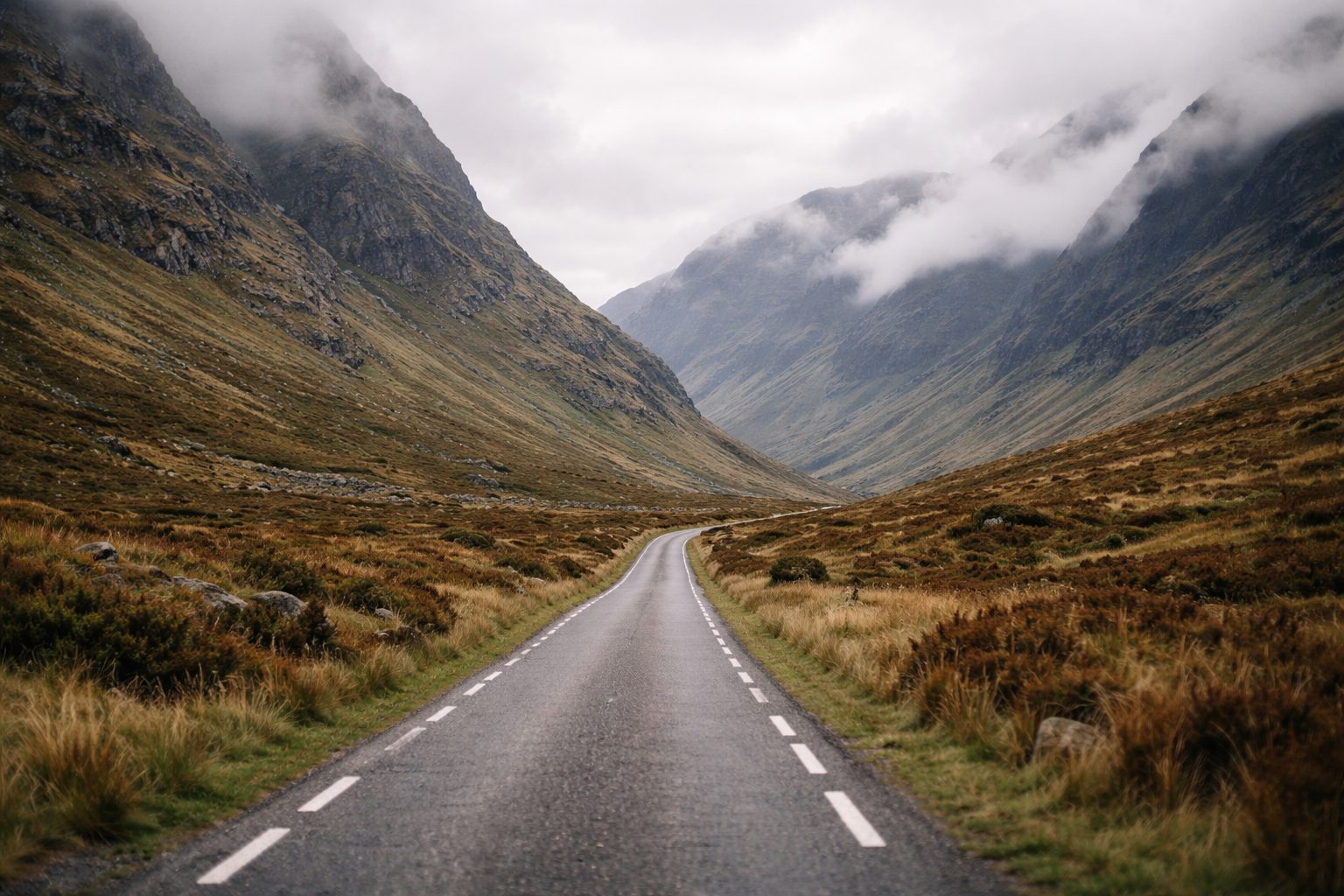
You will begin, as most do, in Inverness — the self-proclaimed capital of the Highlands, sitting at the mouth of the Caledonian Canal where the River Ness meets Beauly Firth. Inverness Airport (INV) receives direct flights from London Gatwick, London Luton, Bristol, Manchester, and Birmingham, making it the logical gateway for the NC500 road trip guide that follows.
Day 1: Inverness to Applecross (approx. 120 miles)
Leave Inverness on the A835 northward through Garve, then branch southwest on the A832 through the Torridon peninsula. The Beinn Eighe National Nature Reserve — Britain’s first, established in 1951 — rises to your left in tiers of ancient Cambrian quartzite. Arrive in Torridon village for lunch, then take the coast road to Applecross via the Bealach na Bà, the ‘Pass of the Cattle.’ At 626 metres, it is the third highest road in Scotland and features hairpin bends with 1-in-5 gradients that will test both your nerve and your hire car’s brakes. The view from the summit — across the Inner Sound to Raasay and the Cuillin of Skye — is the finest accessible viewpoint in mainland Scotland. Stay at the Applecross Inn, where langoustines are pulled from the loch by boats you can watch from the garden.
Day 2: Applecross to Ullapool (approx. 90 miles)
Drive north through Shieldaig and Kinlochewe, stopping at the Corrieshalloch Gorge — a 61-metre-deep box canyon with a Victorian suspension bridge above roaring Falls of Measach. Ullapool is a genuine working fishing village, its white-painted houses reflected in Loch Broom, and the base for CalMac ferry crossings to the Outer Hebrides. The Ceilidh Place in Ullapool runs nightly live music sessions worth planning around.
Day 3: Ullapool to Durness (approx. 100 miles)
This is the remotest stretch of the NC500 road trip and the one most likely to produce genuine awe. The road north of Ullapool on the A894 passes through Assynt — a landscape of isolated quartzite mountains rising from the flat boggy ground like something from another planet. Suilven (731m), Stac Pollaidh (612m), and Quinag (808m) are each extraordinary. Stop at Smoo Cave near Durness: a coastal limestone cave system with a waterfall inside that can be seen on guided boat tours (typically £8 per adult, check local operators for 2026 pricing). Durness has sand beaches — Balnakeil, just west of the village — that would not look out of place in the Maldives on a sunny day.
Day 4: Durness to Thurso (approx. 110 miles)
The north coast. Cape Wrath — the UK’s most northwesterly point — requires a minibus and a small ferry across the Kyle of Durness (seasonal service, typically April to October). Back on the main route, Tongue sits on the shores of the Kyle of Tongue, its ruined castle overlooking an estuary that fills with grey seals at low tide. Bettyhill, named for Elizabeth, Countess of Sutherland who presided over the brutal Highland Clearances of the 1810s, has a moving Strathnaver Museum chronicling that history. Thurso is a functional base with good supermarkets — stock up.
Day 5: Thurso to Wick and the Far North (approx. 80 miles)
Dunnet Head (not John O’Groats — a common mistake) is the true northernmost point of mainland Britain. The lighthouse was built by Robert Louis Stevenson’s father, Thomas, in 1831. Wick is a former herring capital; at its peak in 1862, over 1,100 boats fished from its harbour. The Wick Heritage Centre tells that story with extraordinary detail. Castle Sinclair Girnigoe, perched on crumbling sea cliffs north of Wick, is among Scotland’s most dramatically sited ruins.
Day 6: Wick to Inverness via the Black Isle (approx. 150 miles)
Dip south through Helmsdale, following the A9 through the Strath of Kildonan — a river valley where the 1869 Scottish Gold Rush saw prospectors pan for gold in the Helmsdale River. Small quantities are still found by recreational panners today. Cross the Dornoch Firth Bridge and detour onto the Black Isle peninsula to visit Chanonry Point, where bottlenose dolphins surf the tidal bore at the Firth’s narrows — one of the most reliable cetacean watching spots in the UK.
Day 7: Inverness — Rest and Explore
Culloden Battlefield, four miles east of Inverness, is the site of the last pitched battle on British soil, fought on April 16, 1746. The National Trust for Scotland visitor centre is exceptional, and the moor itself — largely unchanged — is genuinely haunting. Spend the final afternoon in Inverness’s Victorian Market or kayaking the River Ness before your morning departure.
Renting a Car in Scotland: Everything You Need to Know
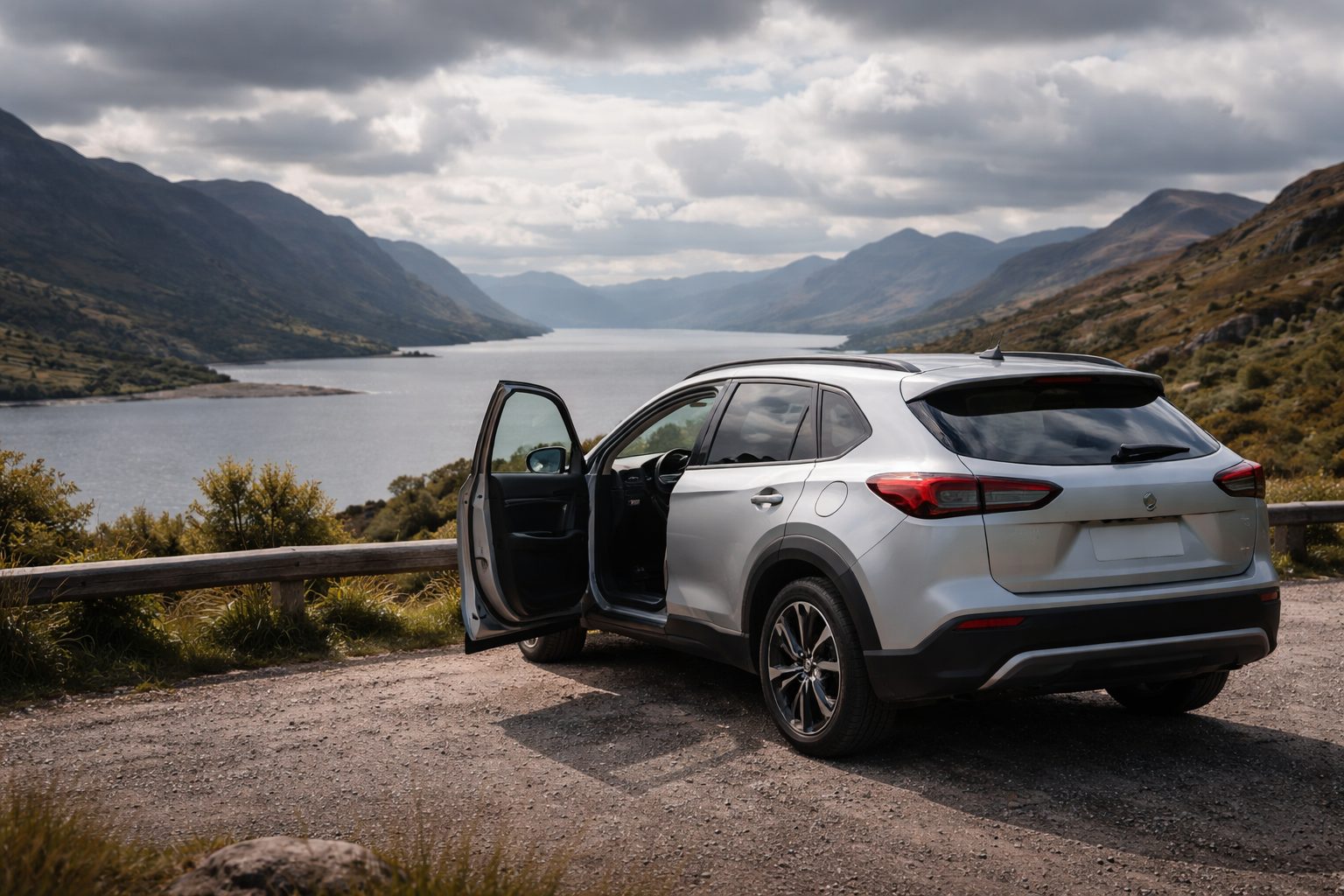
Your Scotland self-drive 2026 begins with the right vehicle — and the Highlands demand more careful thought about this than most destinations. You will not get away with a small hatchback on some of the more challenging routes, and the single-track road network means anything too wide becomes a genuine liability. Here is what the Highlands actually require.
Choosing Your Vehicle
For a solo traveller or couple, a compact SUV or crossover — something like a Volkswagen T-Roc, Ford Puma, or Nissan Qashqai — hits the sweet spot between fuel efficiency and ground clearance for unpaved passing places. For families or groups, a medium SUV like the Hyundai Tucson or Skoda Karoq offers the luggage space necessary for Highland camping gear without feeling oversized on tight coastal roads. Avoid anything with a wheelbase longer than 4.8 metres unless you are very experienced with reversing on single-track. Most Scottish hire cars are manual transmission — if you need automatic, book well in advance and expect to pay a premium of roughly £15–25 per day.
EV Considerations for 2026
Electric vehicle charging infrastructure on the NC500 has improved markedly. ChargePlace Scotland and the Osprey network operate rapid chargers in Ullapool, Durness, Thurso, Wick, and Helmsdale as of 2025, with further expansion planned for 2026. Charger reliability in remote areas remains inconsistent, though. Unless you have specific experience with range anxiety management, a hybrid rather than full EV remains the safer choice for the full NC500 circuit in 2026.
Where to Hire
Inverness has multiple hire options including Europcar, Enterprise, Arnold Clark, and Sixt at or near the airport and city centre. Booking direct through comparison sites (we recommend checking both Rentalcars.com via the CJ affiliate network and direct operator sites) typically saves 12–18% versus walk-up rates. July and August 2026 availability will be extremely tight — book no later than March for summer dates.
Driving Rules You Must Know
– Drive on the left; give way to traffic coming uphill on single-track roads.
– Passing places (white diamond signs) are for passing only — not parking, unless signed.
– Speed limits: 60mph on single-carriageway roads unless signed otherwise. Many NC500 sections are legally 60mph but safely driven at 35–45mph.
– Fuel: petrol and diesel are available in Ullapool, Thurso, and Wick. Carry a backup can for remote western stretches — some stations close Sundays.
– Scottish law requires winter tyres between November 1 and March 31 for certain Highland roads; confirm with your hire company that the vehicle is equipped.
Scottish Highlands Car Hire — Cost Expectations 2026
Mid-range compact SUV: £55–£85 per day in peak season (June–August). Shoulder season (April–May, September–October): £35–£55 per day. Comprehensive insurance is non-negotiable — excess waiver policies from iCarhireinsurance.com or Questor Insurance typically cost £3–£7 per day and provide peace of mind on those passing-place reversals.
Glencoe and the West Highlands: The Classic Alternative Route
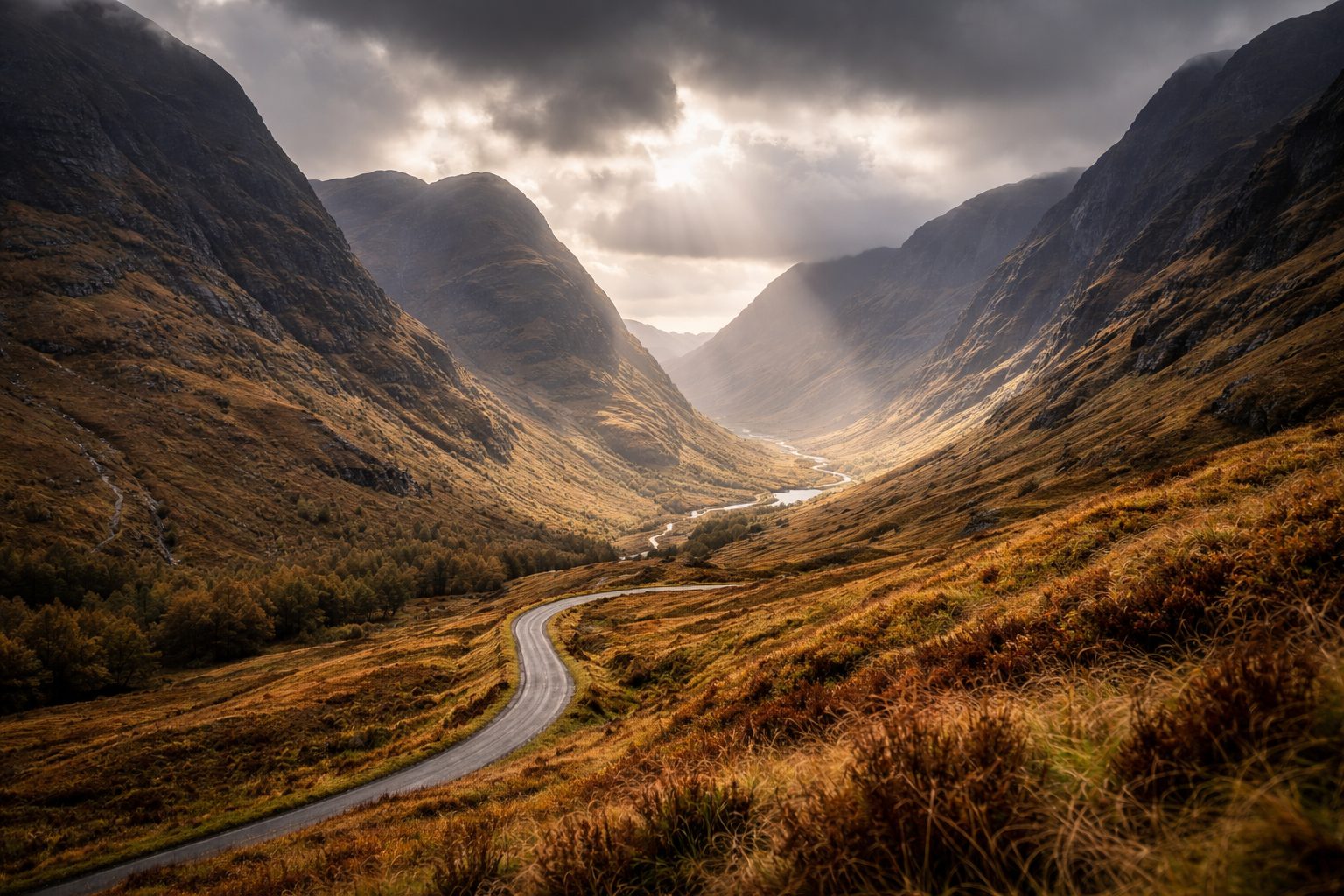
Not every Highlands driving route begins in Inverness. For travellers arriving in Glasgow — Scotland’s largest city and hub for transatlantic flights into Glasgow Airport (GLA) — the classic southern approach through Glencoe and the West Highlands rivals the NC500 in raw drama and frequently surpasses it in emotional intensity.
You will leave Glasgow on the A82, skirting the western shore of Loch Lomond — the largest body of fresh water in Britain by surface area, at 71 square kilometres — before climbing into the true Highlands at Crianlarich. The road narrows as it enters Rannoch Moor, 150 square kilometres of treeless, waterlogged bog that once formed the floor of an ancient glacier. In all weathers it is extraordinary; in low mist it becomes the most desolate and beautiful landscape in Britain.
Glencoe arrives with the force of myth. The Three Sisters — the ridges of Beinn Fhada, Gearr Aonach, and Aonach Dubh — rise 900 metres above the valley floor. The Clachaig Inn, operating as a Highland refuge since at least 1734, serves Fyne Ales in a bar hung with ice axes and is one of the finest pub experiences in Scotland. The valley is also the site of the Glencoe Massacre of February 13, 1692, when 38 members of the MacDonald clan were killed by government soldiers billeted in their homes — an act of treachery that still resonates in Highland consciousness.
From Glencoe the road continues north to Fort William, the ‘Outdoor Capital of the UK,’ sitting beneath Ben Nevis — at 1,345 metres, the highest mountain in the British Isles. The Jacobite Steam Train — inspiration for the Hogwarts Express — departs Fort William for Mallaig from April to October, crossing the Glenfinnan Viaduct in a scene recognisable from the Harry Potter films. Book tickets at least 60 days in advance via the West Coast Railways website.
North of Fort William, the A87 cuts west through Glen Shiel to Kyle of Lochalsh, where the Skye Bridge provides free access to the Isle of Skye. Skye deserves a minimum of two days — the Fairy Pools at Glenbrittle, the Old Man of Storr, and the Quiraing require walking time to fully experience, and the island’s distilleries — Talisker and Torabhaig among them — reward an unhurried evening.
Where to Stay in the Highlands: Bothies, B&Bs, and Wild Camping
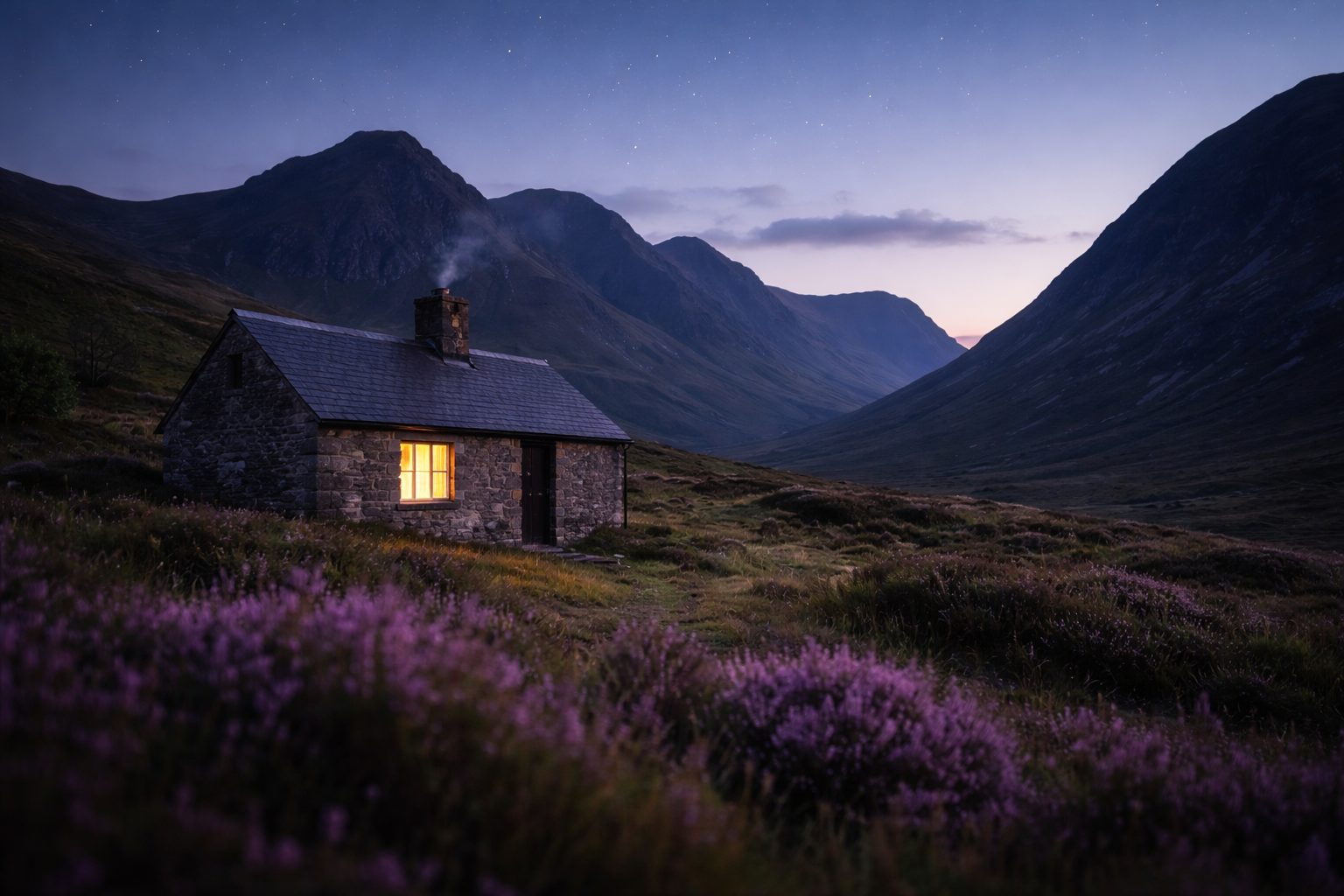
Accommodation in the Scottish Highlands spans a spectrum from utterly spartan to genuinely luxurious, and the choice you make shapes the entire character of your trip. You will find that booking is non-negotiable for summer 2026 — the NC500’s profile has pushed peak-season availability to near-breaking point.
Wild Camping
Scotland’s Land Reform (Scotland) Act 2003 grants a legal right of responsible access to most land for wild camping — among the most progressive such laws in Europe. You may pitch a tent on unenclosed land as long as you leave no trace, do not disturb wildlife or livestock, and do not remain on the same spot for more than three nights. This is genuine freedom. The shores of Loch Maree, the banks of the River Dionard in Sutherland, and the western beaches of the Durness peninsula are among the most rewarding wild camping locations on the route.
Mountain Bothies
The Mountain Bothies Association maintains 102 unlocked shelters across Scotland, most accessible only on foot but several within reach of road users willing to walk a mile or two. Shenavall in Fisherfield — accessible via a 5-mile walk from Corrie Hallie near Dundonnell — is the most celebrated of all Scottish bothies, a simple stone refuge set below the An Teallach massif. Bring sleeping bag, stove, and food. There are no reservations and no fees; the system runs on mutual respect.
B&Bs and Guest Houses
The classic Highland B&B — a whitewashed farmhouse, a full Scottish breakfast with Stornoway black pudding and Inverawe smoked salmon, a landlady who knows every local waterfall — remains the backbone of Highlands accommodation. Expect to pay £85–£130 per room per night in high season (2026 pricing). Book direct where possible; many small operators do not list on major OTA platforms, and calling ahead can secure local knowledge that no app can provide.
Lodges and Hotels
For a splurge, the Torridon Hotel (rates from approximately £250 per night) and Glenmorangie House near Tain (from approximately £395 per night, all meals and whisky tastings included) represent the pinnacle of Highland hospitality. Inverlochy Castle near Fort William holds a five-star rating and has hosted Queen Elizabeth II. These are not casual choices — plan them as anchors around which the wilder nights of your itinerary pivot.
Glamping
Highland glamping has matured considerably. Pods, shepherd’s huts, and geodesic domes now appear along the NC500 with varying degrees of luxury — some offering hot tubs overlooking sea lochs. Sites like Comrie Croft in Perthshire (a certified B-Corp) and Black Isle Yurts near Inverness combine sustainable credentials with genuine comfort.
Hidden Highland Gems: Off the NC500 Route
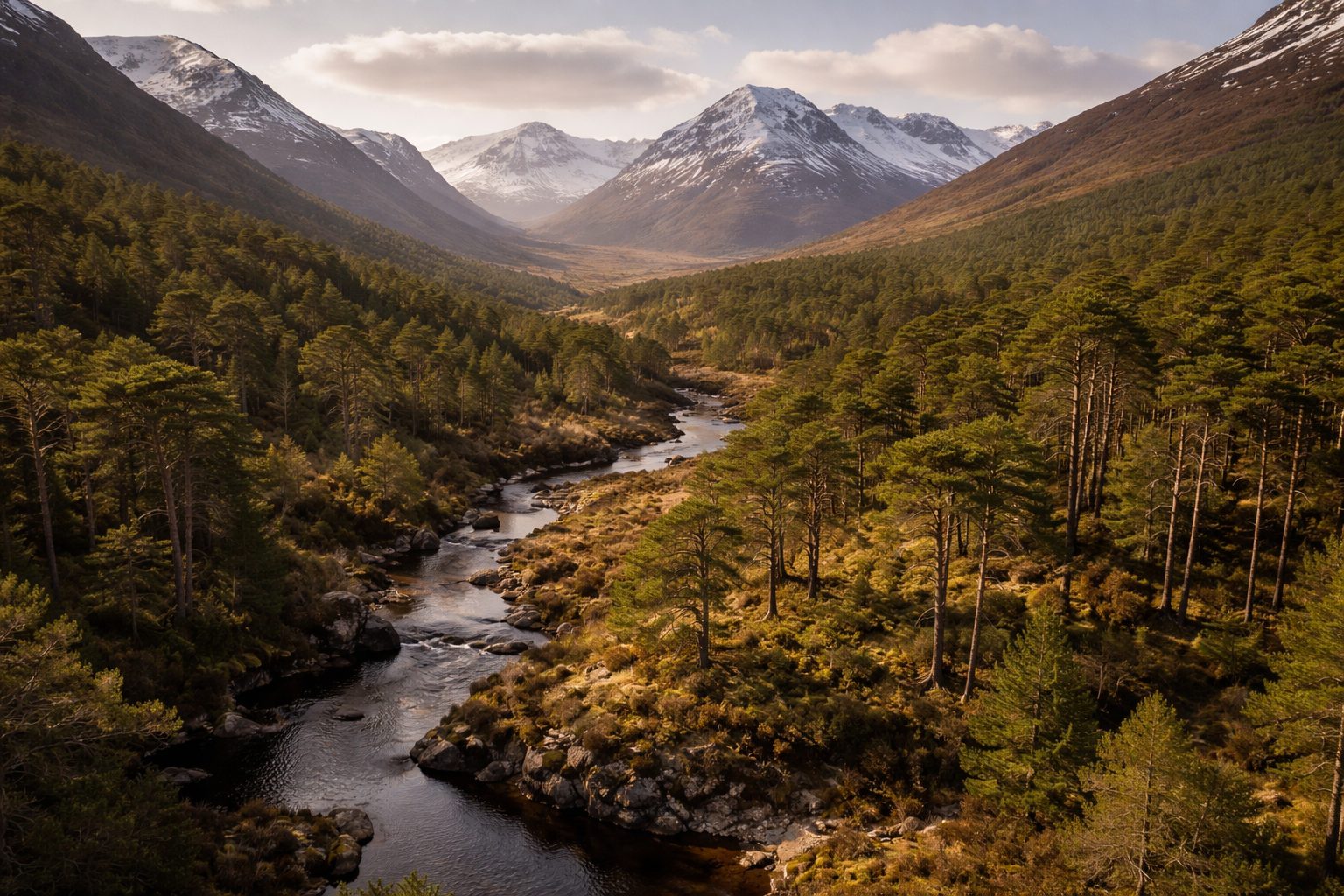
You will discover that the NC500 road trip guide, for all its breadth, barely scratches the surface of what the Highlands contain. Venture even 10 miles off the main circuit and the crowds — such as they are — dissolve entirely.
The Cairngorms National Park Interior
Most NC500 drivers bypass the Cairngorms entirely. That is a significant oversight. The B970 through Strathspey from Grantown-on-Spey to Kingussie is one of the finest drives in Scotland — through ancient Caledonian pine forest that predates recorded history, past red squirrels and capercaillie (the world’s largest grouse, with only around 500 remaining in Scotland). Rothiemurchus Estate near Aviemore offers estate tours, wild swimming in the River Luineag, and access to the Lairig Ghru — a 28-mile mountain pass through the highest plateaus in Britain.
The Ardnamurchan Peninsula
The most westerly point on the British mainland is not Land’s End — it is Ardnamurchan Point in the West Highlands, accessible via the B8007, a road so narrow and winding that it demands a full hour to cover 25 miles. The lighthouse at the point (1849, built by Alan Stevenson, uncle of Robert Louis Stevenson) overlooks some of the finest Atlantic waters in Scotland. On clear days you can see Coll, Tiree, and the Outer Hebrides. The peninsula has a total population of approximately 1,200 — a genuine edge-of-the-world feeling.
Strathfarrar and Glen Cannich
North of Loch Ness lies a network of hydroelectric glens — Strathfarrar, Glen Cannich, Glen Affric — that collectively form one of the great landscapes of the Highlands yet receive a fraction of the visitor numbers of the NC500. Glen Affric in particular, with its ancient birch and Scots pine forest around Loch Beinn a’ Mheadhain, is frequently described by those who know Scotland deeply as the most beautiful glen in the country. Access to Strathfarrar requires passing through a gate managed by Scottish Natural Heritage (seasonal permissions apply — check before travelling).
The Black Mount and Bridge of Orchy
Before Glencoe grabs the attention, the Black Mount — a high plateau of deer forest between Bridge of Orchy and the Kingshouse Hotel on Rannoch Moor — offers some of the finest wild stalking and walking country in the southern Highlands. The West Highland Way long-distance path crosses this section, and the Bridge of Orchy Hotel (open to non-walkers) serves excellent food in a location that feels geographically pivotal.
Scottish Highlands Road Trip Budget 2026
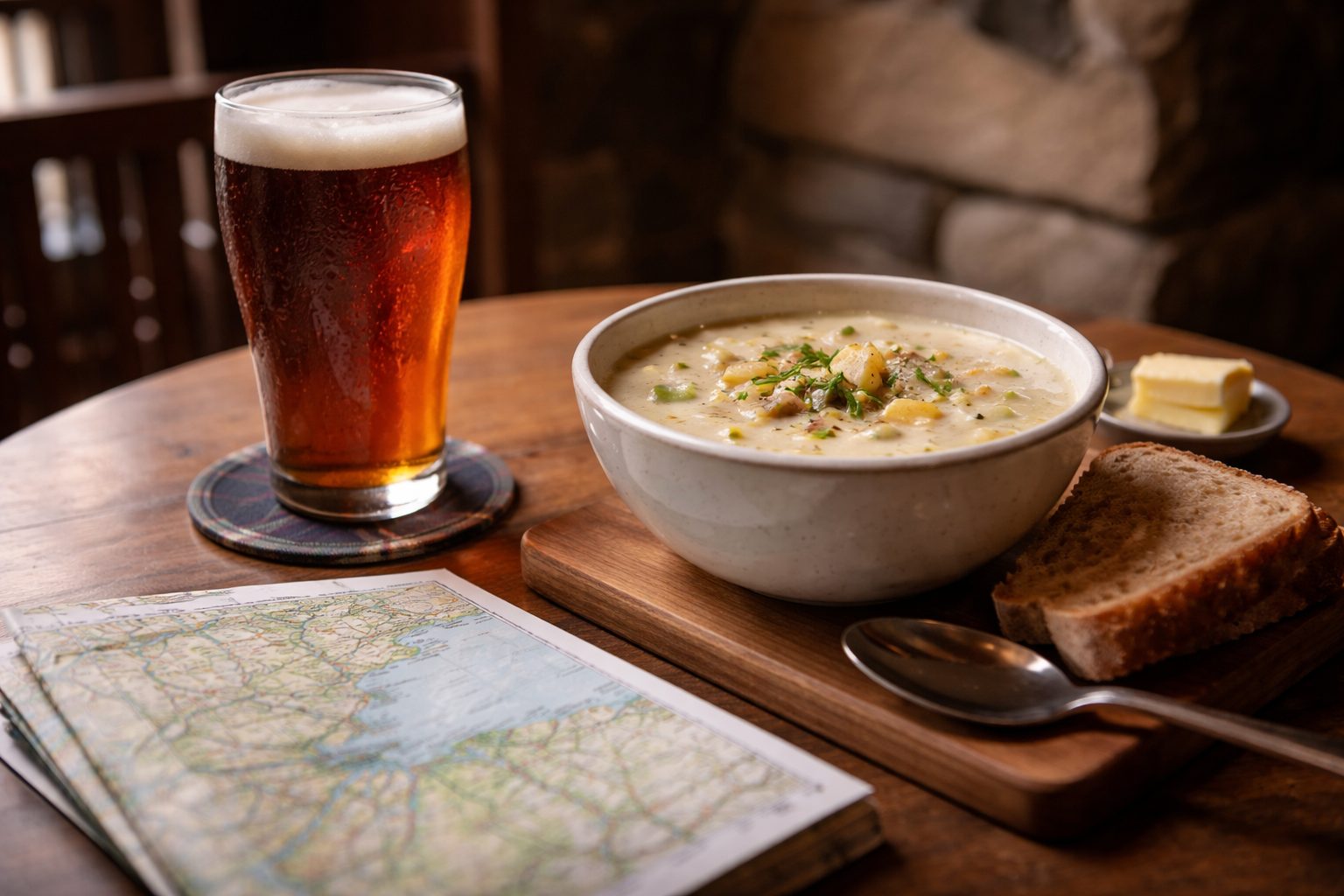
You will be relieved to know that a Scottish Highlands road trip can be calibrated to almost any budget — the region rewards resourceful travellers with free wild camping, low-cost bothies, and a cuisine of such quality that a fish supper from a harbour chip shop can compete seriously with a restaurant meal.
Budget Breakdown (per person, per day, based on 2 people sharing costs)
Budget Tier (£60–£90/day per person):
– Car hire: £35–£50/day split between two (£17–£25pp)
– Wild camping or bothy: £0
– Food: self-catered breakfast and lunch, one pub meal (£15–£25pp)
– Fuel: approximately £25–£30/day for full NC500 circuit in a mid-range SUV at 2025 pump prices (~£1.55/litre diesel); divide by two (£12–£15pp)
– Activities and entry fees: National Trust for Scotland Explorer Pass (£50 for 7 days as of 2025) covers Culloden, Glencoe Visitor Centre, and more
Mid-Range Tier (£120–£180/day per person):
– Car hire: £55–£75/day divided by two
– B&B accommodation: £85–£130/room per night
– Dining: one restaurant dinner per day (£25–£40pp), self-catered breakfasts
– Whisky tastings and distillery tours: Glenmorangie, Dalmore, Old Pulteney, and Clynelish all sit on or near the NC500 (typically £10–£25 per tasting)
Luxury Tier (£300–£500+/day per person):
– Premium hire car or chauffeur-driven SUV
– Boutique hotels and country houses
– Private guided wildlife experiences (red deer rut, eagle watching)
– Private fishing beats on the River Spey
Key Costs to Anticipate
– Skye Bridge: Free since 2004
– Jacobite Steam Train Inverness to Mallaig: approximately £44 adult standard return (2025 pricing — confirm for 2026)
– CalMac ferry to Outer Hebrides: Ullapool–Stornoway approximately £6.40 per adult foot passenger (2025) — vehicle ferry prices vary; book months in advance
– Parking: NatureScot parking passes required at certain sites (Fairy Pools, Quiraing); typically £5–£8 per visit
Fuel Budget Planning
The full NC500 circuit is approximately 516 miles. Add 20% for detours — plan for roughly 620 miles. At 40mpg for a mid-range SUV diesel and diesel at £1.60/litre (estimated 2026), expect approximately £100–£120 in fuel for the full circuit. Remote western coastal roads such as the Bealach na Bà should be driven with at least half a tank.
Best Time to Drive the Scottish Highlands
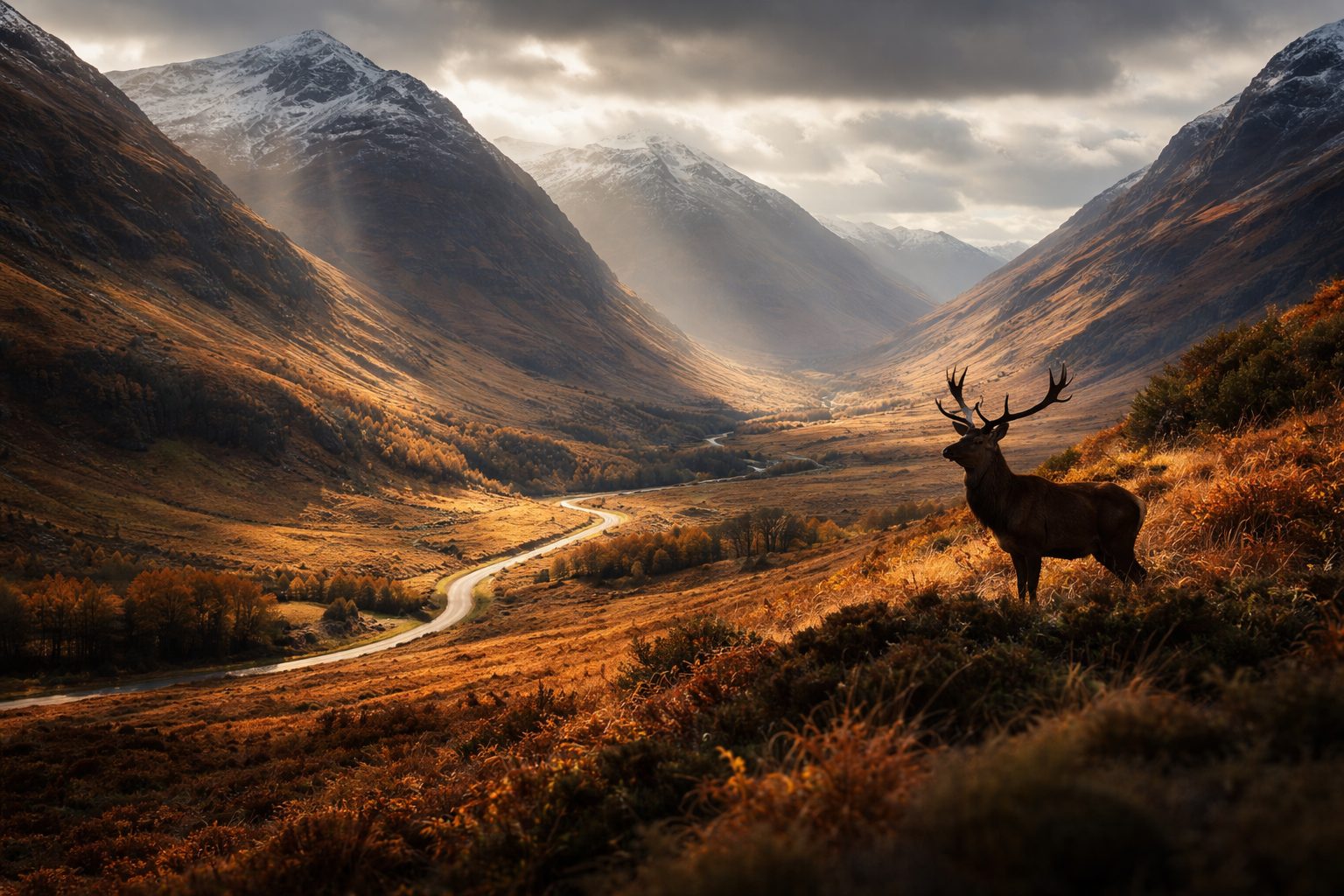
You will get a different Highland driving experience in every season — and every one of them has genuine merit. The question is what kind of experience you are seeking.
May and June — The Peak of Light
The Highlands in late spring are extraordinary. Days are long — in Inverness on June 21, sunrise is before 4:30am and sunset after 10:00pm — and the heather has not yet turned purple but the landscape glows with new growth. Midges (Culicoides impunctatus, the biting Highland midge) are present but manageable before July. This is the best window for wildlife watching: golden eagles are nesting, red deer calves are born in late May, and the wildflowers on Assynt are spectacular. Accommodation is available at more reasonable prices than peak summer, and NC500 road traffic is noticeably lighter.
July and August — Peak Season
This is the busiest period. The NC500’s popularity means some lay-bys and viewpoints can genuinely feel crowded — particularly the Fairy Pools on Skye and the Quiraing. Book accommodation 6–9 months ahead. Midges are at their most ferocious in August — carry Smidge or Avon Skin So Soft (the latter famously recommended by Scottish Royal Marines). Despite the crowds, peak summer delivers the warmest swimming temperatures in the sea lochs (typically 14–16°C) and the most reliable weather windows.
September and October — The Golden Season
This is arguably the finest time for the Scotland self-drive 2026 itinerary. The bracken turns copper and gold, the midges largely disappear after the first cold nights, and the red deer rut — one of the great wildlife spectacles in Europe — peaks in October. The Cairngorms in October birch colour rivals the New England fall. Accommodation rates drop, the roads quiet, and the light for photography is exceptional. The weather is unpredictable but frequently dramatic in the most photogenic way.
November to March — The Brave Choice
Winter Highland driving is not for the inexperienced. Snow, ice, and limited daylight (as few as 6.5 hours in December at Inverness latitude) are real factors. The rewards are substantial, though: frozen waterfalls, snowfields on Ben Nevis visible from 40 miles away, and the theoretical possibility (southern Highlands, around 20% chance on clear winter nights) of Northern Lights visibility. The A82 through Glencoe is sometimes closed by snowfall, and the Bealach na Bà is frequently impassable November through March. If you drive in winter, check Traffic Scotland (traffic.gov.scot) daily for real-time road conditions.
Frequently Asked Questions
The North Coast 500 covers approximately 516 miles of road from Inverness, circumnavigating the northern Highlands. A minimum of 7 days is strongly recommended — less time means driving at a pace that prevents you from actually experiencing the landscapes. Ten to fourteen days allows for proper exploration, including day hikes, distillery visits, and ferry crossings to Skye or the Outer Hebrides. Do not plan to average more than 100 miles per driving day; the road quality, passing places, and sheer volume of things worth stopping for make higher mileage targets both unsafe and counterproductive.
A 4WD or AWD vehicle is not strictly required for the NC500 or the classic West Highlands route — the vast majority of the NC500 is paved road, albeit often single-track. However, a vehicle with reasonable ground clearance (at least 160mm) is advisable if you plan to explore unpaved forestry tracks or certain access roads to beaches and bothies. The Bealach na Bà is paved but very steep; any roadworthy vehicle in good mechanical condition with competent braking can manage it in dry conditions. In winter (November to March), winter tyres or snow chains become essential for Highland roads.
The NC500 passes within reach of some of Scotland’s most celebrated distilleries. Glenmorangie, near Tain on the Easter Ross coast, is one of Scotland’s best-selling single malts and offers excellent guided tours (book ahead at glenmorangie.com). Dalmore, also near Tain, is celebrated for its extraordinarily aged expressions. Old Pulteney in Wick claims the title of Scotland’s most northerly mainland distillery. Wolfburn in Thurso, established in 2013, is one of Scotland’s newest distilleries and offers a compelling contrast to the heritage giants. On or near Skye, Talisker (Carbost) is non-negotiable — its Maritime whisky has won multiple awards, and the distillery sits in one of the most dramatic settings in Scottish whisky.
The Scottish Highlands can be driven safely by confident but inexperienced drivers provided they prepare properly. The key skill to practise before departure is reversing — single-track roads require frequent reversing to passing places, sometimes for 100 metres or more, and often with a wall or a steep drop on one side. Rural Highland roads carry very little traffic outside peak season, which reduces overall risk. Drive slowly (rarely more than 40mph even on 60mph single-track roads), give livestock absolute right of way, and never overtake on blind summits or bends. The most dangerous moments typically involve impatient drivers from abroad unused to single-track — simply pull over, let them pass, and enjoy the view they are missing.
Yes — comprehensive travel insurance that covers vehicle hire excess (or a standalone excess waiver policy), medical repatriation, and trip cancellation is essential. The Highlands, while part of the UK’s NHS system for emergency care, can mean long response times in genuinely remote areas. Mountain rescue operations, while technically free, can be significantly delayed if you are injured far from a road. Many standard European travel insurance policies cover Scotland if you are flying from Europe; US and international travellers should purchase a dedicated international policy. For the hire vehicle specifically, consider a specialist product from iCarhireinsurance.com or Questor Insurance — these typically provide excess waiver cover for £3–£7 per day, far cheaper than the hire company’s own excess reduction product.
The Northern Lights (Aurora Borealis) are theoretically visible from the Scottish Highlands year-round during periods of strong solar activity, but the best practical window is October through March when nights are long and dark enough. The Highlands’ northern latitude — Inverness sits at approximately 57.5°N — means moderate aurora events (Kp index 3–4) are occasionally visible, while stronger geomagnetic storms (Kp 5+) reliably produce displays. The darkest skies are found away from the coast on the Rannoch Moor plateau, in the hills above Torridon, and on the Caithness and Sutherland moorlands north of Thurso. Use the SpaceWeatherLive app or the AuroraWatch UK service for real-time alerts during your trip.
