
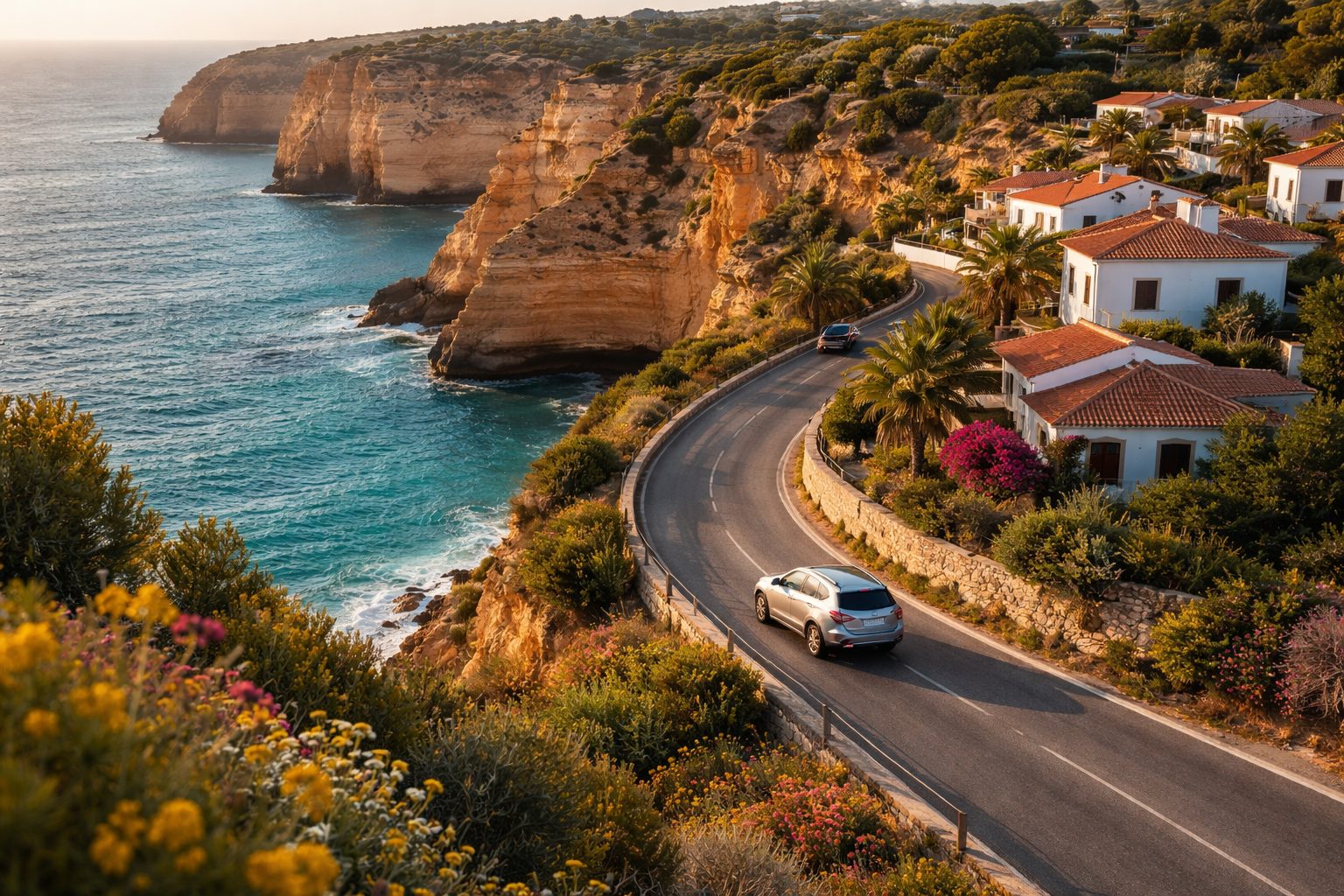
Why the Algarve Is Europe’s Ultimate Road Trip Destination
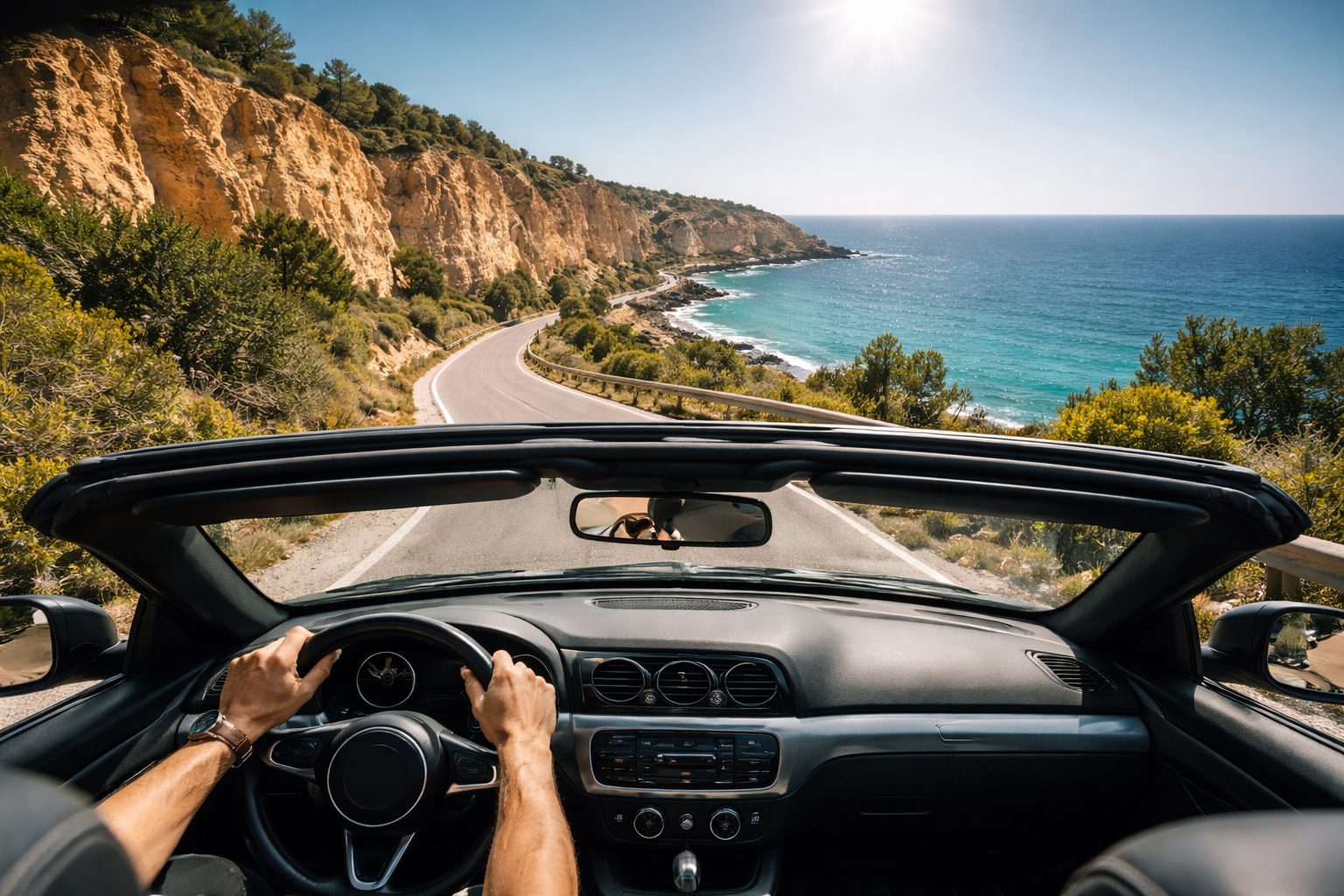
You will smell the sea before you see it. Somewhere between Sagres and Lagos, the Atlantic breeze pushes through the car window carrying salt and wild rosemary, and the road begins to curve toward cliffs so impossibly orange they look hand-painted. This is the Algarve — Portugal’s southernmost region, stretching 155 kilometres along the coast — and there is simply no better way to absorb it than behind the wheel of your own vehicle.
The Algarve’s genius lies in its radical variety compressed into a manageable distance. Within a single day’s drive you can transition from the raw, wind-hammered clifftops of the Costa Vicentina — a protected nature reserve where surfers outnumber sunbathers — to the sheltered golden-sand coves of the Barlavento coast around Albufeira, and then continue east past the Roman salt pans and flamingo-dotted estuaries of the Ria Formosa Natural Park near Faro. No train line connects these contrasts. No bus schedule accommodates spontaneous detours down unmarked tracks to pocket beaches. Only a car gives you that freedom.
Portugal’s road infrastructure in the Algarve is genuinely impressive for leisure driving. The A22 Via do Infante motorway runs the full length of the region from the Spanish border at Castro Marim to the interchange near Lagos, offering a fast spine from which you peel off onto the IC4 heading north into the Serra de Monchique, or onto the EN120 westward toward Sagres. Toll costs on the A22 are modest — typically €0.08 to €0.12 per kilometre for a standard car — and the EN125 national road that shadows the coast is free, slower, and infinitely more characterful, threading through market towns and past roadside stalls selling smoked almonds and local honey.
For 2026, the Algarve continues to position itself as a year-round destination. The Portuguese Tourism Board recorded over 4.5 million overnight stays in the region in 2023, and infrastructure investment — including improved EV charging networks along the EN125 and expanded car parks at previously overcrowded beach access points — makes the self-drive experience more practical than ever. You will discover that the Algarve rewards those who arrive with a loose plan and a full tank of curiosity.
The Classic Algarve Route: Lagos to Tavira in 7 Days
You will want to begin in Lagos, and not only because it is the logical western gateway to the Algarve’s most celebrated coastline. This walled medieval port city — whose 15th-century slave market, the Mercado de Escravos, is now a sobering museum — earns at least one full day before you touch the car keys again. Walk the Ponta da Piedade headland at sunset when the limestone stacks turn amber, and eat dinner at one of the tascas lining Rua Silva Lopes where grilled sea bass with roasted peppers costs around €14.
Day 1–2: Lagos to Sagres (approximately 30 km)
Drive west on the EN125 toward Sagres, stopping at Praia do Castelejo — a surf beach accessible via a rough track that rewards you with near-total solitude even in August — and Praia da Cordoama just north of Vila do Bispo. Sagres itself is the end of the known world in the most literal historical sense: Henry the Navigator established his school of navigation here in the early 15th century. The Fortaleza de Sagres, perched on a clifftop at the meeting of the Atlantic and the Mediterranean, is open daily and charges just €3 adult entry. Stay two nights in Sagres to catch the sunset at Cabo de São Vicente, the south-westernmost point of mainland Europe.
Day 3: Sagres to Portimão (approximately 75 km)
Head east along the EN125, diverting south to Praia da Marinha near Lagoa — consistently ranked among Europe’s most beautiful beaches and accessible via a cliffside boardwalk. Lunch in Ferragudo, a fishing village across the Arade River estuary from Portimão, where half a dozen family-run restaurants serve caldeirada (Portuguese fish stew) for around €12. Book a riverside guesthouse in Portimão for the night.
Day 4: Portimão to Albufeira (approximately 45 km)
The EN125 delivers you to Albufeira in under an hour, but take the scenic coastal detour via Praia de Nossa Senhora da Rocha, where a Romanesque chapel balances on a promontory above sea caves. Albufeira is the Algarve’s largest tourist resort and its Old Town retains genuine charm away from the strip. Use it as a base for Praia São Rafael and Praia da Oura.
Day 5: Albufeira to Faro (approximately 40 km)
Faro is the Algarve’s capital and most underrated city. The walled old town — the Cidade Velha — contains a Roman forum, a Baroque cathedral with a tower you can climb for panoramic views over the Ria Formosa lagoon, and a bone chapel in the Igreja do Carmo that dates to 1816. From Faro’s harbour you can take a ferry to Ilha Deserta, the uninhabited barrier island at the western edge of the Ria Formosa — but you will need your car again by afternoon.
Day 6–7: Faro to Tavira (approximately 30 km)
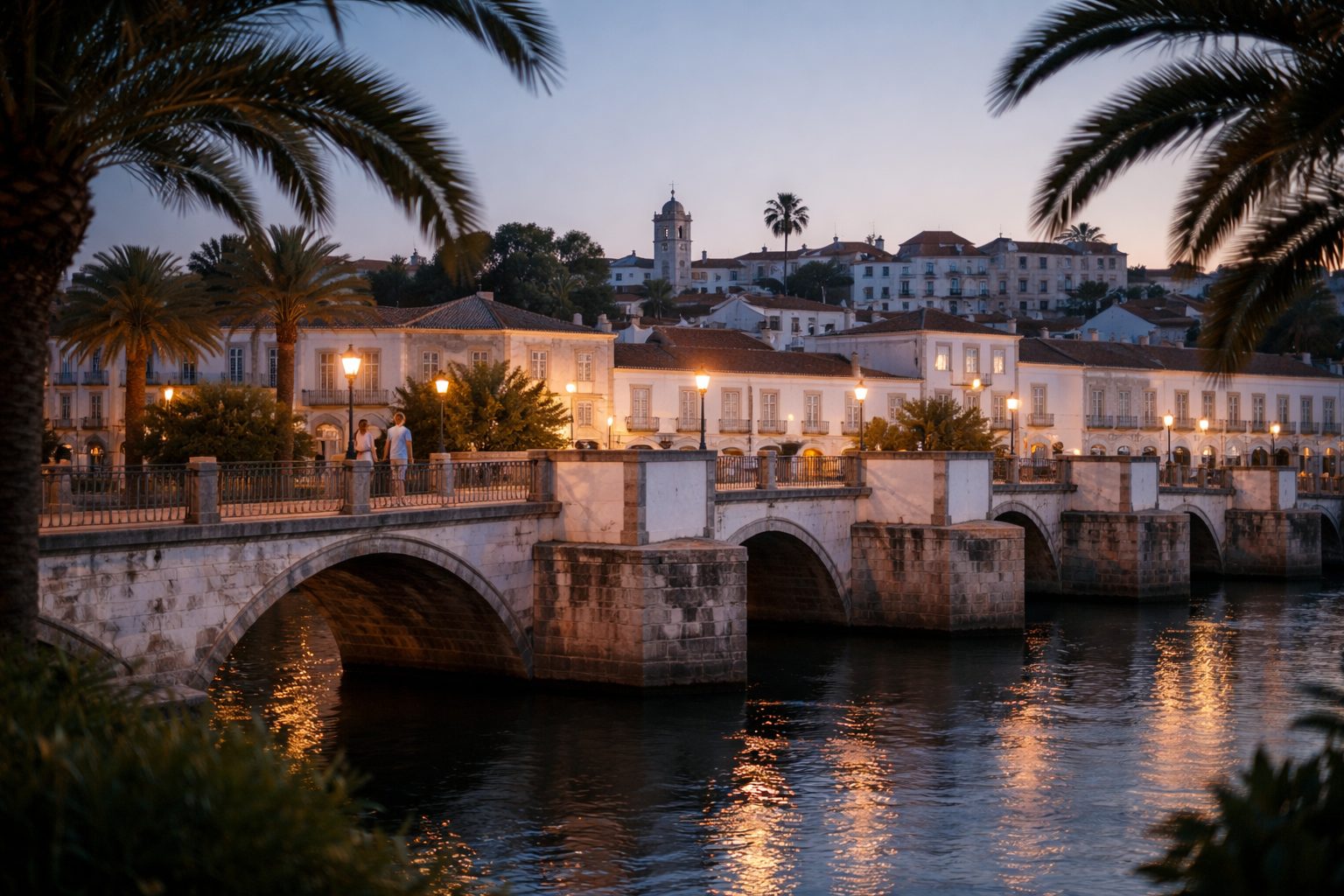
Tavira is the most beautiful town in the Algarve and the reward for driving all the way east. Its 37 churches, Roman bridge, and labyrinthine Moorish street plan repay slow exploration on foot. Stay at a converted townhouse in the historic centre and take a short boat taxi to Ilha de Tavira — a pristine barrier island with 11 kilometres of Atlantic beach — each morning. The eastern Algarve around Tavira and Castro Marim is quieter, cheaper, and more authentically Portuguese than the western coast, and you will leave feeling you have found the region’s real soul.
Renting a Car in the Algarve: What to Know in 2026
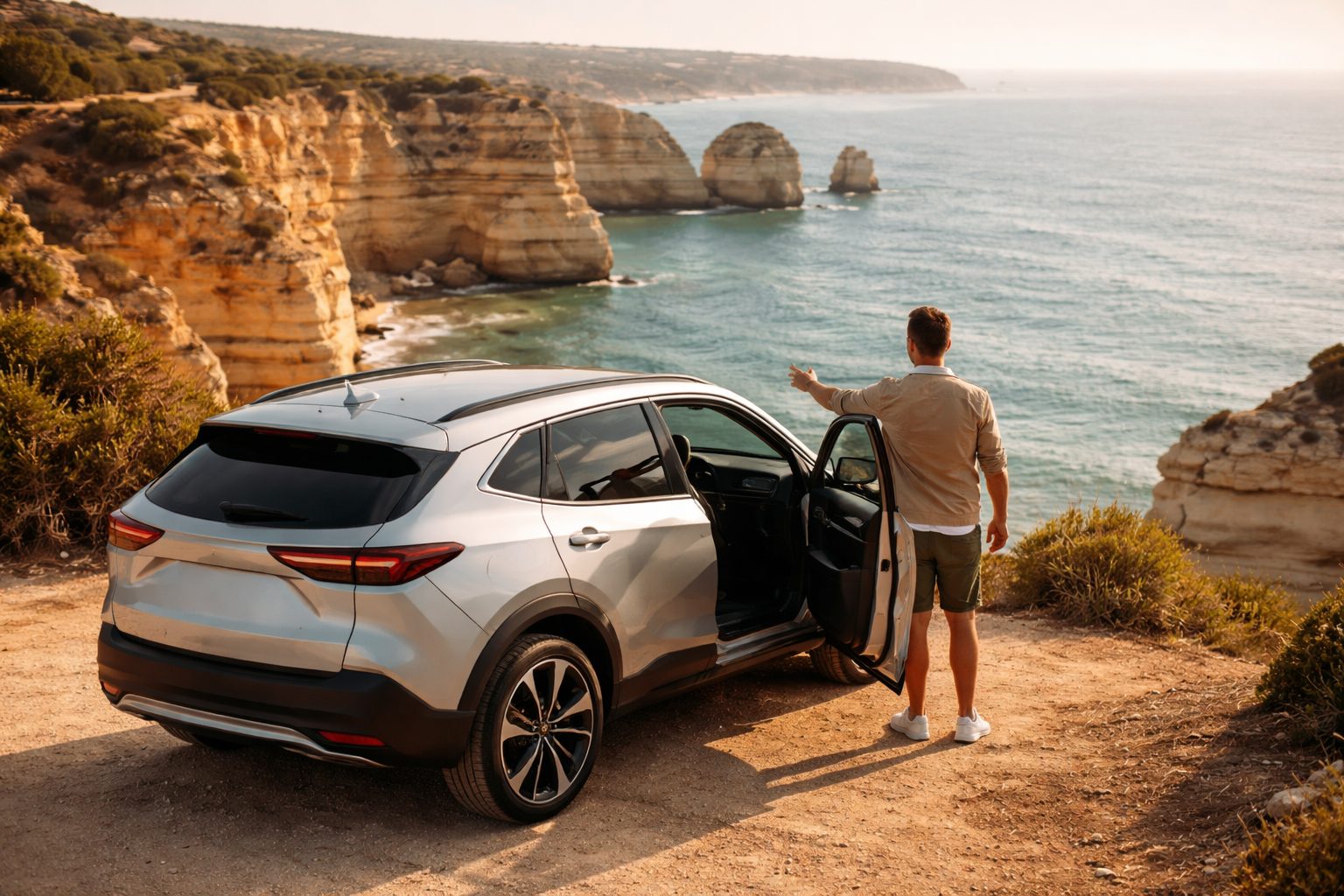
You will find car rental desks at Faro Airport (FAO) from every major international brand — Europcar, Hertz, Sixt, Avis, and Budget all maintain fleets here — alongside competitive local operators such as Auto Jardim, which has served the Algarve since 1965 and often undercuts international chains on weekly rates. For 2026, expect base weekly rates starting around €180–€220 for a compact (Volkswagen Polo class) rising to €350–€450 for a mid-size SUV in peak July and August. Book at least eight weeks ahead for summer travel; the Algarve’s rental fleet sells out faster than flights.
For the itinerary described above, a compact car handles every route comfortably except the rougher tracks to Praia do Castelejo and Praia da Cordoama near Sagres, where a small SUV or crossover — think Renault Captur or Volkswagen T-Roc class — offers meaningful ground clearance without a significant price premium. Electric vehicle options are expanding: Faro Airport now has dedicated EV pick-up bays, and the EN125 corridor has charging stations approximately every 25–30 kilometres as of 2025.
Portugal drives on the right. The national speed limits are 50 km/h in urban areas, 90 km/h on non-divided national roads, and 120 km/h on motorways. The Algarve’s EN125 is technically a national road but passes through numerous villages where 50 km/h limits apply — Portuguese police enforce these actively, and cameras are common. Alcohol limits are strict at 0.5 g/L (lower than the UK’s 0.8 g/L), and a zero-tolerance policy applies to drivers who have held a licence for fewer than three years.
Insurance is the area where most travellers make costly mistakes. The Collision Damage Waiver (CDW) included in most base rental rates carries an excess of €600–€1,500 that you are liable for in the event of any damage, including windscreen chips from gravel roads. Purchasing full excess protection — either through the rental company (€10–€18 per day) or via a standalone travel insurance policy that covers car hire excess — is strongly recommended. Credit card rental coverage frequently excludes Portugal or imposes conditions that make claims difficult.
Parking in Algarve town centres uses a blue-zone disc system where you dial the departure time on a cardboard clock displayed on the dashboard — discs are available free from most petrol stations and tourist offices. In Lagos, Albufeira Old Town, and Tavira, free parking exists within 500–800 metres of the historic centres, making short walks preferable to expensive waterfront car parks.
For travellers exploring our [luxury ground transportation options](/luxury-ground-transportation/) before or after their road trip, particularly those flying into Faro and wanting a smooth airport-to-first-hotel transfer, a pre-booked private car service eliminates the stress of navigating unfamiliar roads after a long flight.
Hidden Beaches You Can Only Reach by Car
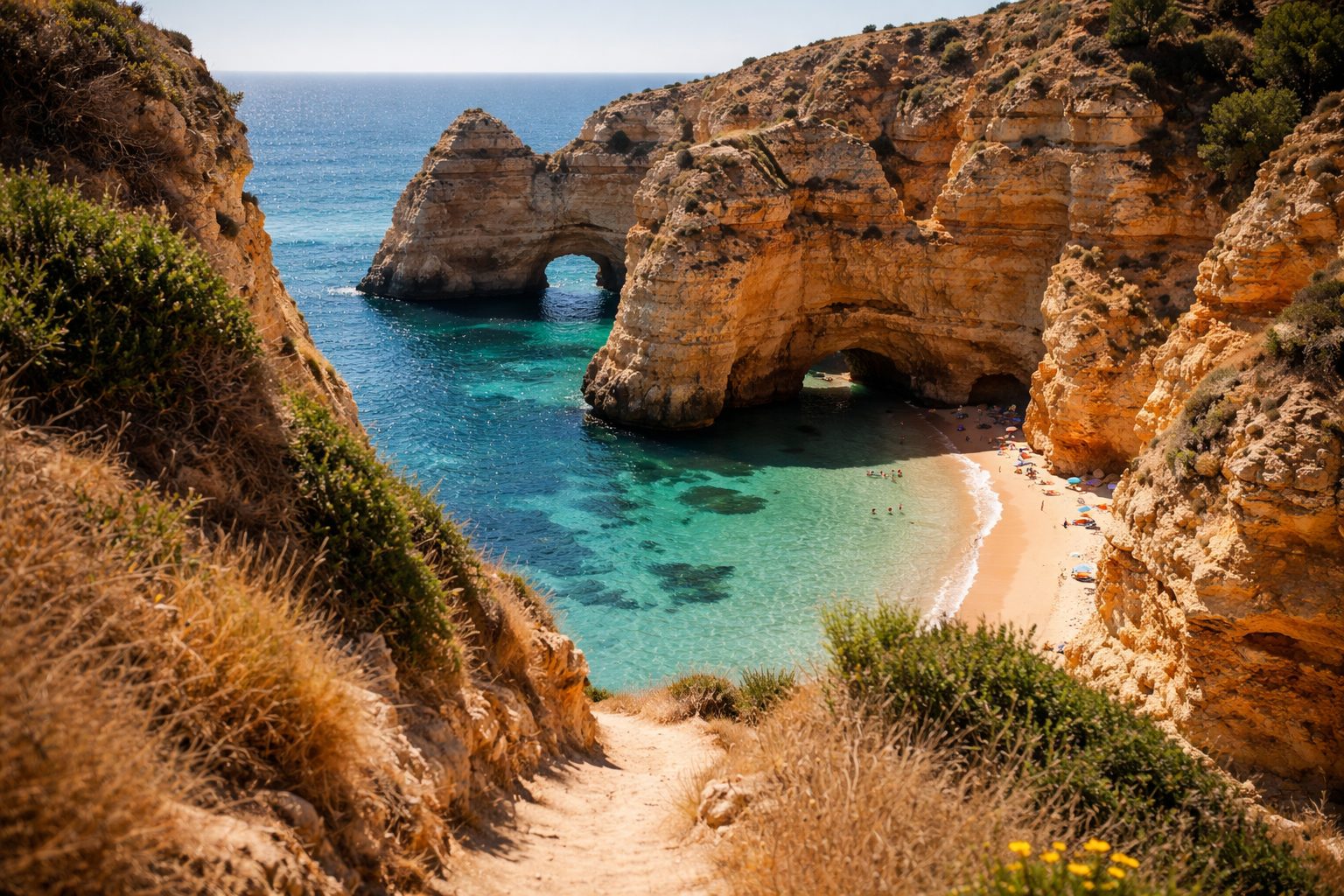
You will not find these beaches on the postcards. The Algarve’s most celebrated strands — Praia da Marinha, Meia Praia, Praia de Dona Ana — are magnificent, but they are also well documented, well signposted, and well attended. The beaches that will stay with you longest are the ones that require a car, a willingness to leave the tarmac, and occasionally a scramble down a cliff path.
Praia do Barranco das Canas (near Lagos): Turn south off the EN125 between Lagos and Luz onto an unmarked track beside a farm gate. After 1.2 kilometres of compacted dirt road, a tiny parking area appears above a cove of absolute perfection — red-brown cliffs, fine golden sand, no facilities whatsoever. Arrive before 9:30 AM in summer or accept that you will not park.
Praia da Boca do Rio (Vale de Boi): Located between Lagos and Sagres, this wide estuary beach where a small river meets the Atlantic is famous among birdwatchers for its waders and among surfers for its consistent south-westerly swells. Access is via the EM1059 road from Budens — entirely paved but narrow enough that passing places matter. A seasonal beach café operates June through September.
Praia do Amado (Costa Vicentina): Technically in the Alentejo coast’s protected area but accessed via the Algarve interior, Praia do Amado is one of Portugal’s premier surf beaches and gloriously undeveloped because the Southwest Alentejo and Vicentine Coast Natural Park prohibits commercial development within its boundaries. The park covers 74,788 hectares and its regulations are rigorously enforced — which is precisely why the beach is extraordinary.
Praia de Odeceixe: The northernmost beach typically included in Algarve road trip itineraries, where the Seixe River bisects the sand creating a lagoon on one side perfect for families with children and open Atlantic surf on the other. The access road from the village of Odeceixe — a 25-minute drive from Aljezur — winds through eucalyptus and cork oak forest and is entirely unsuitable for coaches, which is why the beach retains its character.
Meia Praia Extended (east of Lagos): Most visitors park at the main Meia Praia car park and walk the first 500 metres of this seven-kilometre beach. Drive the unpaved track east along the beach access road to its far end near the Alvor estuary and you will find yourself on a virtually empty expanse of sand with unobstructed views back toward Lagos’s fortress walls. This is the Algarve’s best-kept open secret.
For travellers who want expert guidance on reaching these remote spots as part of a curated driving experience, our [private tour and excursion services](/private-tours-excursions/) pair a knowledgeable local driver with a premium vehicle — ideal for those who prefer to be passengers on their first Algarve visit before returning independently.
Where to Stay Along the Route
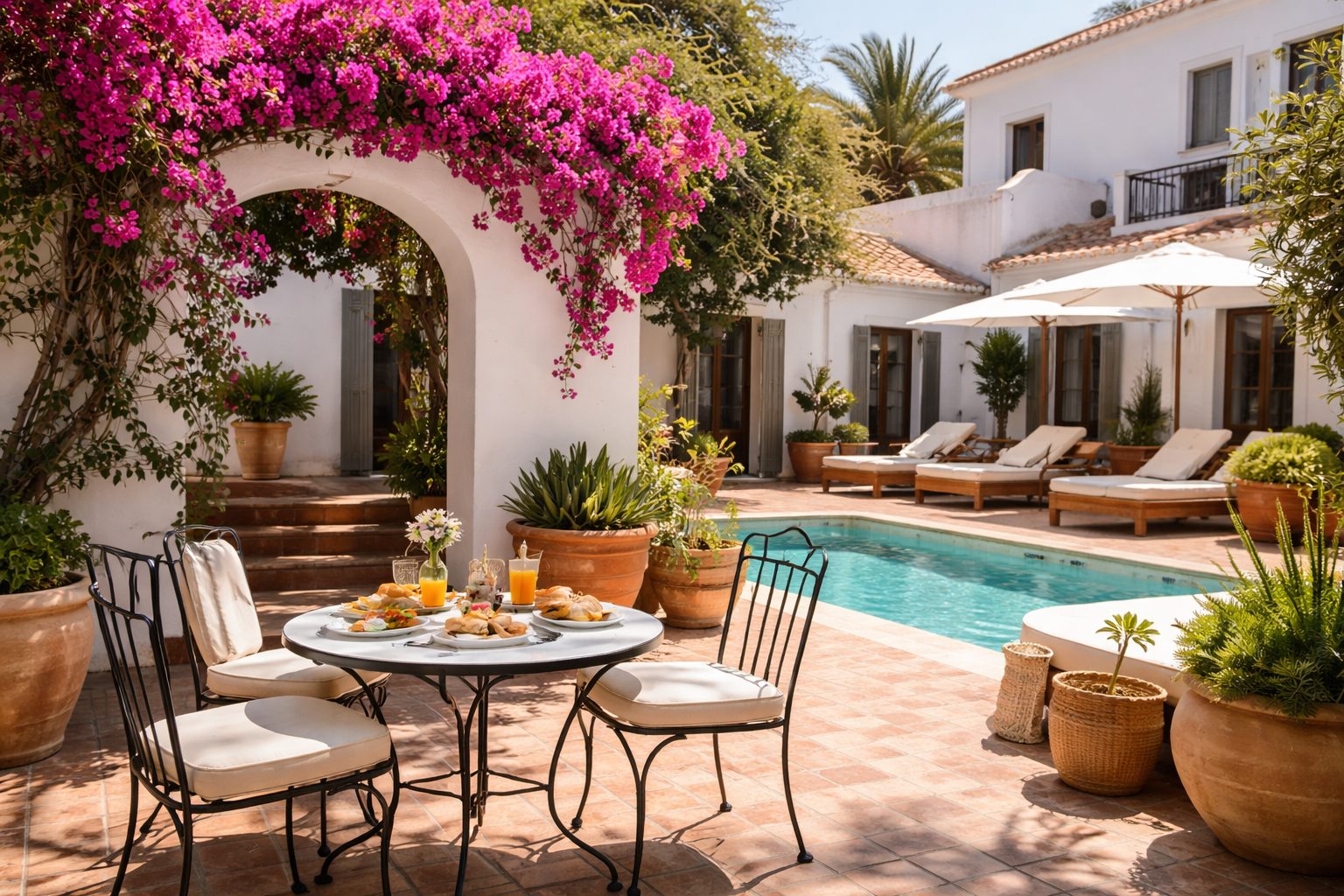
You will sleep better in the Algarve knowing you have booked accommodation with car parking confirmed. This is not a minor logistical footnote — in July and August, parking in Albufeira’s Old Town is essentially impossible overnight, and several boutique hotels in Tavira’s historic centre have no private parking whatsoever, requiring guests to use a public car park 400 metres away. Always confirm parking arrangements before booking.
In Lagos, the Monte Mar Lagos hotel sits on the cliff above Praia do Pinhão and offers rooms from approximately €140 per night in shoulder season with private parking and direct cliff access. For a more characterful stay, the boutique Casa dos Arcos in the old town — a converted 18th-century townhouse — charges €95–€130 per night including breakfast, with arrangements for nearby parking.
Along the western coast near Sagres, the Martinhal Sagres Beach Family Resort is the region’s benchmark luxury property, with a private beach, multiple restaurants, and rates from €280 per night in peak season. For the budget-conscious, Sagres has several highly-rated guesthouses charging €60–€85 per night for en-suite doubles, including Residencial Dom Henrique which has operated since the 1980s.
In Tavira, the Convento de Santo António — a converted 16th-century convent with just 13 rooms, a courtyard garden, and panoramic roof terrace — represents the finest small hotel experience the Algarve has to offer and starts from €180 per night in summer. Book months in advance; it sells out by February for July dates.
For road trippers who want flexibility, rural tourism properties called Quintas (estates) and Casas de Campo (country houses) scattered through the Algarve interior offer self-catering cottages with private parking from €70–€120 per night and are particularly practical for families. These properties rarely appear on mainstream booking platforms — the Portuguese Rural Tourism Association (TER – Turismo Em Espaço Rural) maintains a searchable directory at www.center.pt.
Budget-conscious travellers should also explore aparthotel options in Quarteira and Armação de Pêra — functional, car-friendly resorts with lower accommodation costs than Lagos or Albufeira that serve well as central bases for day trips in both directions. Our [hotel concierge and booking assistance](/hotel-concierge-booking/) service can arrange priority reservations at partner properties throughout the Algarve route.
The Algarve Off the Beaten Path: Interior Villages and Serra de Monchique
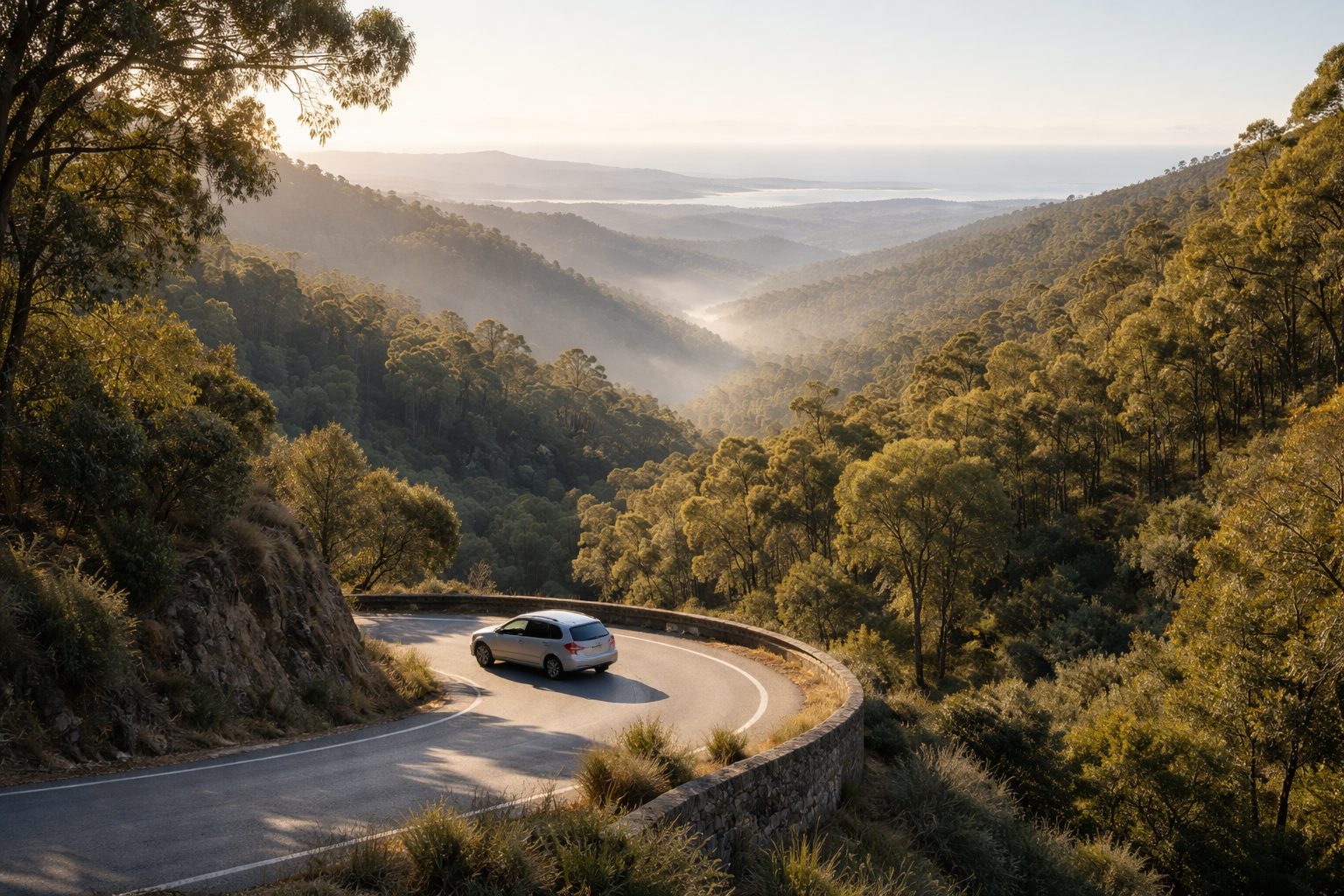
You will discover a completely different Portugal the moment you turn the wheel north off the EN125 and begin climbing into the Serra de Monchique. The mountain range that frames the Algarve’s northern border reaches 902 metres at Fóia — the highest point in southern Portugal — and the IC4 road that ascends through it passes through a landscape of eucalyptus, mimosa, and ancient oak forest that most visitors to the coast never see.
Alcoutim, on the eastern border with Spain where the Guadiana River separates the two countries, is perhaps the Algarve’s most genuinely remote village. Its 14th-century castle faces a Spanish castle directly across the water in Sanlúcar de Guadiana — the shortest international border crossing in Europe, served by a small passenger ferry. Alcoutim has a permanent population of under 3,000 and a café culture that feels unchanged since the 1970s. Driving here from Tavira takes 45 minutes on the EN122 along the Guadiana valley.
Monchique town, 25 kilometres north of Portimão, is the gateway to the serra and the source of Monchique mineral water — naturally fluoridated water that has been bottled commercially since 1892 and is served in restaurants throughout Portugal. The town’s daily market sells medronho, the potent arbutus-berry spirit distilled in the mountains, and local smoked pork sausages (linguiça de Monchique) that pair memorably with the altitude and the view.
Silves, just 15 kilometres north of the coast, surprises visitors who expect just another Algarve town. Its Moorish castle — the largest in Portugal — dominates a hilltop above the Arade River and dates to the 8th century; the red sandstone walls contain an excellent archaeological museum. Silves served as the Algarve’s capital during Moorish rule from the 8th to the 13th century and at its height had a population of 30,000, rivalling Lisbon. The historic centre is genuinely walkable, parking is straightforward on the riverside, and the regional cork oak forests visible from the castle walls remind you that the Algarve produces approximately 30% of the world’s cork supply.
Loulé, inland from Vilamoura, hosts one of the Algarve’s finest covered markets — the Mercado de Loulé, housed in a neo-Moorish building from 1908 — and a Saturday farmers’ market that draws producers from across the region. The drive from the coast through the barrocal (limestone uplands) passes ancient carob and almond orchards whose February blossom turns the hillsides white, creating what the Portuguese call ‘the Algarve’s snow.’
Algarve Road Trip Budget Breakdown 2026
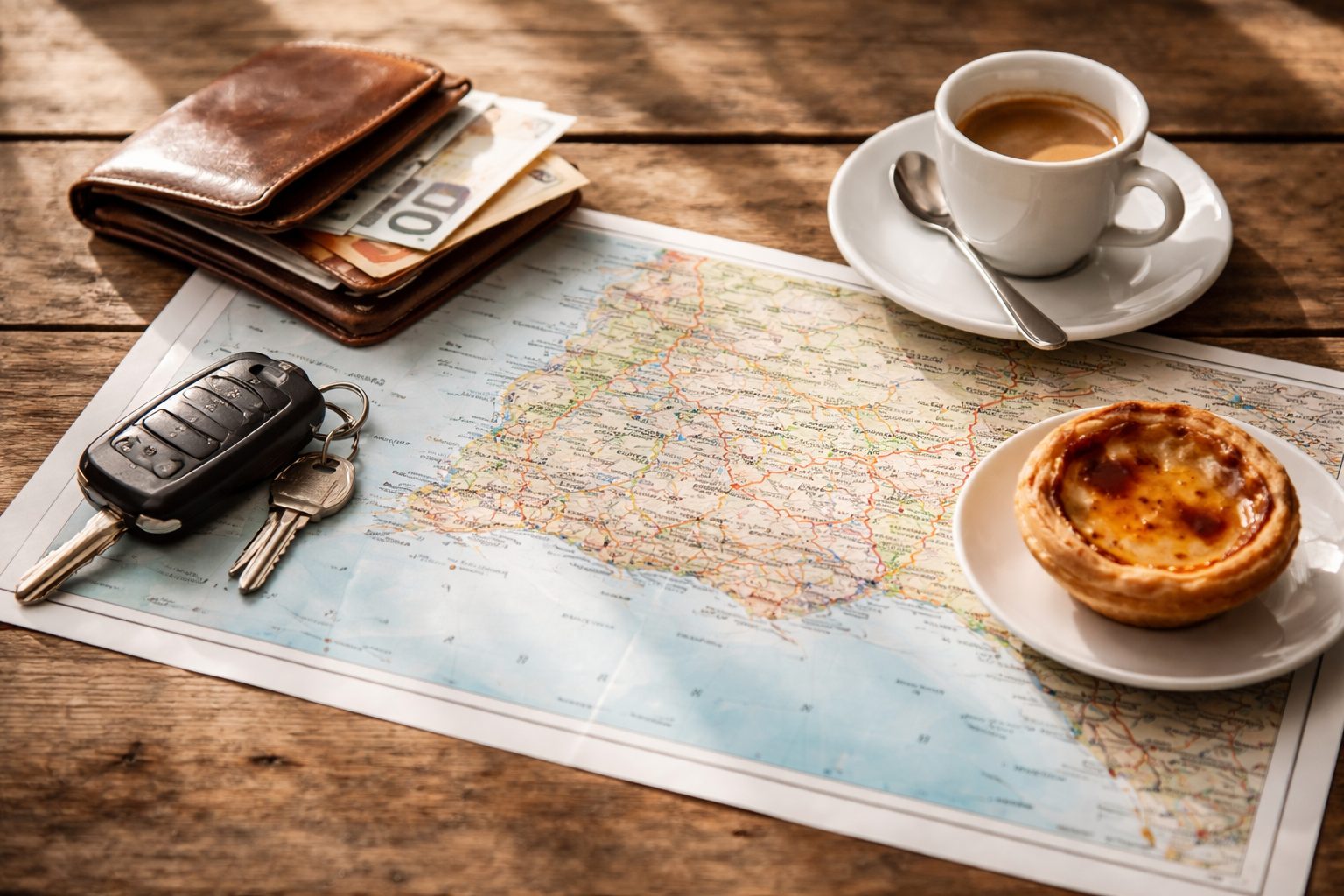
You will want a clear-eyed financial picture before you commit to this itinerary, and the good news is that the Algarve remains meaningfully more affordable than comparable coastal road trips in France, Italy, or Croatia — even as Portuguese prices have risen approximately 12–15% since 2022 due to inflation and increased tourism demand.
Car rental (7 days, compact SUV class, pre-booked): €280–€380
Full excess insurance (standalone policy or upgrade): €50–€80
Fuel (approximately 600 km total, diesel at €1.65/litre, 6L/100km consumption): €59
A22 motorway tolls (selective use, Lagos to Faro and return): €15–€22
Accommodation (7 nights, mid-range guesthouse/boutique hotel, per person sharing): €450–€700
Meals (2 meals per day in restaurants, per person): €280–€420 (€20–€30 per person per meal on average)
Entrance fees (Sagres Fortaleza €3, Silves Castle €2.80, Faro Cathedral tower €2, bone chapel €2): €12–€15
Beach parking (pay-and-display at main beaches, approximately €2–€4 per day): €15–€25
Ferry to Ilha de Tavira (return, per person): €3.50
Estimated total per person (sharing costs for two): €1,100–€1,650 for seven days, excluding flights.
This compares favourably with a comparable itinerary in the French Riviera (€1,800–€2,800 per person) or Amalfi Coast (€2,200–€3,500 per person). Budget travellers who opt for self-catering accommodation and supermarket picnic lunches — Portuguese supermarkets stock excellent local cheeses, cured meats, and freshly baked bread for €6–€10 per day — can realistically complete this trip for €800–€900 per person.
Premium travellers choosing luxury hotels, private guided detours, and fine dining restaurants in Lagos and Tavira should budget €2,500–€3,500 per person for a genuinely indulgent experience. Portugal’s mid-range and luxury restaurant scenes have developed significantly since 2020, with the Algarve now home to two Michelin-starred restaurants: Gusto by Heinz Beck at the Conrad Algarve (Quinta do Lago) and Ocean at the Vila Vita Parc (Porches).
Best Time to Road Trip the Algarve
You will find the Algarve road trip genuinely rewarding in every month except, arguably, the peak of August — not because the weather fails (it averages 29°C in August with negligible rainfall) but because the region’s popularity creates conditions that work against the freedom a road trip is supposed to provide. Beach car parks at Praia da Marinha and Praia de Dona Ana reach capacity by 9:30 AM in August. The EN125 through Albufeira becomes a slow procession between 5:00 PM and 7:00 PM. Accommodation prices peak and availability narrows.
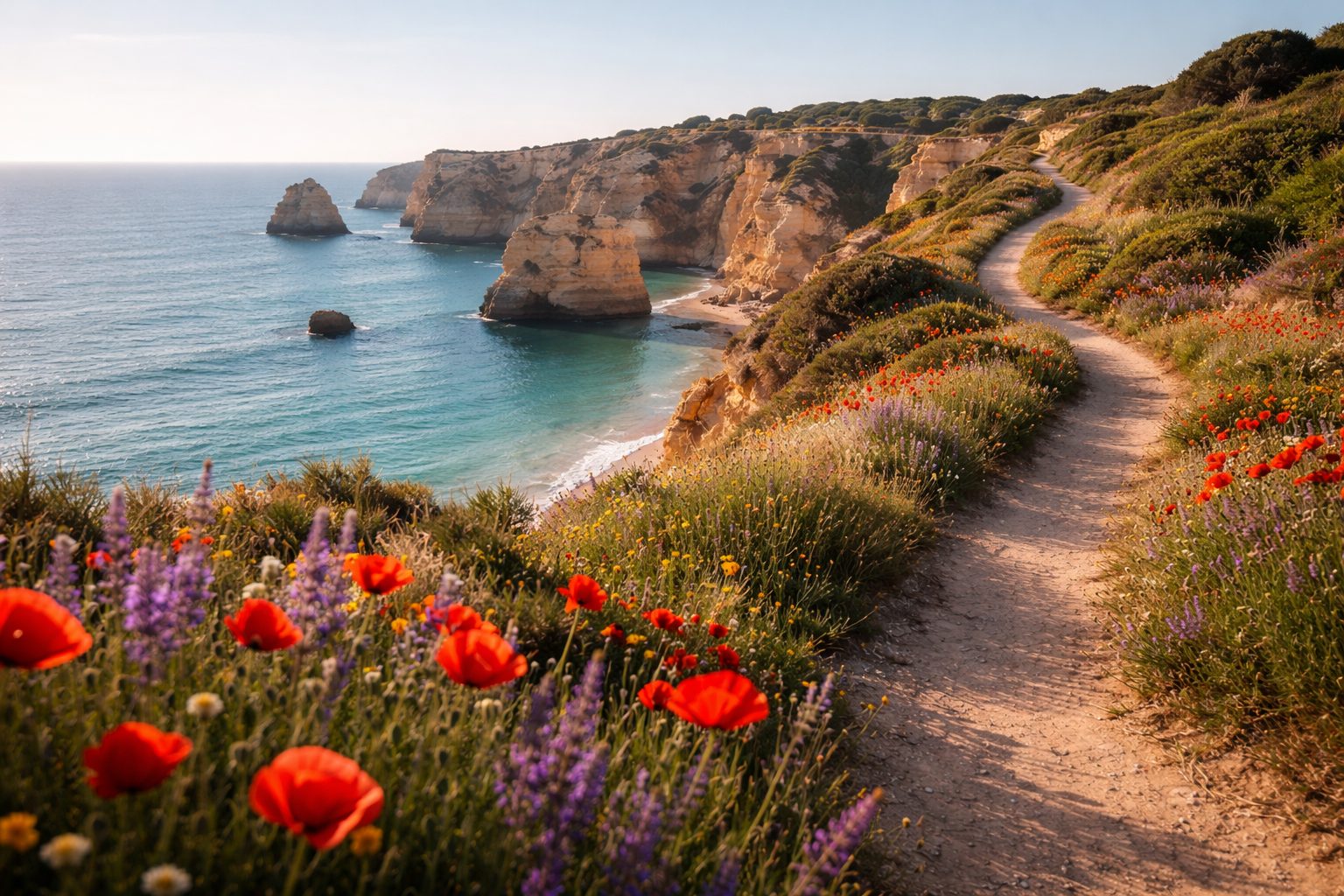
Late April to early June represents the road tripper’s golden window. Daytime temperatures reach 22–26°C, the wildflowers that carpet the coastal clifftops — poppies, sea lavender, wild orchids — are at their most spectacular, water temperatures are still bracing (18–19°C) but manageable, and accommodation costs 30–40% less than peak season. The almond and orange blossoms of the interior villages are still detectable in the morning air.
September and October offer what many experienced Algarve visitors consider the finest conditions of the year. Sea temperatures peak in late September at 22–23°C (warmer than July in most of northern Europe), crowds thin dramatically after Portuguese school terms resume in mid-September, and the afternoon light takes on a golden quality that makes the limestone cliffs look almost luminescent. The Algarve’s fig harvest — September — means roadside stalls sell paper bags of fresh figs for €1–€2. Simple pleasures. Hard to beat.
Winter (December–February) is the Algarve’s secret season for road trippers who prioritise solitude over swimming. Daytime temperatures average 16–18°C, the interior hills are green from autumn rains, and the coastal towns resume their authentic rhythms after the summer diaspora. February brings the almond blossom — concentrated around Alte, Salir, and the Serra do Caldeirão — which draws photographers from across Europe. Hotel rates drop to their annual floors: rooms available in Tavira for €55–€75 that cost €200 in August.
For 2026 specifically, be aware that Faro will host the Portuguese National Gastronomy Festival from October 14, 2026 to October 18, 2026, and Silves Medieval Fair is scheduled for August 5, 2026 to August 16, 2026 — both events create localised accommodation demand spikes. The Lagos Jazz Festival runs annually in November, with 2026 dates confirmed for November 20, 2026 to November 23, 2026. Building your road trip around one of these cultural events adds texture to the experience but requires earlier booking than usual.
Frequently Asked Questions
Citizens of EU member states and most English-speaking countries — including the USA, UK, Canada, and Australia — do not require an International Driving Permit (IDP) to drive in Portugal with their national licence. UK licence holders should note that post-Brexit, UK licences remain valid in Portugal for tourist driving. However, if your national licence is not in Roman script (for example, a Japanese or Chinese licence), an IDP is mandatory and must be obtained before you leave home, as it cannot be issued abroad.
The direct A22 motorway distance from Lagos to Tavira is approximately 155 kilometres, but the itinerary described in this guide — incorporating scenic EN125 diversions, coastal detours to hidden beaches, the Sagres peninsula, the Serra de Monchique, and Silves — accumulates approximately 550–650 kilometres over seven days. This averages 80–90 kilometres per driving day, which is genuinely leisurely and leaves ample time for stops. If you add the Alcoutim border excursion from Tavira, add another 90 kilometres round trip.
The majority of unmarked tracks leading to secluded Algarve beaches are compacted gravel or firm earth and are manageable in a standard compact car driven carefully at low speed. Exceptions include the final access to Praia do Barranco das Canas near Lagos and some tracks in the Costa Vicentina, which have loose surfaces and notable gradients. For peace of mind and ground clearance, we recommend renting a small crossover SUV such as a Renault Captur or Volkswagen T-Roc. Always check your rental agreement: many standard car hire contracts prohibit driving on unpaved surfaces, which could void your damage cover.
Lagos is the ideal single base for a shorter Algarve road trip. Its central position on the western coast places you within 30 minutes of Sagres and Cabo de São Vicente, within 45 minutes of the Costa Vicentina surf beaches, and within 75 minutes of Albufeira and Silves to the east. Lagos has excellent car parking options (free parking near the football stadium and riverside, paid parking in the centre), a wide range of accommodation at all price points, outstanding restaurants, and the Ponta da Piedade clifftop walk which is among the most spectacular short walks in southern Europe.
As of 2025–2026, the Algarve has significantly expanded its EV charging network. The EN125 corridor has ChargePoint and Galp Charge stations at intervals of approximately 25–35 kilometres, and all major town centres — Lagos, Portimão, Albufeira, Faro, Tavira — have multiple charging points. Faro Airport has dedicated EV rental bays. The main caution is for detours into the deep interior (Alcoutim, remote Serra de Monchique) where charging infrastructure remains sparse. For the classic Lagos-to-Tavira coastal route, a modern EV with 300+ km of range will not encounter range anxiety. Download the Mobi.E app (Portugal’s national EV charging network) before your trip for real-time availability.
